
Politics
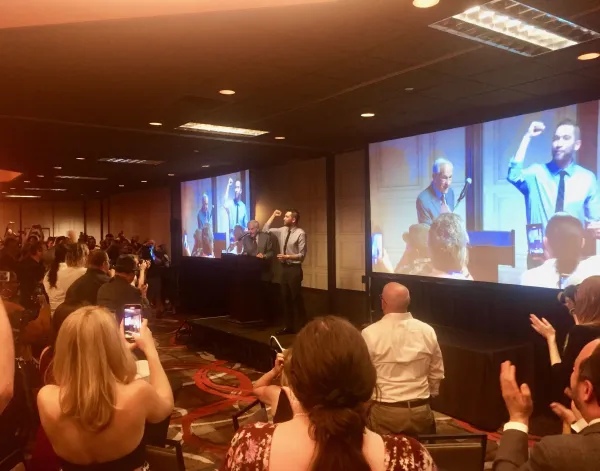
Spend enough time in America’s biggest little city with over one-thousand Libertarians and you’ll start to understand why Johnny Cash shot a man in Reno just to watch him die. However, that would be a violation of the non-aggression principle –– commonly known as “the NAP” to Libertarians, who will also debate the topic ad nauseam until you’ll want to take one yourself. Every two years, the members of America’s biggest little political party engage in the usual shenanigans that make it the third largest in the nation, albeit a distant third. This year’s convention was held at the notable Nugget Casino Resort and featured divided factions, drama, spirited debates and just plain spirits to decide the party’s future. After all, Libertarians know plenty about nuggets, whether they’re made of gold, weed or chicken.

In my post-election column, I stated that Nan Whaley, the Democratic nominee for Ohio governor, had 1 chance out of 10 of defeating incumbent Gov. Mike DeWine in the general election Nov. 8.
It might be worse than that. Morning Consult recently reported that DeWine has an astounding +28 percent approval rating, the tenth best among governors in the country. This reflects what I wrote, that DeWine is very popular with Democrats and Independents. Enough so as to overcome the fact that only 48 percent, less than half of the Republicans who voted in the primary, picked DeWine.

I wrote a column titled "Sherrod Bets It All On Nan" last month.
On Tuesday May 3, Sherrod won his big bet. What follows is my take on the election outcome and what it means for the future.
1. Sherrod Brown is the both the king and king/queen-maker of the Ohio Democratic Party. The U.S. Senator made a brilliantly executed television commercial for Nan Whaley that saturated the airwaves, gave her instant name recognition around the state, and, more than any other factor, is responsible for her one-sided victory over John Cranley in the Democratic primary for governor.
2. Now the challenge for Sen. Brown is to get Whaley elected governor. She has about 1 chance out of 10 of knocking off incumbent Gov. Mike DeWine. Brown will have to orchestrate several effective TV ads, some of them negative against DeWine, in order for Whaley to have a chance. He will have to help her raise $50 million because DeWine has access to $100 million, if he needs it, to hold onto his job.

Two decades ago, a new name entered the Toledo political arena: Teresa Fedor.
I was living in nearby Bowling Green at the time and had never heard of her.
She had been an elementary public school teacher in the Toledo area for 18 years.
My first thought was that Fedor was giving up a lot -- a good-paying job that she loved and was gifted at that had good fringe benefits and a good retirement program -- for an uncertain future in the Ohio House of Representatives.
She was a protégé of U.S. Rep. Marcy Kaptur of Toledo, who is now the longest serving woman n in the history of the U.S. House of Representatives.
"Saint Marcy," as the congresswomen is affectionately known, is revered for her political insight and it was never keener than when she plucked Fedor out of the classroom and put her in the Ohio Legislature.
Now, another wise political hand, Democratic gubernatorial candidate John Cranley, has forged a partnership with Fedor by putting her on the ticket as his running mate.
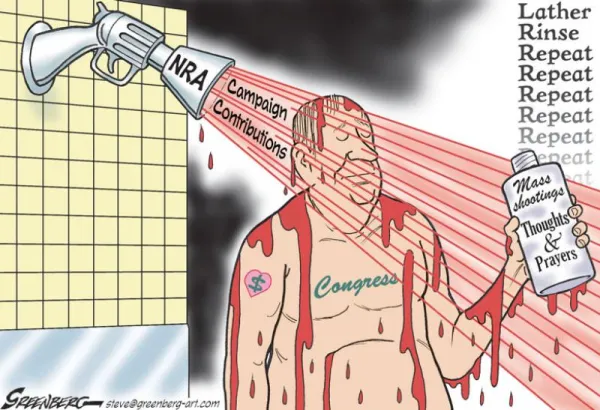

Homebound Entrepreneurs Against DeWines has now released its second video opposing Republican Governor Mike DeWine.
Just in time for Tax Day, Homebound Entrepreneurs Against DeWines has released its second ad “Tax Hike Mike,” which takes on Governor Mike DeWine for his controversial fight to raise Ohio’s gas tax over the last few years. The PAC is led by former Libertarian candidate for governor Travis Irvine, who ran against DeWine in 2018.

Sherrod Bets It All On Nan
It was not enough for U.S. Sen. Sherrod Brown to endorse Nan Whaley for governor months ago.
Key Ohio Democrats subsequent countermanded Brown and denied Whaley the Ohio Democratic Party endorsement in her primary race for governor against John Cranley. The Party stayed neutral.
Two years ago, Brown took over the state party and installed a protégé, Liz Walters, as party chair.
Not to be outdone, especially since he is the only statewide elected non-judicial Democrat in Ohio, Brown did a TV ad for Whaley that began running in a reportedly multimillion dollar statewide buy four weeks before the May 3 primary.
While Cranley appeared to have gained some momentum toward winning the primary in recent weeks, the Brown TV ads for Whaley may have evened the playing field or even tilted it slightly in her direction. (More on how Cranley must respond in a moment.)
The biggest obstacle to winning a primary is gaining name recognition. Simply, people are reluctant to vote for somebody they have never heard of.
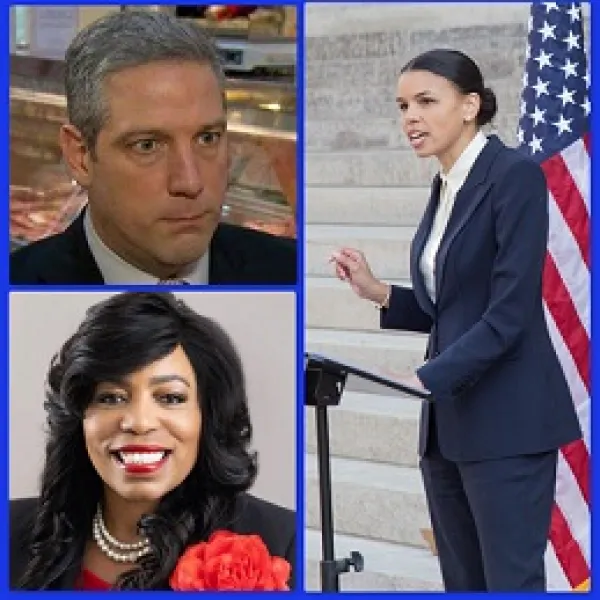
The Ohio Debate Commission, a nonprofit created in 2018 to facilitate debates among candidates vying for the highest statewide offices, says that US Rep. Tim Ryan’s condition that all US Senate Democratic candidates be on stage during the scheduled March 28 debate have been met. A debate that will go on even if the primary is postponed due to the redistricting mess at the Ohio Statehouse.
In February, Ryan said if either Columbus attorney Morgan Harper and Columbus tech executive Traci “TJ” Johnson failed to qualify, he would not participate. But both Harper and Johnson have met the “candidate participation criteria” required by the Ohio Debate Commission, which is hosting the March 28 debates at Central State University.
Johnson’s participation was in doubt as she only announced her candidacy in January.
As Ohio’s recent Republican-dominated redistricting process bungles on, any Ohioan who has been paying attention has probably realized the importance of our state’s Supreme Court. Thanks to Republican Chief Justice Maureen O’Connor siding with the court’s three Democratic justices, the uber-gerrymandered Statehouse and congressional maps that the Ohio Redistricting Commission recently passed (along party lines) have now been found to be unconstitutional not once, but THRICE. This rightful rejection of gerrymandering –– as well as the correct protection of Ohio’s new redistricting laws, which are enshrined in our constitution due to their respective 2015 and 2018 ballot initiatives –– has thankfully put the spotlight onto Ohio’s vital (but often forgotten!) third branch of government.
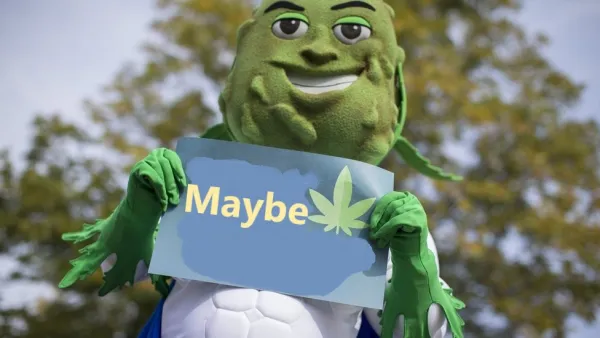
Ohio is on the verge of making marijuana fully legal, but no surprise is the unlucky timing for proponents. Stuck in purgatory in the Ohio Statehouse is a proposed citizen-initiated statute which will make marijuana legal for adults 21 and over.
The Coalition to Regulate Marijuana like Alcohol (CTRMLA) and its canvassers gathered signatures at shopping plazas late last year gaining 136,729 valid signatures. Their goal is to force the Ohio legislature to consider their legislation for November’s ballot. An answer from the Statehouse is due in May.
CTRMLA’s law would give 36 percent of earned taxes to support social equity and jobs, and it also legalizes home grow with a limit of six plants per person and 12 plants per household. Ohio’s current Medical Marijuana Control Program forbidshome-based cultivation, a point of contention with many of the state’s patients.