
Politics

On February 13, Columbus Mayor Andrew Ginther made a stunning announcement in his annual State of the City address: Columbus would transition its electricity supply to 100% renewable energy by 2022 through a program called Community Choice Aggregation.
“Not only will this help our climate goals and commitments, but it will drive workforce development and job creation in the clean-energy sector for our city and region,” Ginther said.
It was the exact case that Ready for 100 Columbus, a group of local climate activists, has been making to city government for the past three years.
Ready for 100 is a campaign of the Sierra Club asking cities to commit to 100% renewable energy. So far 162 cities, 13 counties, eight states, Puerto Rico, and the District of Columbia have all made this commitment. In Ohio that includes Cleveland, Cincinnati, Lakewood – but so far not Columbus.
Dear Governor DeWine and Ohio government officials,
COVID-19 has catapulted us into a crisis. You, rightly, have expressed concern about protecting the peoples’ health, safety and rights. In cancelling the Ohio primary election you were attempting to act to protect us. This is what we elect you to do. Governor DeWine, when you announced you were cancelling the election, you stood at the podium, and stated, “the people should not have to decide between their health and their constitutional rights.”
Amen to that.
But let’s be honest. It was a fantastic sound bite. But it was also hypocritical. I have great difficulty reconciling some of your words with your actions.
Ongoing Crises
Dear Governor DeWine and Ohio government officials,
Covid-19 has catapulted us into a crisis. You, rightly, have expressed concern about protecting the peoples’ health, safety and rights. In cancelling the Ohio primary election you were attempting to act to protect us. This is what we elect you to do. Governor DeWine, when you announced you were cancelling the election, you stood at the podium, and stated, “the people should not have to decide between their health and their constitutional rights.”
Amen to that.
But let’s be honest. It was a fantastic sound bite. But it was also hypocritical. I have great difficulty reconciling some of your words with your actions.
Ongoing Crises
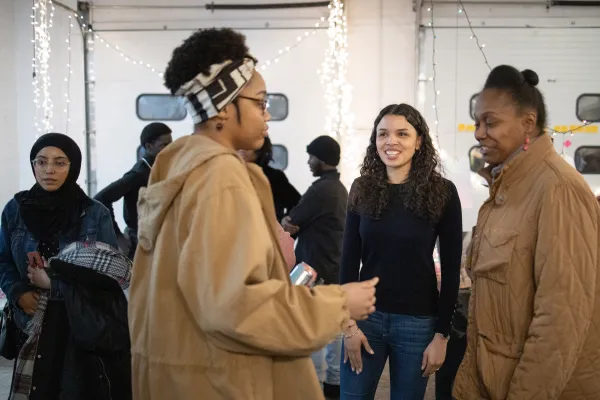
Progressive voters in central Ohio know that they should take the time to investigate the candidates and issues before they cast a ballot in the March 17 primary election. Being an educated voter is essential for the democratic process to work.
But people have very busy lives. Work and family obligations can take a lot of time and energy. It’s even harder if you’re a single parent, or you have to work several low-paying jobs to make ends meet. It’s much easier to vote with the sample ballot that the Franklin County Democratic Party mails to your home and distributes at your polling location.
The FCDP sample ballot lists the party’s candidate endorsements for the U.S. House; the Ohio House, Senate, and Supreme Court; and local offices, including the FCDP Central Committee who represent the 152 wards in Franklin County.
The sample ballot doesn’t encourage voters to educate themselves about the candidates and issues. It includes one simple directive: “Vote for every endorsed Democrat on your ballot.”
In other words, trust us. We’re looking out for what’s best for you, your family, your community, and the nation.
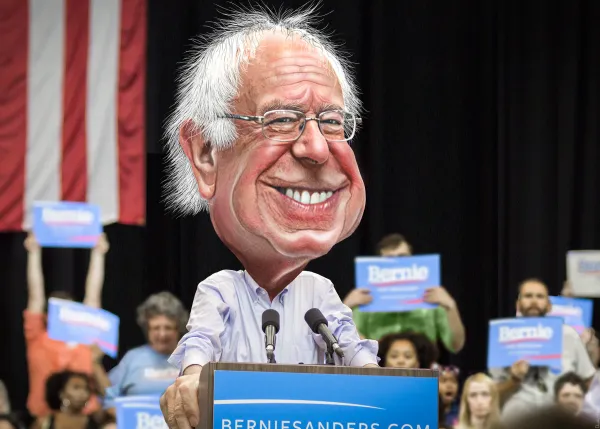
There’s a monumental shift happening in U.S. politics today, whether people like it or not. While the majority of Americans have been waiting for it for years – even decades – there are many others who remain vehemently opposed to the change. These types of people have opposed each other throughout our country’s history, especially whenever a major social shift like this takes place. These battles have been fought with words, weapons and feet in the street, whether it was during the Revolutionary or Civil War, the Gilded Age or the Great Depression, the Civil Rights Movement or the counterculture revolution that followed. It’s a dichotomy that can only be described as “uniquely American.”
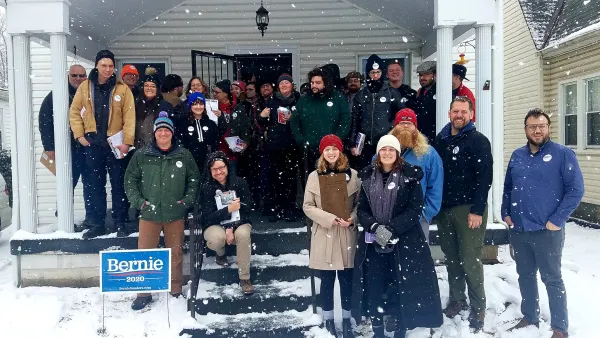
Bernie Sanders’ 2016 presidential campaign coincided with explosive growth in the American Left. Democratic Socialists of America (DSA) surged from 6,500 members in 2012 to 24,000 members in 2017. The trend is continuing in the run up to the 2020 election. DSA had 56,794 members in November 2019, Democratic Left reported.
The Columbus DSA chapter is showing the same trend. “We’ve been doing weekly canvasses to door knock for Bernie,” said organizer Kristin Porter. “We’ve been setting records in turnout for canvasses, regularly getting between 30 and 50 people. Previously we would have struggled to get 15 people to turn out.”
Porter said that attendance at Columbus chapter meetings has also increased from people who are interested in DSA’s other work in organizing tenants and transit riders, defending reproductive rights, etc.
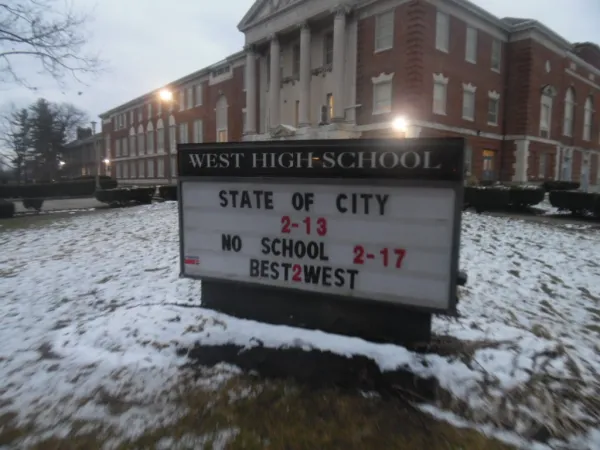
Columbus has been truly a “Tale of Two Cities” to emphasize the true meaning of this year’s State of the City Address. While Columbus has been touted in success stories and innovations, there is still that one-third of the community that feels like they are shut out of the entire loop. Columbus Mayor Andrew J. Ginther’s State of the City Address was no different, as two protesters made their voices loud and clear early on in the speech.
The theme of Ginther’s Address, held at historic Columbus West High School in Westgate, was centered about equity. Ginther addressed the auditorium at the beginning of the evening by saying, “Tonight, I share to you my ‘Equity Agenda,’ an agenda that calls out racism and discrimination where it exists, and my plans to address it as your Mayor.”
Ginther said, “Equity is the cornerstone of my administration, tonight, I will lay out what we will be doing this year, and over the next four years, to continue to grow this city and also to assure that we stop racism and discrimination, wherever we see it.”
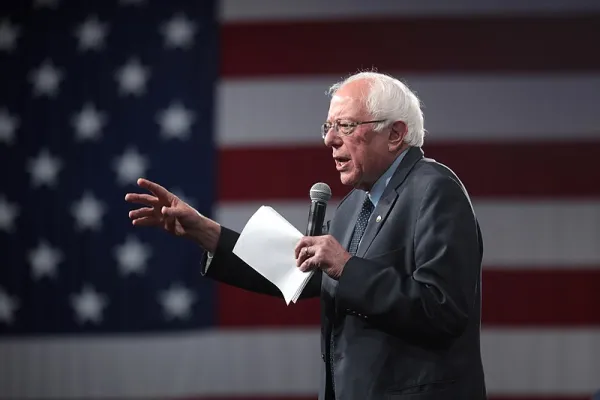
In a time when American politics keeps getting more bizarre, yet another bizarre occurrence happened last month when the two leading progressive candidates in the Democratic primary were pitted against each other, resulting in what could only be described as a “hot mic heard around the world.”
Immediately after the Democratic debate in January, Senator Elizabeth Warren (D-MA) approached Senator Bernie Sanders (I-VT) to tell him she thought he had just called her “a liar on national TV.” Sanders was going in for the typical post-debate handshake when Warren blindsided him with the comment, ultimately not even shaking his hand. However, because viewers couldn’t hear what was said until later, CNN’s commentators spent the next 24 hours salivating and speculating about what kind of drama had just gone down. Naturally – and as I predicted – CNN magically “recovered” the audio the next day, ultimately revealing what Warren said.
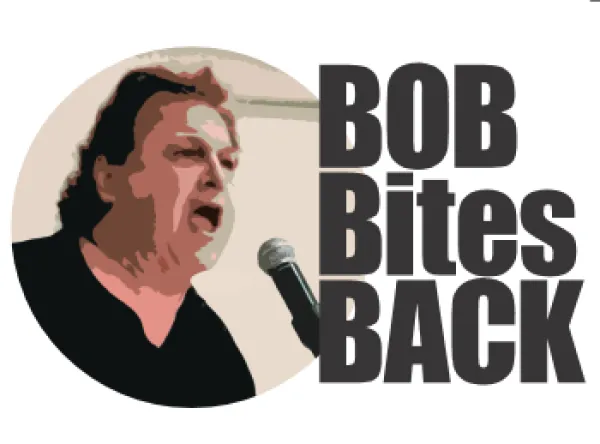
Should the Franklin County Democratic Party (FCDP) be endorsing in a primary? Jonathan Beard (55th Ward) said “No” at the January Franklin County Democratic Party Central Committee meeting and was backed by none other than the powerhouse former FCDP Chair Bill Anthony.
When a candidate is endorsed, their name appears on the Democratic Party sample ballot. These are mailed to all potential Democratic voters, handed out by the tens of thousands at polling places, and nearly always assure victory.
Beard believes the Party should not be endorsing in the open Ohio 25th House District and that the decision should be left up to the Franklin County voters.
There were eleven people seeking the Party seat for the 25th District. The FCDP machine endorsed Dontavius Jarrells. Jarrells won strong support from U.S. Representative Joyce Beatty. It is Beard’s contention that the Dems are forcing potential supporters away from the Party by allowing prominent elected Democratic officials to secure endorsements for their supporters or staffers.
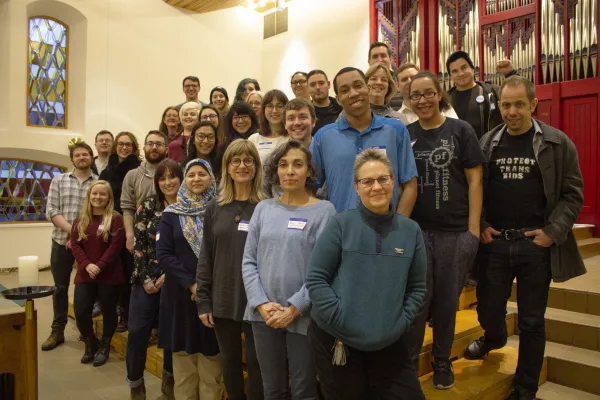
Power players in the Franklin County Democratic Party think you’re stupid. At least the propaganda campaign they’re running around the FCDP Central Committee race makes it look that way.
In 2016 a number of progressive Democrats ran for ward seats on the Central Committee in an attempt to move the party to the left. Fifteen candidates affiliated with the grassroots group Yes We Can got major pushback from the party establishment.
Instead of allowing an open, democratic process — where ward candidates could win seats by listening to the concerns of their neighbors and committing to fight for them — the FCDP Executive Committee gave party chairman William Anthony the authority to hand-pick Central Committee candidates for the sample ballot. This mailing to all Franklin County voters contained only the names of party-endorsed candidates.