
Politics
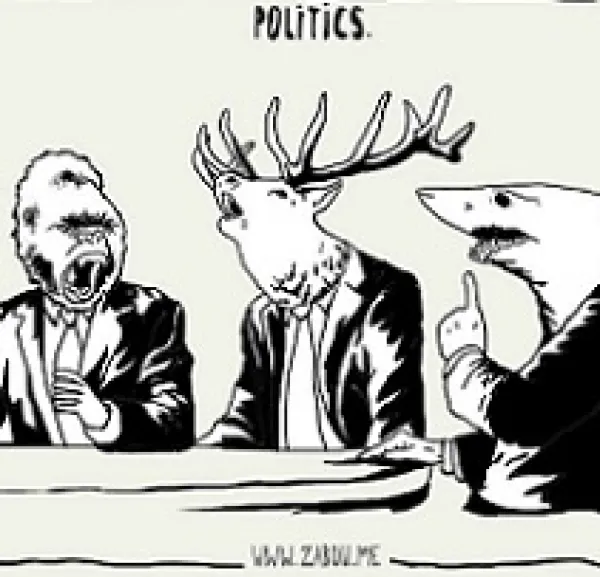
At the end of June, our corporate media overlords blessed us with the most inclusive political debate in American history. Twenty candidates seeking the Democratic presidential nomination made their case to voters over the course of four hours on television – to get on the stage, they only needed a minimum of 65,000 unique donors, regardless of how they were polling in the primary race. Thanks to these requirements, voters were able to hear from a diverse field of qualified (and unqualified) candidates.
As a former third party candidate for office myself, I found this inclusion of twenty candidates particularly interesting. For years I was told that media outlets were unable to include more than two candidates in a debate unless they were polling at a specific number, despite the fact that these polls and polling methods were never exactly disclosed. In fact, every two to four years when partisan elections take place in our country, it doesn’t matter if third party candidates are running on a local, state or national level -- we’re always somehow kept out of the debates because of our “low” polling numbers.

Four years ago, the editors of the Columbus Free Press gave me the chance to write a monthly column about the local media as the Columbus Media Insider. Over time, the editors let me write broadly about media and politics.
I will always be grateful. Nearly every newspaper journalist yearns to be a columnist.
Thank you, Robert Fitrakis and Suzanne Patzer, for making my dream come true.
And thank you, dear readers, even those of you at the Columbus Dispatch.
The sale of the Dispatch by the Wolfe family to GateHouse Newspapers led to the launch of my column in July 2015.
I noted in my first column that chain newspaper ownership results in major staff cuts. Around Labor Day, 2015, dozens of heads rolled. Today there are about half as many journalists putting out the newspaper as before.
The paper's coverage has shrunk and the errors have increased as much of the design and editing has been shifted to a hub in Texas.
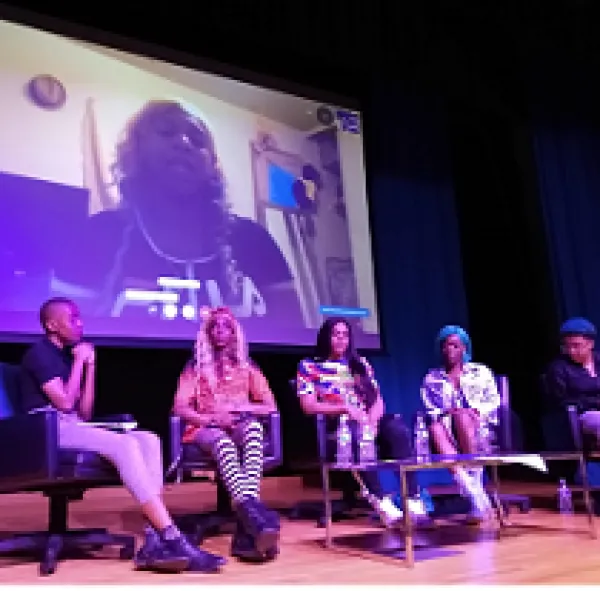
Community Pride’s third event was a screening of Laverne Cox and Jac Gares’ documentary, “Free CeCe!” The film is about the revolutionary prison abolitionist politics of CeCe McDonald, a black trans woman who was incarcerated into a men’s prison for acting in self-defense when experiencing fascist violence. The film was shown in the Beeler Gallery on Tuesday at 7pm and was followed by a panel discussion of four black trans activists with co-director of the festival, Dkéama Alexis, as the moderator.
A prominent theme in the documentary is how transmisogynoir, oppression of black trans women, is legalized in the police and prison systems. Cox and Gares highlight how there is no respite from violence and abuse as a trans woman of color. The film portrayed McDonald’s resistance to the state’s racist policies and the international support for her. The integral argument is that solidarity with black trans women means to reject respectability politics. There can be no trans liberation without prison abolition. McDonald skyped in after the screening to express her disgust at mainstream pride events and explain why she will not be celebrating Pride.

Testimony before the Ohio legislature on House Bill 6, Ohio’s nuclear and coal plant bailout bill which ironically also cuts off funds for renewable energies.
Is Ohio's legislature declaring a state of atomic socialism?
It seems poised for a Soviet gouging of some $3 billion over the next ten years to bail out two dirty, dangerous, decayed Chernobyl-ready atomic reactors that are falling apart. Neither can compete in the free markets so many Buckeyes profess to love.
The legislature proposes this $3 billion bailout while trashing some $4 billion in private capital. That money wants to build thousands of wind turbines and create tens of thousands of jobs, generating safe clean energy far cheaper than those radioactive "mistakes by the lake." The fast-rising turbines would lower electric rates and bring in private development capital, not drain it out of the public pocket.
The astonishing turn to Soviet nuclear economics comes as FirstEnergy's top executives pocket some $25 million in annual "salaries" while they spent $3 million to "lobby" the Legislature.

One of the few perks about being a third party candidate after an election is the eventual collective realization that your campaign was right about most of the things you said, despite the fact this realization happens too late for it to matter. Of course, by “perk” I mean sometimes it’s just nice to say “I told you so” after everyone seemed to ignore your contribution to the political discussion. Whether it happens to be our various stances on an assortment of issues or what we predicted that our establishment, two-party opponents would eventually do if elected (despite what they said they’d do) it’s something third party candidates from local to federal office often get used to in the year after the dust has settled.
A few weeks ago, Ohio became the sixth state to pass a so-called “Heartbeat Bill” that prohibits abortion after a “fetal heartbeat” can be heard–around the sixth week of pregnancy when most women don’t even know yet they are pregnant.
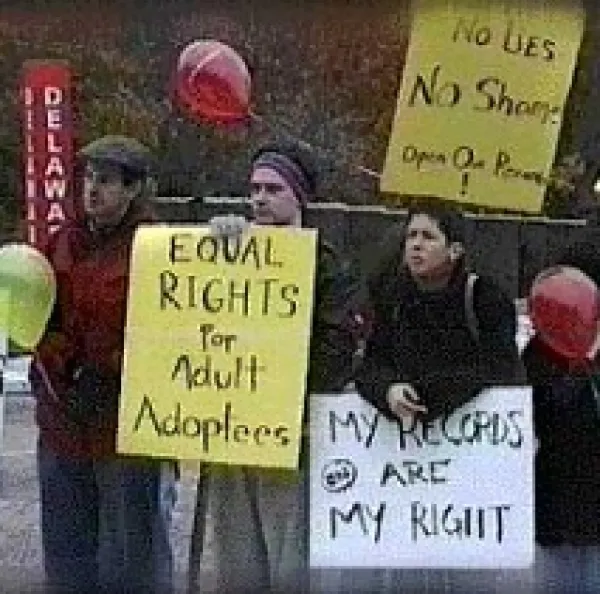
Ohio’s “Heartbeat Bill” has been covered extensively, and I don’t intend to reinvent that wheel. Little has been mentioned, however, about how these bills, especially in Ohio, originated with individuals opposed to adoptee civil rights and how implementation can stymie adoptee rights and adoption reform.
“Heartbeat” and Adoption: Background
Columbus City Council Candidate and longtime neighborhood advocate Joe Motil spoke against City Council’s approval last night for a 6-year $3.6 million income tax incentive for the Root Insurance Company. Root Insurance is a local company that has been the rave of major venture capital fund groups across the United States. Root’s auto insurance products are sold, administered and monitored through a smartphone app. The company’s valuation is now estimated at over $1 billion dollars. Root has expanded to 20 states and plans on selling its product nationwide by the end of the year.
World Press Freedom Day – May 3 – is not very well known, but freedom of the press is certainly a concern nowadays.
The United States now has the distinction of being one of the most dangerous countries for journalists in the word. Reporters Without Borders’ World Press Freedom Index 2019 documented that 63 journalists were killed while doing their jobs during 2018 – a statistic 15 percent higher than the year before. The report states that U.S. journalists are subjected to an unprecedented number of death threats and blames much of it on Trump’s accusations about “fake news” and calling journalists “enemies” of the people.
The Committee to Protect Journalists (CPJ) told NPR that reporters in the U.S have endured attacks by police and protestors, are targeted at the border and in other countries. All over the world, an increasing number of journalists are murdered, falsely imprisoned, and subject to violence. The CPJ reports that more than 260 journalists are in prison, the highest ever recorded.
Ohio’s corrupt voter registration system must be reformed. The Dispatch got it right in an editorial that began by saying “Ohio lawmakers should take up Secretary of State Frank LaRose’s request to make voter registration automatic.”
Our current system, fueled by the former Secretary of State and hardline right-winger Ken Blackwell, was designed to target and eliminate core Democratic voters, particularly blacks and poor people. Former Ohio Secretary of State Jon Husted perfected the art of de-registering Democratic voters. A 5-4 Supreme Court decision in the Husted v A. Philip Randolph Institute case last year upheld Husted’s undemocratic scheme – purging voters who hadn’t voted in the last few federal elections.
In the run-up to Ohio’s 2004 presidential election, the Free Press broke the story that 305,000 voters – primarily in the cities of Cincinnati, Cleveland and Toledo – were stripped from the voting rolls. In the next four years prior to the 2008 presidential election, the Free Press acquired the names of 1.25 million voters kicked off the voting rolls. Between 2009 and 2012, the number reached 1.1 million.
Mayor Ginther: Unopposed and Unindicted
Mayor Andrew Ginther is running unopposed in this year’s election. His major accomplishment in his first term was successfully remaining unindicted in the RedFlex camera scandal.
Ginther perfectly personifies the so-called “Columbus Way,” and that way is pretty straightforward. You suck up to multimillionaire and billionaire developers who don’t live in Columbus and give them massive tax breaks. In return, they fill your coffers for re-election.
Also as part of the Columbus Way, you make it difficult for any oppositional forces to get on the ballot. Municipal election signatures on candidate petitions cannot be gathered until after the November election. You have Thanksgiving, Christmas and then the coldest month of the year in January to try to get signatures. You require 1000 valid signatures for Mayor.
The Mayor with his power of patronage, appointment and abatements can gather a coterie of sycophants looking for favors.