
Politics

Mark McKinnon, a former political consultant and co-host of the Showtime documentary The Circus, famously said that losing an election is a soul-crushing experience. He said he quit because the defeats were damaging his psyche.
The negative effects of losing two elections on the same day appear to have gotten to Melanie Leneghan, who finished a close second in Republican primaries for the unexpired term and new 2-year term as 12th District Congressperson on May 8.
Rather than accept defeat at the hands of State Sen. Troy Balderson, Melanie turned into a "sore loser" and has filed a legal challenge to the results in Troy's home county of Muskingum, whose county seat is Zanesville.
District 12 is a GOP gerrymander of three counties (Delaware, Licking and Morrow) and parts of four counties (Franklin, Marion, Muskingum and Richland). Most of the votes are in northern Franklin, Delaware and Licking.
Mark McKinnon, a former political consultant and co-host of the Showtime documentary The Circus, famously said that losing an election is a soul-crushing experience. He said he quit because the defeats were damaging his psyche.
The negative effects of losing two elections on the same day appear to have gotten to Melanie Leneghan, who finished a close second in Republican primaries for the unexpired term and new 2-year term as 12th District Congressperson on May 8.
Rather than accept defeat at the hands of State Sen. Troy Balderson, Melanie turned into a "sore loser" and has filed a legal challenge to the results in Troy's home county of Muskingum, whose county seat is Zanesville.
District 12 is a GOP gerrymander of three counties (Delaware, Licking and Morrow) and parts of four counties (Franklin, Marion, Muskingum and Richland). Most of the votes are in northern Franklin, Delaware and Licking.

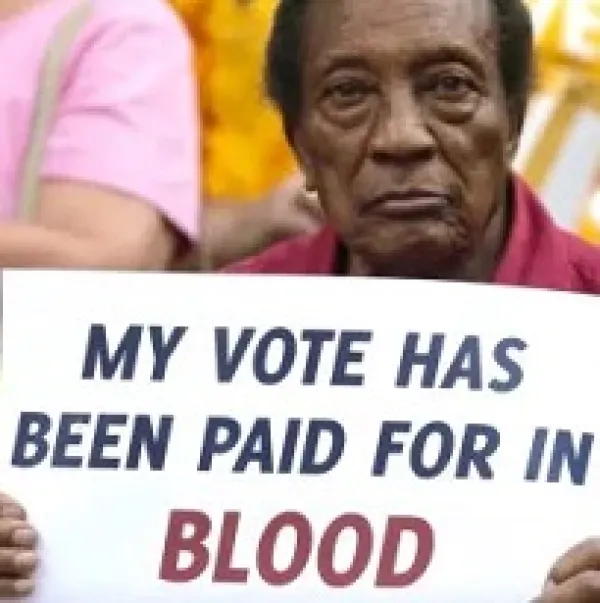
The Supreme Court decision blessing the purge of half a million voters in Ohio is NOT the last word.
On Monday, the renowned law firm of Mirer Mazzocchi Julien of New York will serve a 90-day notice on Jon Husted, the Secretary of State of Ohio, of our intent to file suit in federal court unless we receive complete information on each of the hundreds of thousands of voters removed from the voter rolls.
We have already filed a demand for information on Kris Kobach, the éminence grise behind Ohio and other mass purges nationwide, to open his purge program files to us. We are joined in this demand by the ACLU of Kansas.
What we can do

Murder Incorporated is a three-book series by Mumia Abu Jamal and Stephen Vittoria, which I can highly recommend based on the first book. The other two are not out yet.
Book One, “Dreaming of Empire,” is a critique of U.S. imperialism, a debunking of U.S. nationalist myths, a corrective or alternative history of the U.S. nation. Politically, a book like this would never be permitted in U.S. schools, and it’s clearly not aimed at clearing that hurdle. It uses curse words, which would provide a handy excuse for keeping it out. It’s also not straight history. It’s part chronological, part theme-based. It mixes historical accounts with pop-culture, with quotations from scholars, historical sources, and analysts interviewed by the authors.
Now that the gubernatorial primary is over, the policies pursued by the two major party candidates for Ohio’s chief executive office indicate we’ll have boring, middle-of-the-road corporate status quo. It looks like Ohioans’ choices will be between a third party woman and two male candidates racing to the wishy-washy center.
Richard Cordray’s already running as a centrist shunning the progressive democratic left and staking out territory to the right of John Kasich – particularly on the health care issue. The Dispatch spelled it out in a recent headline: “Cordray bashes House GOP, praises Kasich.” Mike DeWine’s campaign commercials emphasize that he has a large family. He’s also opposed to opioids. Like, who isn’t? This creates space on the Left for progressives to push for universal single-payer health care in Ohio.
Also, Cordray is afraid of legalizing marijuana which gives a tremendous boost to the Green Party, the only other party on the ballot for governor.

I sat down last week ready to say how the week before had bruised my ego. Some (very, very few) progressives won Democratic primaries and the Korean negotiations collapsed overnight. I hadn’t expected any progressives to even come close to victory and I thought any dysfunction surrounding the then-upcoming Korea summit would be minor and only occur in dribs and drabs. Then more children were murdered as they studied peacefully in their school. I was disgusted at the lack of response from all politicians and found myself unable to write about another mass shooting and how gun violence is easily unavoidable so soon. So I decided to give myself another week to start to get over my horror and see if anything would be done to stop innocent people being gunned down on a daily basis.
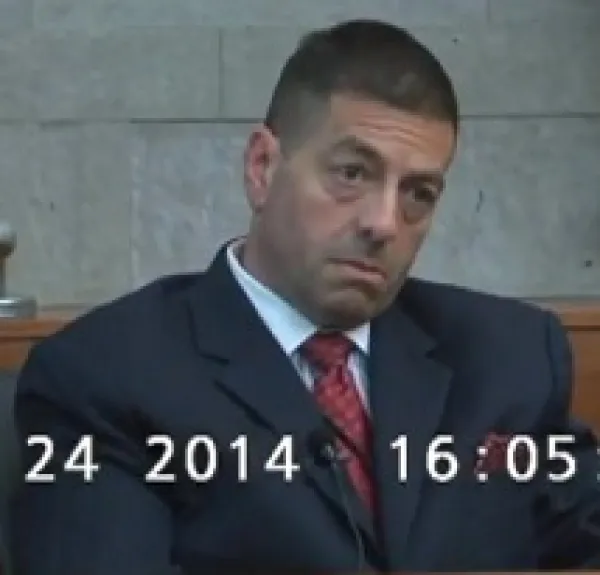
State Rep. Bernadine Kennedy Kent (D-Central Ohio) introduces legislation that would extend the period of limitations for any criminal offense involving a minor as the victim.
Current law dictates the period of limitation for a violation that involves or indicates abuse or neglect of a child under eighteen years of age or of a child with a developmental disability or physical impairment under twenty-one years of age shall not begin to run until either of the following occurs: (1) The victim of the offense reaches the age of majority, or (2) A public children services agency, or a municipal or county peace officer that is not the parent or guardian of the child, in the county in which the child resides or in which the abuse or neglect is occurring or has occurred has been notified that abuse or neglect is known, suspected, or believed to have occurred.

As we plow towards Ohio’s primaries this month, the two big parties are predictably gearing up to reward their establishment candidates.
On the Republican side, Ohio’s attorney general Mike Dewine is trying to put the final nail in the coffin of lieutenant governor Mary Taylor’s campaign with million dollar ad buys, calling her “two faced” and challenging her “conservative” credentials. This comes after DeWine is already well on his way to the nomination after receiving the party’s endorsement in February, a process that Taylor criticized as the “good ol’ boys” tipping the race. With all of this support and plenty of money in the bank, DeWine’s ad buys are questionable because the nomination is seemingly in the bag, but his campaign must be worried about Taylor’s attacks having an impact past the primary. Either way, he’s certainly got the cash to blow.
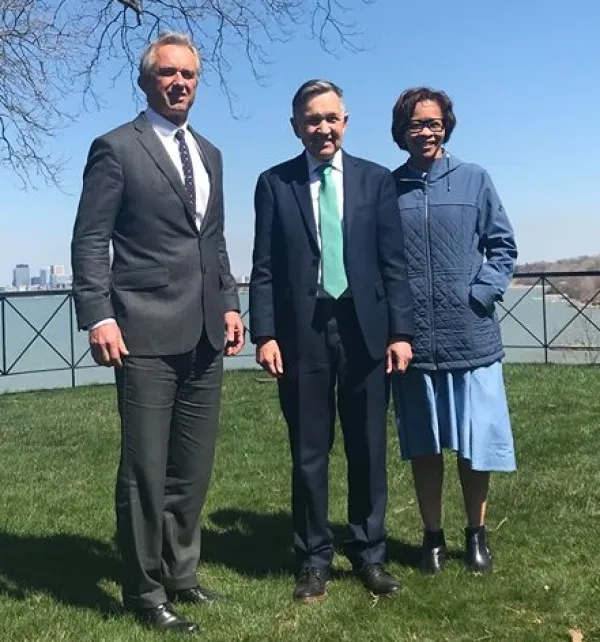
It is strange times indeed for Ohio politics. Richard Cordray is practically molded in the image of the perfect Democrat, and yet he is fighting for his life against someone that the Democratic elite had long dismissed as a sideshow, engaging in an escalating and bizarre series of character assassinations. Not that Aramis Malachi-Ture Sundiata, the Kucinich/Samples campaign’s state organizing director, is particularly concerned. “When I speak to the people, the questions on their tongues are not about Syria. I haven’t heard anything on the ground about that.”
Indeed, while he is not particularly concerned about the Cordray campaign and its hilarious-if-not-so-frightening clip-emptying attack ads, they should be concerned about him, for it is him and the team of veteran organizers that make up the Kucinich campaign staff that have given the ODP’s anointed one sleepless nights.
Howard Dean was seen as the first pioneer in waging a major electoral campaign through grassroots organizing, and Bernie Sanders is the most prominent example in recent history, but in both situations, it was more of a marketing term.