
Politics
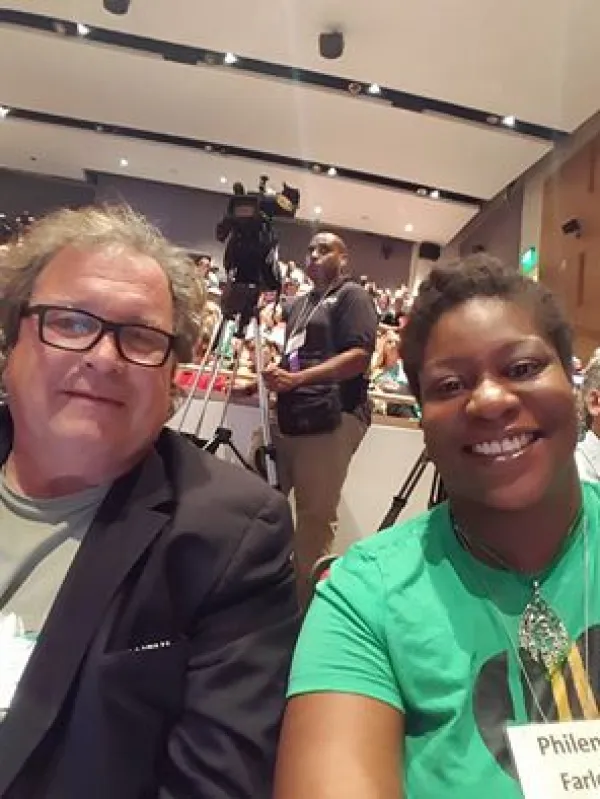
More than a few have wondered why the Green Party headed for Houston in August to nominate Jill Stein for President. I heard a few press observers note that maybe it was because Houston is one of the hottest and most polluted cities in the nation – perhaps more in need of Stein’s proposed Green New Deal than any other major U.S. city.
The reality is that the national Greens chose Houston because the state Party there practices thoroughgoing grassroots democracy. Simply put, Houston’s state Green Party had the best proposal. The Ohio Greens had proposed Toledo and were a finalist, with a vision of the Cleveland fascistic Republican convention contrasted with adecentralized democratic meeting in the city that is, for all practical purposes, a suburb of Detroit.
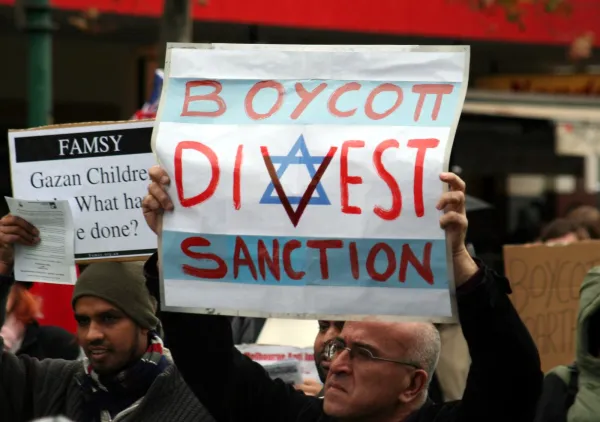
Prime Minister Benjamin Netanyahu declared on July 25 that Israel has defeated the BDS movement. Ben White of Middle East Eye calls this claim “laughable.” A few days earlier, the Palestinian BDS National Committee posted a blog article that describes the accelerating growth of BDS despite Israel’s efforts to undermine it.
BDS (Boycott, Divestment, and Sanctions) is an economic strategy for pressuring Israel to end its occupation and colonization of Arab lands in Palestine. BDS supporters also want Israel to dismantle the Gaza Wall and recognize full equality for Arab-Palestinian citizens — ending what they see as a system of apartheid.
Bernie Sanders need only ask the obvious question to find his way out of the corporate capitalist neocon wasteland where he now lingers – What Would Debs Do?
Sanders is quite familiar with the life of his “hero” Eugene Victor Debs. Sanders produced a documentary on Debs’ life in 1979 before being elected to political office. In the 1970s, Sanders ran in five statewide races on the ticket of the left-wing Liberty Union Party. Debs ran five times for president of U.S. on the Socialist Party ticket.
Now Sanders and his mass of young followers find themselves squabbling over how to influence a meaningless Clinton Democratic Party platform. Students in my Intro to American Government class are familiar with the phrase “A political promise in the UK is a pledge but in the U.S. it’s a hedge.”
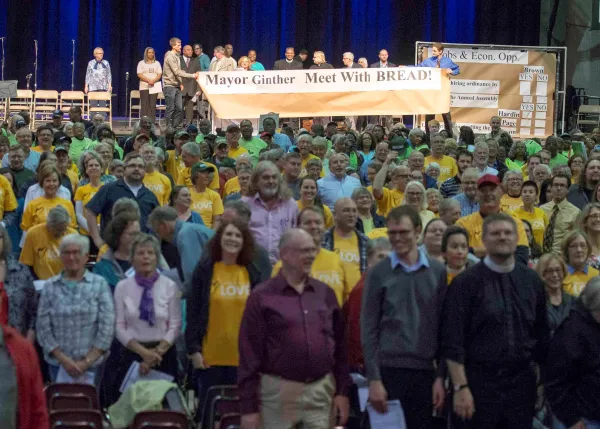
Just hours before the Nehemiah Action meeting on May 9, organizers of the interfaith social justice coalition BREAD didn’t know whether Mayor Andrew J. Ginther would make an appearance at the Celeste Center for the annual event. They had invited Ginther to weigh in on an economic initiative that would benefit residents of Linden, the Hilltop, and other marginalized neighborhoods. They had two different programs printed up for the evening: one in case the mayor would show up, and another in case he wouldn’t.
He didn’t.
Nevertheless, central Ohio faith leaders made their case at the meeting. “Early practices of deed restrictions, discriminatory lending, and highway construction have created a tale of two cities,” said Clyde Sales, senior minster at the Genessee Avenue Church of Christ. “There are the privileged neighborhoods and the throwaway neighborhoods, with clear boundaries separating neighborhoods like Linden.”
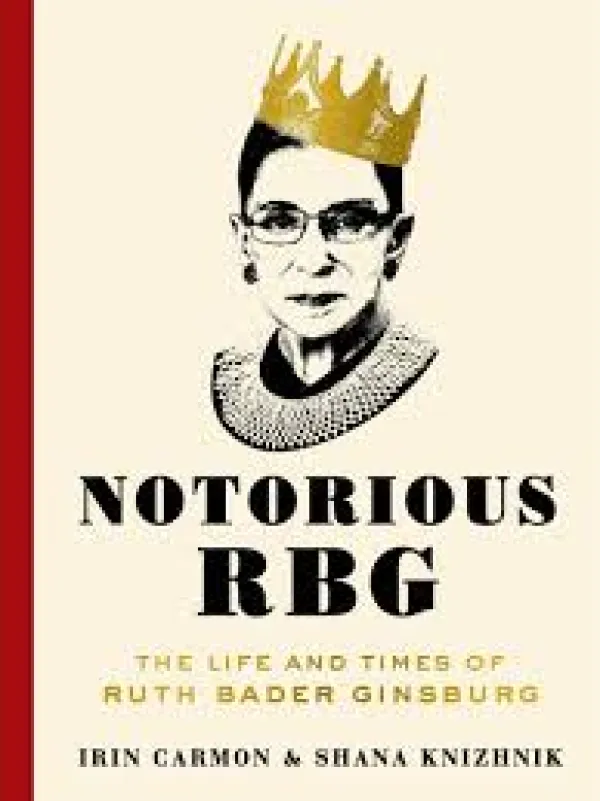
I have been hoisted on my own petard. For decades now, I have assiduously ignored ninety-nine percent of all the rap music–an oxymoron if ever there was one–out there. And then came the publication of Notorious RBG. I immediately knew it was a tongue-in-cheek reference to the late rapper, Notorious B.I.G., but what I didn’t know was if he and Biggie Smalls were the same person. For those readers uninitiated in rap music, they were.
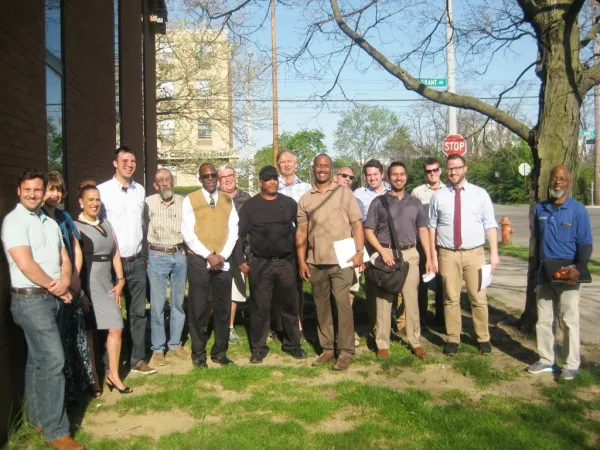
The air crackled with anticipation on Wednesday evening as newly-elected members of the Franklin County Democratic Party (FCDP) Central Committee gathered outside Ohio Democratic Party headquarters. In a few minutes they would join a Central Committee meeting for the first time as voting members.
“We’re here because we deeply care about concretely improving people’s lives,” said Will Petrik, Central Committee member for Ward 18. “We believe in freedom, in democracy, in social and economic justice, and in making sure that everyone in the community can live a decent life.” Petrik is affiliated with Yes We Can Columbus, one of several coalitions who are trying to make the local Democratic Party more transparent and responsive to the needs of its constituents.
“I was elected because people in my neighborhood want a change,” said Mario Cespedes, Ward 40. “They want big money out of politics, and they want a debate around raising the minimum wage.”
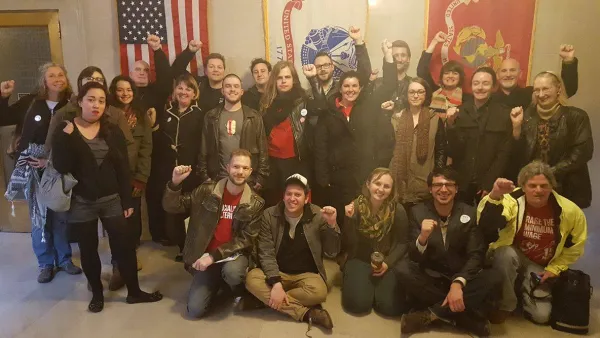
On April 4, the same day that California and New York State raised their minimum wage to $15 an hour, supporters from grassroots organizations spoke in Columbus City Hall to remind City Council members of their campaign promises and push for a clear commitment to raising the minimum wage to $15 in Columbus.
“We’re a city where children go to bed hungry because their parents have to decide whether to buy food or pay rent,” said Jordan Patton, a Capital University law student and member of Socialist Alternative. “We’re a city where the corrupt grow richer, while people working multiple jobs struggle to pay their rent on time.”
The biggest local electoral issue in this year’s primary election in Columbus is the split in the Democratic Party. Mayor Andrew Ginther, former Mayor Michael Coleman and Congresswoman Joyce Beatty led one faction dead set to punish Sheriff Zach Scott and his supporters, simply because Scott ran for Mayor against Ginther in November. The Franklin County Democratic Party establishment recruited candidates and endorsed them to run against Scott, as well as Democrat incumbents County Commissioner Paula Brooks and Treasurer Terry Brown, because they supported Scott.
In a further effort by this ruling faction to retain control of the Party, this faction took the unusual step of recruiting and endorsing candidates for the party’s Central Committee – party officials elected by ward every four years – so that those people’s names were a part of the “Democratic Unity Ticket” sample ballot. Scott and Brooks fought back with the “Democrats United” sample ballot, which had Scott, Brown, and Cheryl Brooks Sullivan, along with a slate of Central Committee candidates.
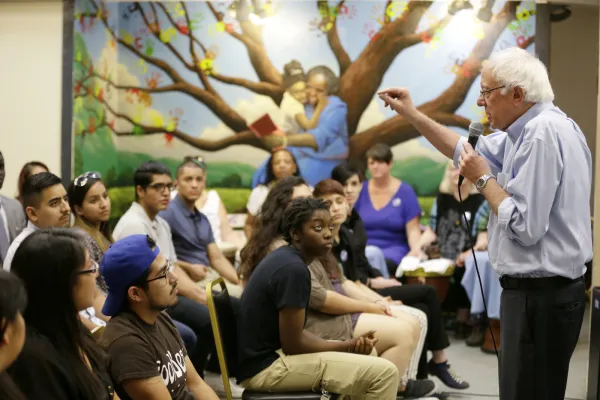
Hey old people! This is why American youth Feel the Bern
By Sam Lagana
Bernie Sanders’ appeal to so many young people is uncanny to older Americans. As if the Democratic candidate with the socialist message has a secret energy that’s driving them to flock under his banner. No other presidential candidate has such influence over our young adults and even those who are not of voting age. After pressure from Sanders’ team and a lawsuit, an Ohio judge ruled last week that teenagers who turn 18 before Election Day can vote in Ohio’s primary.
What’s mind-boggling is that while the support for Bernie from young people is unwavering, older generations are left scratching their heads and scoffing. How can our youth be so loyal to a 70-something white man who works in Vermont? How can a card carrying Democratic socialist be so well liked by a generation that’s so in love with their connected devices and video games? Don’t these young voters know about the Red Scare? Older Americans often ask my friends and me: Don’t you know about the failed socialist and communist experiments that nearly drove the world to the brink of extinction?!
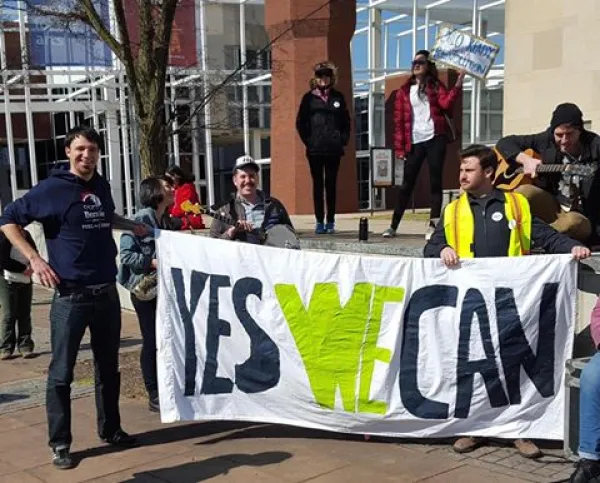
The election Columbus should really care about this year happens on March 15.
The 2016 primary can set in motion changes that will make a real difference for people living and working in Columbus − changes that seem out of reach when we look at the Ohio Statehouse or Washington. New alliances are developing at the local level to fight for a future with more equitable wages, healthier neighborhoods and more accountable political structures. Yes We Can Columbus is an emerging political movement poised to replace government corruption with mass participation, starting right where we live.
Where We’ve Been: Municipal Reform and the Progressive Era
Over one hundred years ago, activists mobilized to stop child labor, take down political machines, and challenge the bonds of concentrated wealth and political power. And they did it starting in their cities.