
Politics
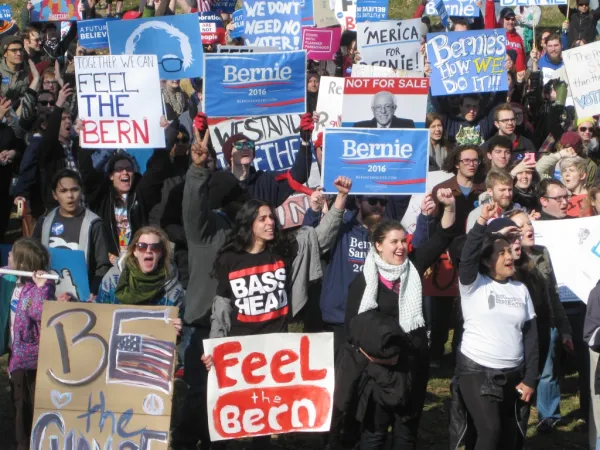
“Are you tired of the 1 percent making more than the bottom half of this country?” asked Troy Harris, an activist with Central Ohio Grassroots for Bernie Sanders. “Are you tired of corporate-owned Democrats and Republicans who are controlling our legislative interests? Are you tired of Starbucks and Wal-Mart decimating our communities?
“I’ve got a candidate for you,” he said. “His name is Bernie Sanders.”
Harris was speaking to a crowd of about 900 Sanders supporters at the Wexner Center Plaza on the Ohio State University campus on February 27, a few days after a Sanders campaign office opened on East Main Street in Columbus.
Many of the speakers at the rally emphasized the local implications of Bernie Sanders’ national platform. CWA Local 4501 president Kevin Kee brought the focus directly to OSU and the university’s privatization of much of its workforce.
“They outsourced the parking here, and now pay employees $8 an hour,” Kee said. “You can’t raise a family on $8 an hour. You can’t buy a car on $8 an hour. Are we in a race to the absolute bottom of the wage scale, or do we believe that there should be a living wage?

Thursday evening at the University of Virginia four expert pollsters performed a dramatic act of self-experimentation in which they demonstrated that, using a map and two hands, they would still be incapable of finding their ass.
The brave participants included Glenn Bolger who promotes and does polling for Republican senators, Congress members, and governors at Public Opinion Strategies; Courtney Kennedy who is director of survey research at Pew Research Center; Mark Mellman who promotes and does polling for Democratic senators, Congress members, and governors; and Doug Usher who works for Purple Insights and supports the two political parties the name suggests.
The event was put on by the Center for Politics which was trying to hand out stickers that said "Politics is a good thing." I didn't see anyone accept one. The event had been titled "How Polls Influence Public Opinion," which was why I went. But the moderator, Kyle Kondik, and the four panelists never mentioned that topic. During Q&A someone in the audience asked about it, and was given the answer: Oh, no, polls don't influence the public.
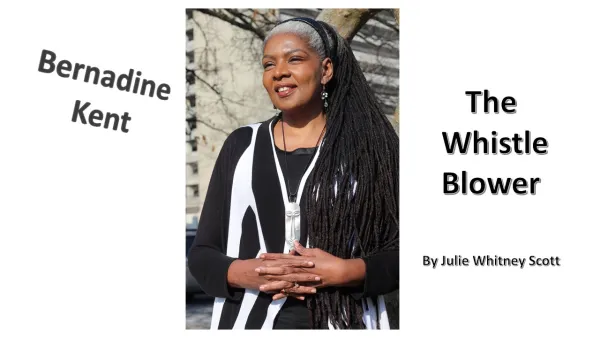
March 15, 2016 is the Ohio Primary Election and time for the people of certain districts to vote for their House Representative. One of those districts is the 25th district, a “whistle blower” is running for that spot, and her name is Bernadine Kent.
Kent has been a teacher and vice principal for the Columbus City Schools and runs the nonprofit advocacy group PASS – Parent Advocates for Students in School. Kent was responsible for blowing the whistle on the Columbus City Schools for theft and fraud in No Child Left Behind (NCLB) funds. When the Columbus Police Department didn’t listen to her, or shall I say, follow up with her complaint, Kent didn’t just say “OK, I tried to tell them what’s going on” and then give up. No, she blew her whistle even louder and in the direction of the FBI, which in turn sparked their investigation into the situation and found that the Columbus School’s tutoring program was not functioning as it should and in fact, fraud had been committed. Kent also helped expose the data
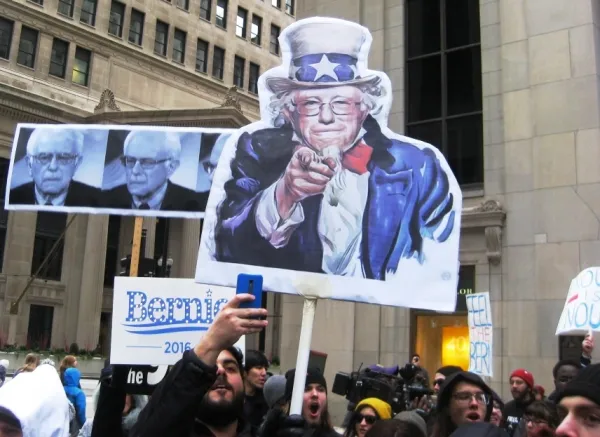
“The billionaire class and their representatives in Washington are so powerful that the best president in the world cannot defeat them alone,” said Bernie Sanders at a rally in Minneapolis last June. “We need a mass movement of millions of people.”
Taking their cue from the presidential candidate, on January 23 many thousands of supporters turned out for a #March4Bernie in more than 35 U.S. cities.
In Chicago, where much of the outrage against corporate-backed Democrats has been focused on Mayor Rahm Emanuel, more than 2,000 Sanders supporters marched from Daley Plaza to the Chicago Board of Trade. Many of the marchers carried signs demanding Emanuel's resignation. Activists have alleged a city-wide cover-up of the police killing of 17-year-old Laquan McDonald.
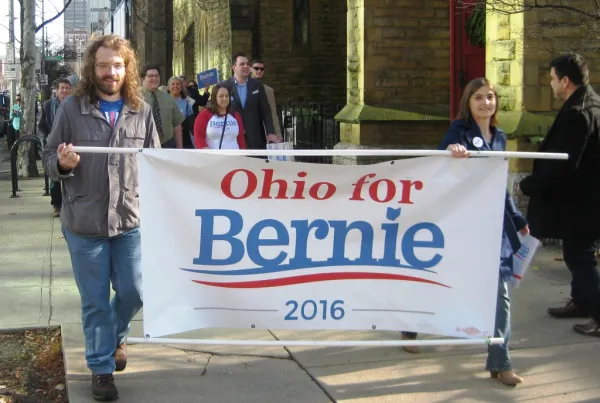
“Money doesn’t win. Pre-primary polls don’t win,” said Jason Edwards. “Votes win, and we have the people to go out and get them.”
Edwards was speaking on December 16 outside the Ohio Secretary of State’s office as nearly 6,000 petition signatures were delivered to put presidential candidate Bernie Sanders on the Ohio ballot for the May primary.
Sanders’ prospects for winning the Democratic primary in Ohio are “very good,” said Edwards, a member of Central Ohio Grassroots for Bernie Sanders and a delegate for the national campaign. For the general election, “We’ve got a lot of work to do as volunteers,” he said. “As long as we keep up our grass-roots effort around the country, we’re going to be fine.”
“I’m very confident that Bernie would win the general election,” said Bianca Davis, a graduate student in physics at Ohio State. “We need his policies. We need universal health care, we need maternity and paternity leave, we need infrastructure, and we need to address climate change. At the first Democratic debate, Bernie was the only one who said that climate change is the biggest security threat.”

What does Issue 3 say?
It is understandable that people want concrete answers concerning what will happen if Issue 3 passes. To help clear up a few misconceptions concerning ResponsibleOhio’s ballot language – assuage some of the uncertainty surrounding it – we have consulted experts and attorneys to answer these commonly heard and often misunderstood questions:
Does Issue 3 have a clause about medical marijuana?
Yes. The use of marijuana for medical conditions leads off the amendment. Patients who have been certified by a doctor to have defined medical conditions can use, possess and purchase cannabis from non-profit dispensaries. These are mandated to be operational no later than May 30, 2016.
Will there be caregivers?
Yes. They will need to be licensed by the Commission and serve their patients for purposes more than just acquiring marijuana. They can purchase, possess and transport it on behalf of those patients.
What are the rules for homegrown marijuana?
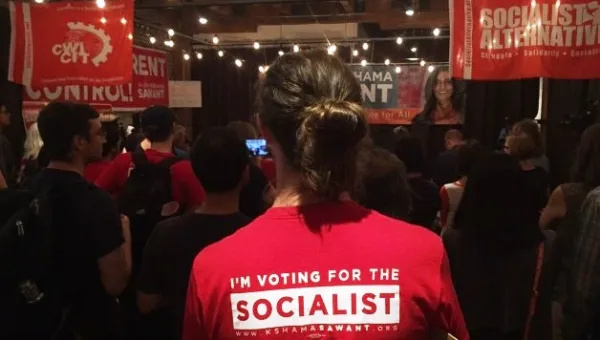
As Election Day draws near, a lot is at stake for working people in Seattle. But the outcome of Seattle’s City Council race will also reverberate in communities across the nation who want their city government to serve its constituents instead of corporate interests.
By making it the cornerstone of her platform in the 2013 City Council race, Kshama Sawant created the political will in a city controlled by the Democratic Party to raise the minimum wage to $15/hour. The Democratic establishment wouldn’t have got there on its own.
Sawant won the election for District 3, unseating a 16-year incumbent Democrat and making her the first independent Socialist in decades to be elected in a major U.S. city.
After years of stagnant wages and an ever-increasing cost of living, Sawant's minimum wage initiative was tremendously popular with working class voters. To maintain their image as the “progressive” party, Democratic mayor Ed Murray and the rest of City Council had no choice but to get on board with a city charter amendment to raise the wage to $15.
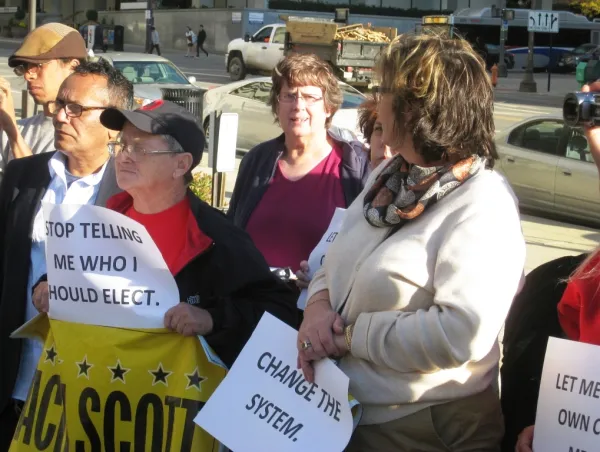
A politically diverse coalition of concerned citizens and community leaders wants to make a foundational change to how Columbus City Council represents the people of Columbus. “We’re fighting to give every community a voice, end corruption in Columbus, and bring accountability back to city government by creating districts in our City Council,” said Represent Columbus co-chair Whitney Smith at a press conference outside City Hall Monday afternoon.
Represent Columbus is collecting petition signatures for a city charter amendment to be placed on the May 2016 primary ballot. The initiative would have ten City Council members elected by districts in which they live. Three at-large Council members would be elected to ensure that city-wide issues are addressed.
“It’s time to return government to the people of Columbus,” said attorney Bill Todd, former Republican mayoral candidate. “It’s time to create transparency, and a system that allows everyone in the neighborhoods to be heard.
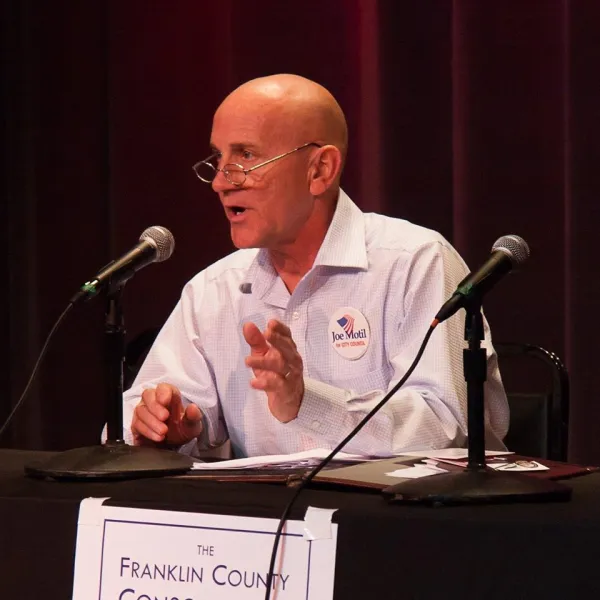
Joe Motil, Independent write-in candidate for the unexpired term race for Columbus City Council, commented on a recent Columbus Dispatch article entitled, “Columbus council candidate decides to campaign after all.” Ms. Ashley Wnek, who is technically also a candidate for the Columbus City Council unexpired term race claimed that, “I am working to let people know they have an alternative to my opponent, who is currently the subject of an ethics investigation.”
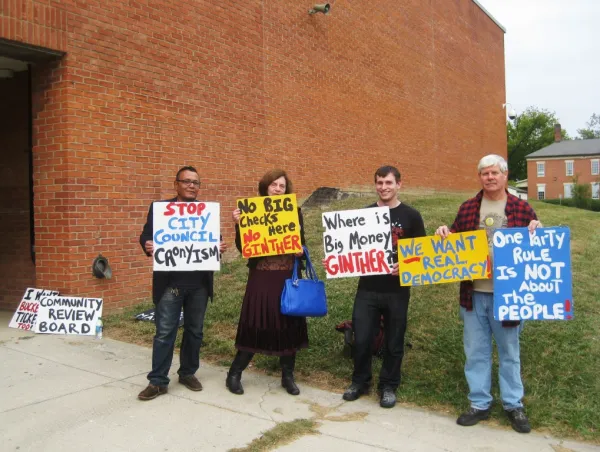
“People should not have to work three jobs just to make ends meet,” said Columbus resident Jasmine Ayres at the “Our City, Our Stories, Our Future” public meeting and candidates’ night on October 1. “People who work 40 hours a week should be able to feed their families. They should be able to pay their bills. There are people who are really struggling in this city. They would really benefit from raising the minimum wage.”
“Minimum wage should cover at least the minimum cost of living,” said former OSU football defensive back Anthony Gwinn. “Can you imagine working 40 to 60 hours a week as a single parent and raising children with a minimum wage of $8.10?”
The moderator posed this question to ten candidates for Columbus City Council: “If elected to City Council, will you raise the Columbus minimum wage to $15 by 2020?”
Democrats