
Anti-War
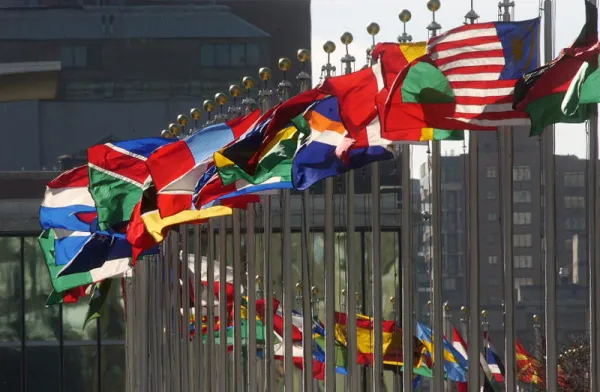
The 77th session of the United Nations General Assembly was, in many ways, similar to the 76th session and many other previous sessions: at best, a stage for rosy rhetoric that is rarely followed by tangible action or, at worse, a mere opportunity for some world leaders to score political points against their opponents.
This should surprise no one. For many years, the UN has been relegated to the role of either a cheerleader for the policy of great powers, or a timid protester of sociopolitical, economic or gender inequalities. Alas, as the Iraq war proved nearly thirty years ago, and as the Russia-Ukraine war is proving today, the UN seems the least effective party in bringing about global peace, equality and security for all.

What does surrender look like in the world of geopolitics? To my mind, this gets pretty close:
“President Biden’s national security adviser said on Sunday that the United States had warned Russia that there would be ‘catastrophic consequences’ for the country if Moscow used nuclear weapons in its increasing desperation to hold on to territory in Ukraine.”
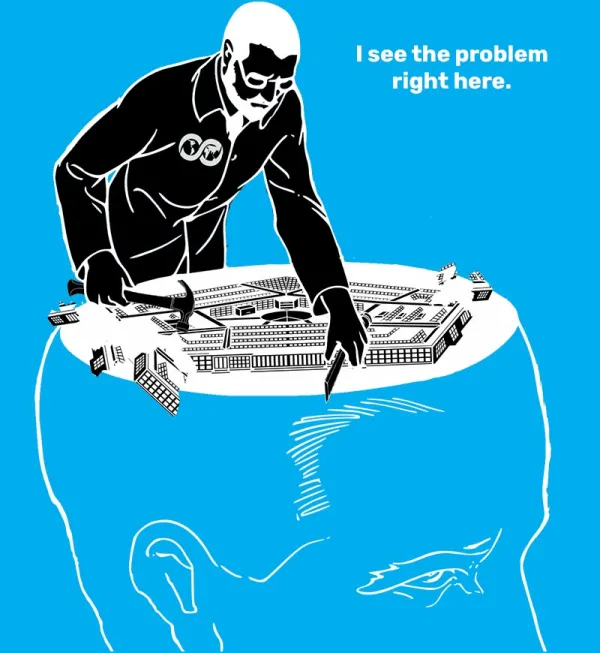
What would we do in a world lacking police, prisons, surveillance, borders, wars, nuclear weapons, and capitalism? Well, we might survive. We might sustain life on this little blue dot a little longer. That — in contrast to the status quo — ought to be sufficient. We might, in addition, do a lot more than sustain life. We might transform the lives of billions of people including each person reading these words. We might have lives with less fear and worry, more joy and accomplishment, more control and cooperation.
But, of course, the question I began with might be asked in the sense of “Wouldn’t the criminals get us, and the forces of law and order be imperiled, and evildoers take away our freedoms, and sloth and laziness deprive us of updated phone models every few months?”
I recommend, as a way to begin answering that concern, reading a new book by Ray Acheson called Abolishing State Violence: A World Beyond Bombs, Borders, and Cages.
Ah, the children!
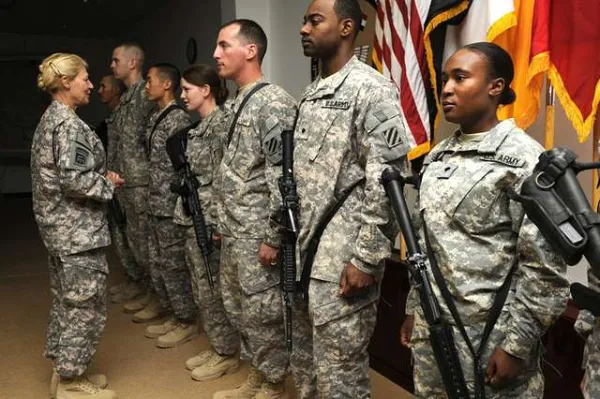
They belong to us, sayeth the Department of Defense. At least some of them do.
It’s a little more complicated than it used to be, thanks to one of the changes that occurred back in 1973, a year of startling historical significance. That was the year of the Roe v. Wade decision and, oh yeah, the Watergate hearings (remember those?). But there was more. The United States, tangled militarily in the quagmire of Vietnam and increasingly torn apart on the home front by protests, was on the brink of conceding defeat in Nam and getting the hell out of the ravaged country. Before that came about, the military-industrialists made a pragmatic decision. They got rid of the draft.
The idea was to shut up the protesters by taking away their personal stake in America’s militarism. The term that was then emerging was “Vietnam syndrome” — people were sick of war. Uh oh! Big problem for the defense industry and all the groveling politicians indebted to it. Patriotism itself had become poisoned. People began calling for profound national change, including (God help us) an end to war. Was the antiwar movement becoming the new patriotism?
Remarks on September 19, 2022 for online event at https://peaceweek.org
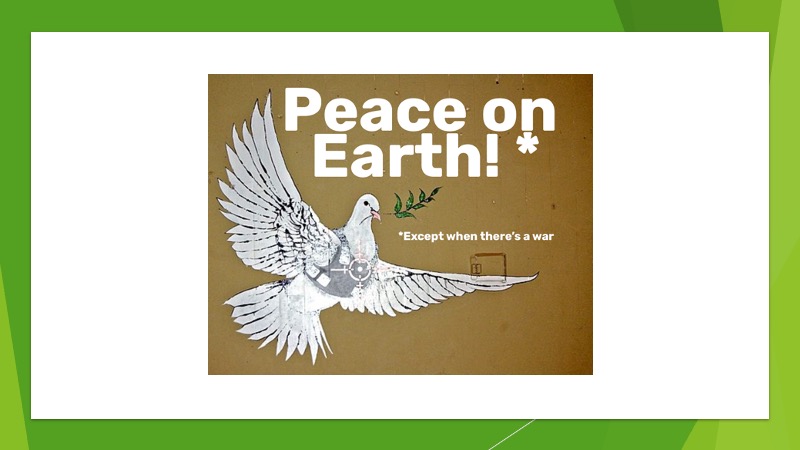
Powerpoint here.
Thank you for including us. After I speak, World BEYOND War Education Director Phill Gittins will discuss the educational work that can move us away from war, and World BEYOND War Canada Organizer Maya Garfinkel will discuss the nonviolent activism that can do the same. This way, I can talk just about the easy part, which is why we should abolish war.
One of my favorite blogs is that of Caitlin Johnstone. Why have I never written about how great it is? I’m not sure. I am too busy to write about most things. I have invited her on my radio show and had no reply. I do know that one of my favorite things to do is also one of hers: correct the mistakes of others. I like to correct my own mistakes too, of course, but it’s not as much fun, and only seems useful to write about when my mistake is shared by millions. I think Ms. Johnstone has now made, in her own talented way, a mistake shared by millions in a post called “In This Disaster We Are All, Ultimately, Innocent,” and I think it’s possibly a horribly dangerous one.
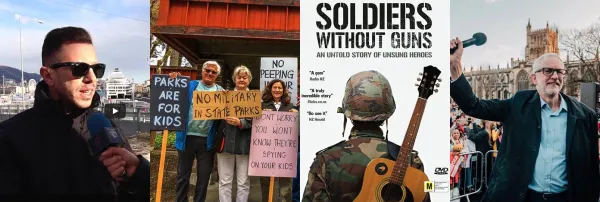
World BEYOND War’s Second Annual War Abolisher Awards will recognize the work of an environmental organization that has prevented military operations in state parks in Washington State, a filmmaker from New Zealand who has documented the power of unarmed peacemaking, Italian dock workers who have blocked the shipment of weapons of war, and British peace activist and Member of Parliament Jeremy Corbyn who has taken a consistent stand for peace despite intense pressure.
An online presentation and acceptance event, with remarks from representatives of all four 2022 award recipients will take place on September 5 at 8 a.m. in Honolulu, 11 a.m. in Seattle, 1 p.m. in Mexico City, 2 p.m. in New York, 7 p.m. in London, 8 p.m. in Rome, 9 p.m. in Moscow, 10:30 p.m. in Tehran, and 6 a.m. the next morning (September 6) in Auckland. The event is open to the public and will include interpretation into Italian and English.
The Whidbey Environmental Action Network (WEAN), based on Whidbey Island in Puget Sound, will be awarded the Organizational War Abolisher of 2022 award.
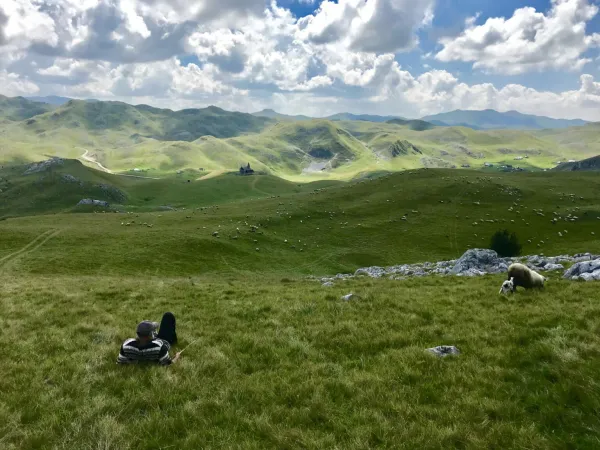
For years now, the people of Montenegro have sought to protect the Sinjajevina mountain plateau from the destruction to be brought by creating a military training ground vastly larger than the entire military of Montenegro could ever use. The NATO nations for whom the project actually exists have sought to keep their roles quiet. But after people put their bodies in the way in October 2020 and prevented the use of their mountains for war training, a popular movement rapidly grew. In recent months it has threatened to make permanent the protection of their environment and way of life. The European Union and the Prime Minister of Montenegro promised them success in July.
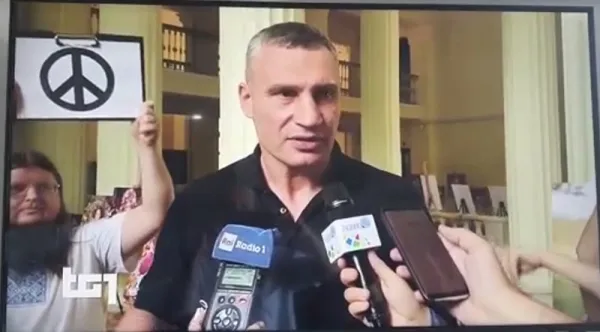
(Presentations by Dr. Yurii Sheliazhenko, executive secretary of Ukrainian Pacifist Movement, at the International Peace and Planet Network conference in New York and at the 2022 World Conference against A and H Bombs in Hiroshima.)
“Thank God Ukraine learned a lesson of Chernobyl and got rid of Soviet nukes in the 1990s.”
Dear friends, I am glad to join this important peacebuilding dialog from Kyiv, capital of Ukraine.
77 years ago (August 9, 1945) an all-Christian bomber crew dropped an experimental plutonium bomb on Nagasaki City, Japan, instantly incinerating, asphyxiating and/or vaporizing tens of thousands of innocent civilians, mostly women and children. Very few Japanese soldiers were killed by the bombs.
Japan’s major religions are Shitoism and Buddhism, but a disproportionate number of the dead at Nagasaki were Christian. The bomb also wounded uncounted tens of thousands of other victims who suffered the blast trauma, the intense heat and/or the radiation sickness that killed and maimed so many of the survivors.
In 1945, the US regarded itself as the most Christian nation in the world and the bomber crew reflected that reality. The small United States Army Air Force (USAAF) unit that was charged with dropping the atomic bombs (the 509th Composite Group) even had two Christian military chaplains assigned to it. They all were products of the type of Christianity that failed to teach what Jesus taught concerning homicidal violence (ie, that it was forbidden to his followers).