
Anti-War
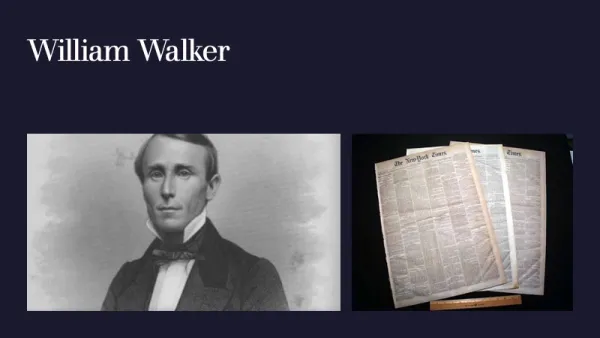
David Swanson is the author of the new book The Monroe Doctrine at 200 and What to Replace It With.
The Monroe Doctrine was first discussed under that name as justification for the U.S. war on Mexico that moved the western U.S. border south, swallowing up the present-day states of California, Nevada, and Utah, most of New Mexico, Arizona and Colorado, and parts of Texas, Oklahoma, Kansas, and Wyoming. By no means was that as far south as some would have liked to move the border.
The catastrophic war on the Philippines also grew out of a Monroe-Doctrine-justified war against Spain (and Cuba and Puerto Rico) in the Caribbean. And global imperialism was a smooth expansion of the Monroe Doctrine.
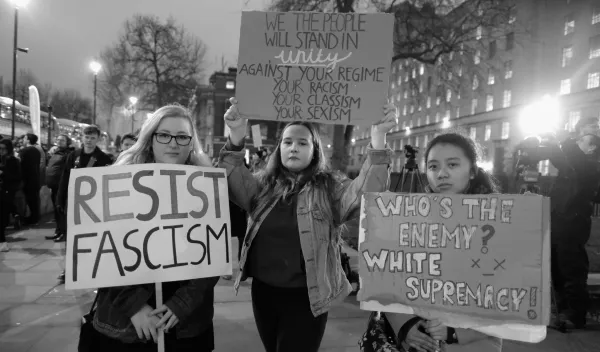
There are a lot of reasons for a progressive caring person not to be focused on the growing threat of fascism in the United States. After getting past all the pressing needs of one’s personal life (in a society of long hours, financial insecurity, poor healthcare, energetic kids drugged, a record number of adults imprisoned, the most finely tuned propaganda system ever devised, not to mention intimidation and fear), the main stumbling block is that everything is turned into a partisan question. If you’re focused on the growing violence and hatred and lawlessness of Republicans, then you’re cheerleading for the Democrats.
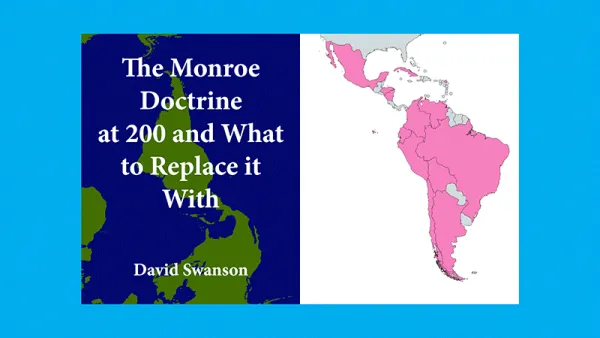
In this video recording of a webinar from January 14, 2023, David Swanson discussed his forthcoming book The Monroe Doctrine at 200 and What to Replace it With. See the 26:24 point in the video.
The Monroe Doctrine was and is a justification for actions, some good, some indifferent, but the overwhelming bulk reprehensible. The Monroe Doctrine remains in place, both explicitly and dressed up in novel language. Additional doctrines have been built on its foundations. This book looks at the creation, evolution, and use of the Monroe Doctrine over the years since 1823, and proposes a radically different approach for the U.S. government to take with Latin America and the world.
David is available to speak about this or other topics, as are other World BEYOND War speakers.
--
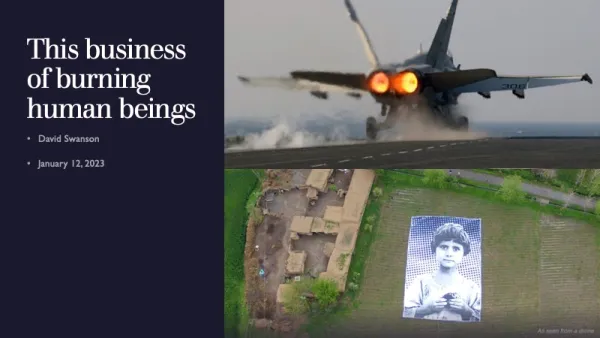
Remarks on RootsAction.org’s Defuse Nuclear War livestream on January 12, 2023. Video here.
Thank you for all for being here and for including me.
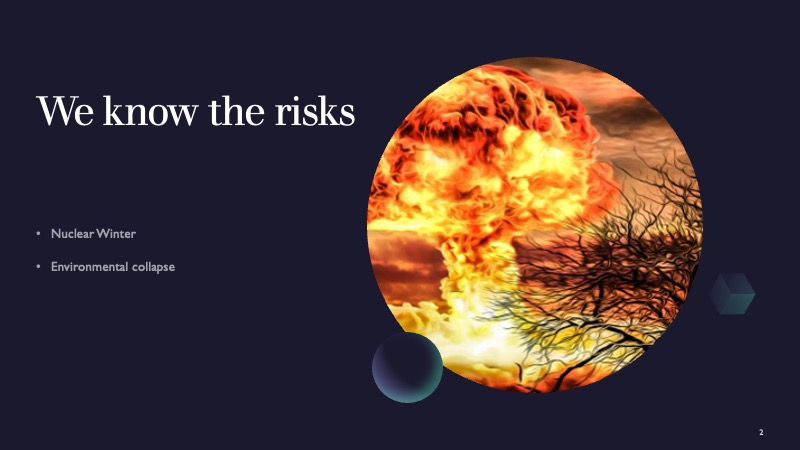
We know the risks. They’re no secret. The Doomsday clock has almost nowhere to go but oblivion.
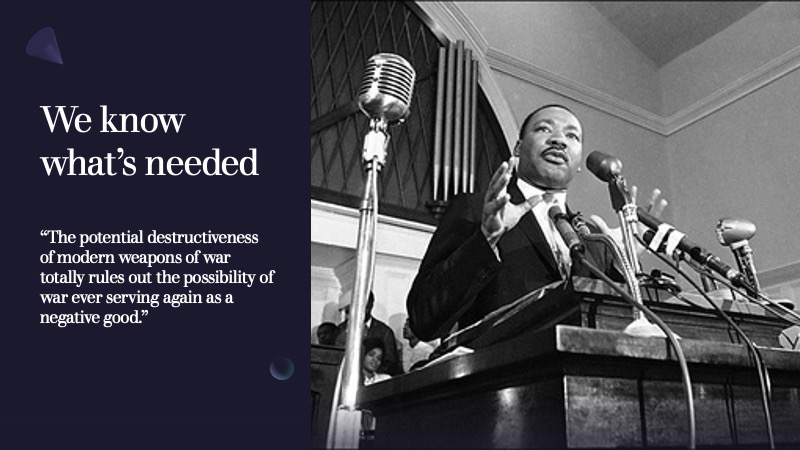
We know what’s needed. We’ve made a national holiday of a man who said he would oppose all nukes and all wars without any regard to whether it was popular, who said the choice was between nonviolence and nonexistence.
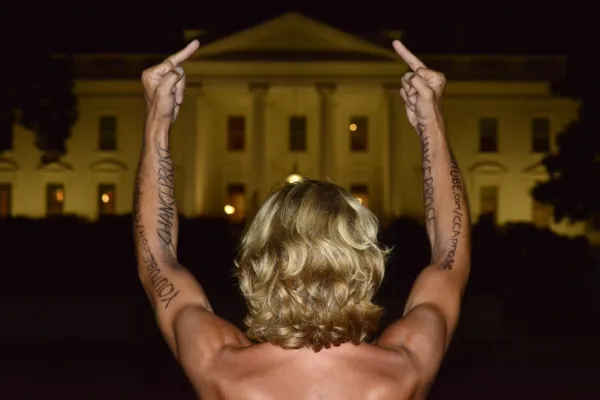
What is democracy but platitudes and dog whistles? The national direction is quietly predetermined — it’s not up for debate. The president’s role is to sell it to the public; you might say he’s the public-relations director in chief:
“. . . my Administration will seize this decisive decade to advance America’s vital interests, position the United States to outmaneuver our geopolitical competitors, tackle shared challenges, and set our world firmly on a path toward a brighter and more hopeful tomorrow. . . . We will not leave our future vulnerable to the whims of those who do not share our vision for a world that is free, open, prosperous, and secure.”
These are the words of President Biden, in his introduction to the National Security Strategy, which lays out America’s geopolitical plans for the coming decade. Sounds almost plausible, until you ponder the stuff that isn’t up for public discussion, such as, for instance:
Here’s a video of John Oliver denouncing FIFA for putting the World Cup in Qatar, a place that uses slavery and abuses women and abuses LGBT people. It’s a video about how everyone else glosses over nasty truths. Oliver drags in Russia as a past World Cup host that abuses protesters, and even Saudi Arabia as a possible host in the distant future that commits all sorts of atrocities. My concern is not just that the U.S., as one of the planned hosts four years hence, gets a pass on its general behavior. My concern is that the U.S. has far outdone FIFA this year, and every year, in Qatar. The U.S. has put six things into that horrific little oil dictatorship, each of which is worse than the World Cup.
Remarks from this webinar.
Sometimes just for fun I try to figure out what I’m supposed to believe. I’m definitely supposed to believe that I can choose what to believe based on what pleases me. But I’m also supposed to believe that I have a duty to believe the right things. I think I’m supposed to believe the following: The greatest danger in the world is the wrong political party in the nation I live in. The second greatest threat to the world is Vladimir Putin. The third greatest threat to the world is global warming, but it’s being dealt with by educators and recycling trucks and humanitarian entrepreneurs and dedicated scientists and voters. One thing that’s not a serious threat at all is nuclear war, because that danger was switched off some 30 years ago. Putin might be the second greatest threat on Earth but it’s not a nuclear threat, it’s a threat to censor your social media accounts and restrict LGBTQ rights and limit your shopping options.
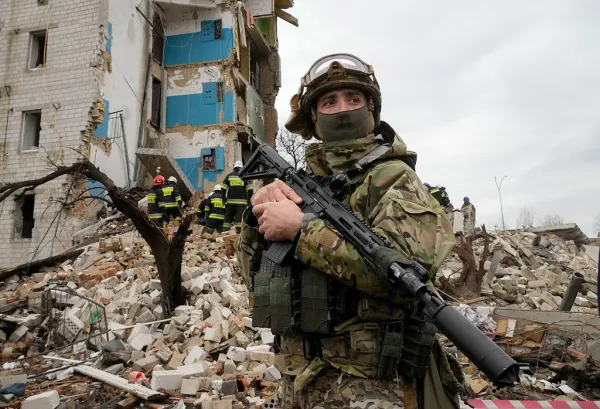
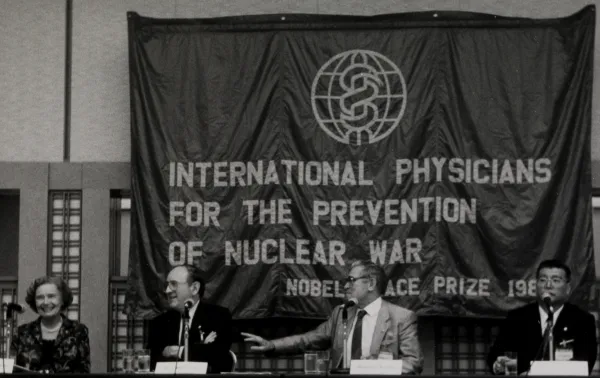
The game may be almost over.
Medea Benjamin and Nicolas J.S.Davies put it this way:
“The irresolvable dilemma facing Western leaders is that this is a no-win situation. How can they militarily defeat Russia, when it possesses 6,000 nuclear warheads and its military doctrine explicitly states that it will use them before it will accept an existential military defeat?”

Chris Hedges’ latest book, The Greatest Evil Is War, is a terrific title and even better text. It doesn’t actually argue a case for war being a greater evil than other evils, but it sure does present evidence that war is tremendously evil. And I think in this moment of nuclear weapons threats, we can consider the case pre-established.
Yet the fact that we’re at major risk of nuclear apocalypse may not interest or move some people the way that the case made in this book might.
Of course, Hedges is honest about the evil on both sides of the war in Ukraine, which is quite rare and may either do a great deal of good persuading readers or prevent a lot of readers getting very far into his book — which would be a shame.
Hedges is brilliant on the supreme hypocrisy of the U.S. government and media.
He’s also excellent on the experiences of U.S. war veterans, and the horrible suffering and regrets that many of them have.
This book is also powerful in its descriptions of the shameful, dirty, and disgusting gore and stench of war. This is the opposite of the romanticization of war so prevalent on tv and computer screens.