
Anti-War
I’ve just read through three of the most boring but potentially most important documents around. One is the War Powers Resolution of 1973 which you can print on 6 pages and is what’s referred to as existing law even though it’s violated as routinely as air is breathed. Another is a war powers reform bill that has been introduced in the Senate and seems very likely to go nowhere (it’s 47 pages), and the third is a war powers reform bill in the House (73 pages) that seems virtually certain to go nowhere.
We have to set aside a couple of major concerns, beyond the unlikelihood of Congressional “leadership” allowing such bills to pass, before taking these things seriously.

A recent article and a recent book have raised this familiar topic anew for me. The article is a super uninformed dud of a hatchet job on Michael Ratner by Samuel Moyn, who accuses Ratner of supporting war by trying to reform and humanize rather than end it. The critique is terribly weak because Ratner tried to prevent wars, end wars, AND reform wars. Ratner was at every antiwar event. Ratner was at every panel on the need to impeach Bush and Cheney for the wars as well as for the torture. I’d never even heard of Samuel Moyn until he wrote this now widely debunked article. I’m glad he wants to end war and hope he can be a better ally in that struggle.
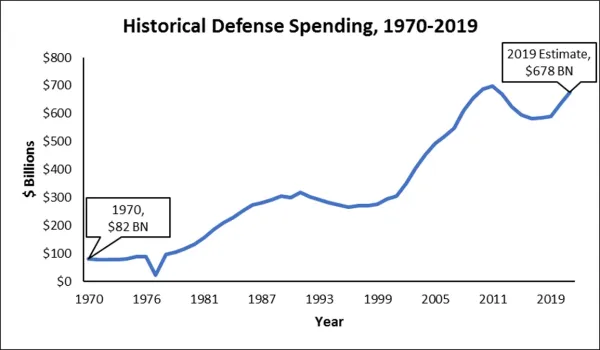
It’s bad enough that mainstream news outlets routinely call the Pentagon budget a “defense” budget. But the fact that progressives in Congress and even many antiwar activists also do the same is an indication of how deeply the mindsets of the nation’s warfare state are embedded in the political culture of the United States.
The misleading first name of the Defense Department doesn’t justify using “defense” as an adjective for its budget. On the contrary, the ubiquitous use of phrases like “defense budget” and “defense spending” -- virtually always written with a lower-case “d” -- reinforces the false notion that equates the USA’s humongous military operations with defense.
What is a gaffe but an inadvertent uttering of an awkward truth? For instance:
“This crusade, this war on terrorism, is going to take a while.”
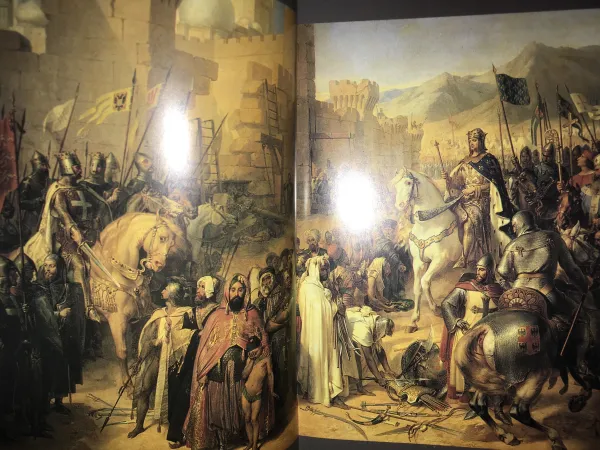
The “gaffe” part of George W. Bush’s post-9/11 announcement that the War on Terror had begun was, of course, his calling it a crusade. Doing so, as the Wall Street Journal put it at the time, was “indelicate,” because:
“In strict usage, the word describes the Christian military expeditions a millennium ago to capture the Holy Land from Muslims. But in much of the Islamic world, where history and religion suffuse daily life in ways unfathomable to most Americans, it is shorthand for something else: a cultural and economic Western invasion that, Muslims fear, could subjugate them and desecrate Islam.”

Yesterday something that has become tiresomely routine happened; I spoke to a college class about the most obvious climate solution, and neither the students nor the professor had ever heard of it. The 325 organizations (and climbing) listed at the bottom of this article are promoting it, and have joined 17,717 individuals (thus far) in signing a petition for it at http://cop26.info
Many of us have been screaming about it at the tops of our lungs for years and years, writing about it, making videos about it, organizing conferences on it. Yet it is ineluctably unknowable.
Here are the words of the petition:
To: Participants in COP26 UN Climate Change Conference, Glasgow, Scotland, November 1-12, 2021

A recent New York Times op-ed was perhaps the strangest, most awkward and tentative defense of the military-industrial complex — excuse me, the experiment in democracy called America — I’ve ever encountered, and begs to be addressed.
The writer, Andrew Exum, was an Army Ranger who had deployments in the early 2000s to both Iraq and Afghanistan, and a decade later served for several years as deputy assistant secretary of defense for Middle East policy.

Today, September 13, 2021, World BEYOND War announces as the recipient of the Lifetime Organizational War Abolisher of 2021 award: Peace Boat.
An online presentation and acceptance event, with remarks from representatives of Peace Boat will take place on October 6, 2021, at 5 a.m. Pacific Time, 8 a.m. Eastern Time, 2 p.m. Central European Time, and 9 p.m. Japan Standard Time. The event is open to the public and will include presentations of three awards, a musical performance, and three breakout rooms in which participants can meet and talk with the award recipients. Participation is free. Register here for Zoom link.
World BEYOND War is a global nonviolent movement, founded in 2014, to end war and establish a just and sustainable peace. (See: https://worldbeyondwar.org ) In 2021 World BEYOND War is announcing its first-ever annual War Abolisher awards.

When you imagine ending a war, do you imagine the U.S. President lamenting the human cost of the war’s financial expense while simultaneously demanding that Congress increase military spending — and while mentioning new wars that could potentially be launched?
Do you picture him blowing up families with missiles from robot airplanes, and committing to continuing those “strikes” while maintaining that such things don’t constitute continuing the war?
Did you hope that if the wars for freedom ever ended we might get our freedoms back, our rights to demonstrate restored, the Patriot Act repealed, the local police rid of their tanks and war weapons, the landscaped stripped of all the cameras and metal detectors and bullet-proof glass that have grown up for two decades?
Did you imagine the people in Guantanamo cages who were never on a “battlefield” would no longer be viewed as threats to “return” there once the war was “ended”?
Did you think that without a war there might be something resembling peace, including perhaps an embassy, the lifting of sanctions, or the unfreezing of assets?
“Ten members of one family — including seven children — are dead after a US drone strike targeting a vehicle in a residential neighborhood of Kabul . . .
“The youngest victims of Sunday’s airstrike were two 2-year-old girls, according to family members.
“Relatives found the remains of one of the girls, Malika, in the rubble near their home on Monday.”

In many ways, war is ever more and less visible. Of course in U.S. academia, the Pinkerist pretense that we are living through a period of great peace is accomplished by all sorts of statistical manipulation, but first and foremost by declaring civil wars to not be wars, and declaring U.S. wars to be civil wars — a tricky thing to do when the minute the U.S. leaves, Afghans, for example, decline to keep killing each other (damn them!).
But in the United States, war and militarism — or some weird shadow of them — are everywhere: endless thank yous, special parking places and airplane boarding, endless recruitment ads and weapons ads, countless movies and television shows. War is relentlessly normalized. And, oddly, the ubiquity of war celebration has made war so unquestionable that there are few objections when war is not mentioned — even on occasions when it should be.