
Anti-War
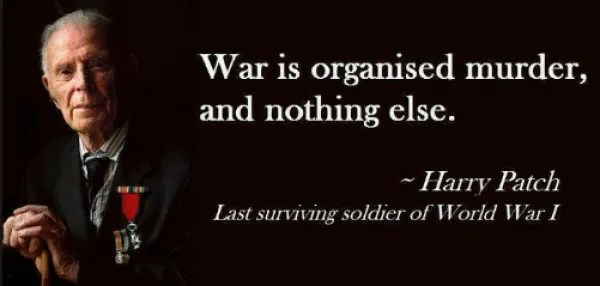
Bomb bomb bomb, bomb bomb Iran . . .
Thanks, John McCain! Let’s mix a little humor in with war. It’s so much easier to take when we do. By the way, have you noticed that we’re always on the verge of war?
Scientists not employed by ExxonMobil or named Neil DeGrasse Tyson have reached a universal consensus. Wanting the United States to attack Iran is the single stupidest idea yet recorded in a human brain. In the words of one, “It isn’t even close.”
In a peer-reviewed report on a controlled laboratory experiment, sample humans were presented with the following 12 items of information.
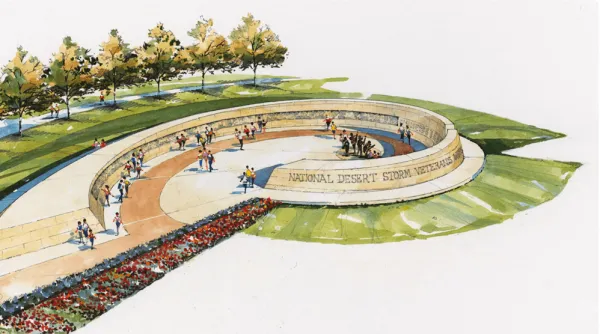
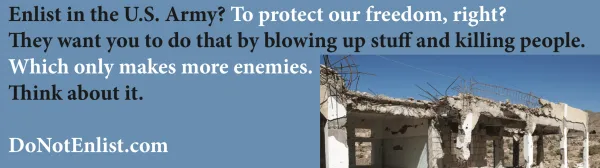
The U.S. Army tweeted a harmless rah-rah tweet and got hit with a burst of reality never encountered on corporate-controlled media. Score one for the internet.
The Army asked: “How has serving impacted you?”
Here’s a tiny sample of the responses:
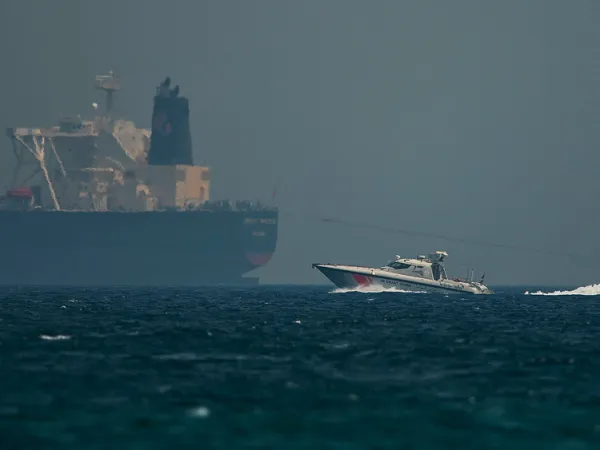
BREAKING OVERNIGHT
OIL TANKERS ATTACKED
SAUDI ARABIA CLAIMS SHIP HEADING TO US SABOTAGED
– ABC News on-screen headline, May 13, 2019
BREAKING OVERNIGHT
SAUDI OIL TANKERS ATTACKED
ENERGY MINISTER SAYS SHIPS WERE TARGETED IN “SABOTAGE ATTACK”
–CBS News on-screen headline, May 13, 2019
 hese network stories are examples of fake news at its most dangerous, when it plays into the dishonest manipulations of an administration beating the drums for a war against Iran that has no reasonable basis. Not only do the networks and mainstream media generally fail to question the administration’s rush to war, they also fail to do basic journalism by independently confirming whether a particular story is true or not.
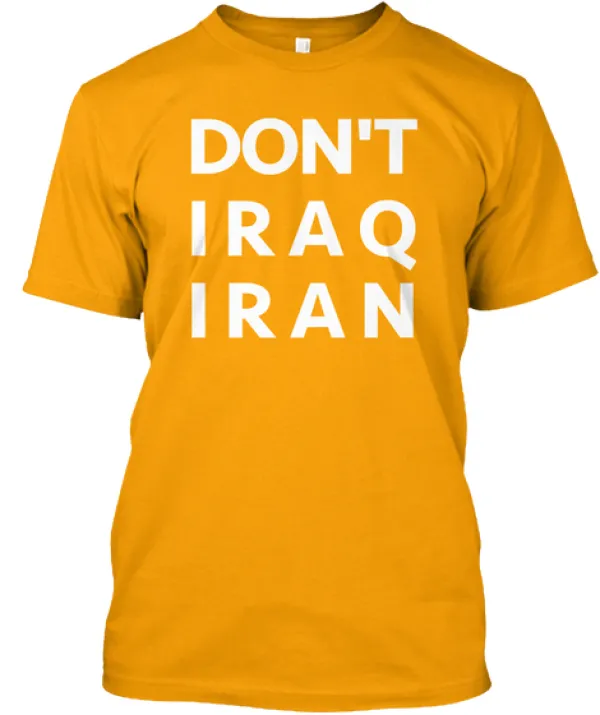
 If Iran had spent the last few decades lying about and threatening the United States, and had attacked and built military bases in Canada and Mexico, and had imposed sanctions on the United States that were creating great suffering, and then a lying scheming war-crazed Iranian official announced that he believed the United States had put some missiles on some fishing boats in the Chesapeake Bay, would you believe that . . .
a) The United States was a dangerous rogue state threatening Iran with imminent destruction?
b) Whether or not to bomb U.S. cities really depended on exactly what kind of missiles were on those fishing boats?
c) The sanctions were clearly not severe enough?
or
d) All of the above?

They say the last sip of a drink is mostly backwash. The last understanding of a war should be that every speck of it is backwash in the sense used by Ellen N. La Motte in her 1916 book The Backwash of War. La Motte was a U.S. nurse who worked at a French hospital in Belgium not far from a semi-permanent front line at which men slaughtered each other for no discernable purpose for months on end, and the mangled bodies from one side, plus the occasional civilian, were brought into the hospital to die or to be kept alive and — if possible — patched up and sent back into it, or, in some cases, patched back together well enough to be shot for desertion.
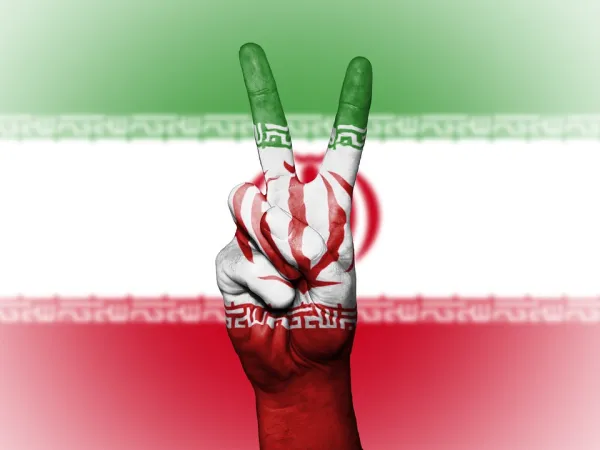
The United States is moving dangerously forward in what appears to be a deliberate attempt to provoke a war with Iran, apparently based on threat intelligence provided by Israel. The claims made by National Security Advisor John Bolton and by Secretary of State Mike Pompeo that there is solid evidence of Iran’s intention to attack US forces in the Persian Gulf region is almost certainly a fabrication, possibly deliberately contrived by Bolton and company in collaboration with Prime Minister Benjamin Netanyahu. It will be used to justify sending bombers and additional naval air resources to confront any possible moves by Tehran to maintain its oil exports, which were blocked by Washington last week. If the US Navy tries to board ships carrying Iranian oil it will undoubtedly, and justifiably, provoke a violent response from Iran, which is precisely what Bolton, Pompeo and Netanyahu are seeking.
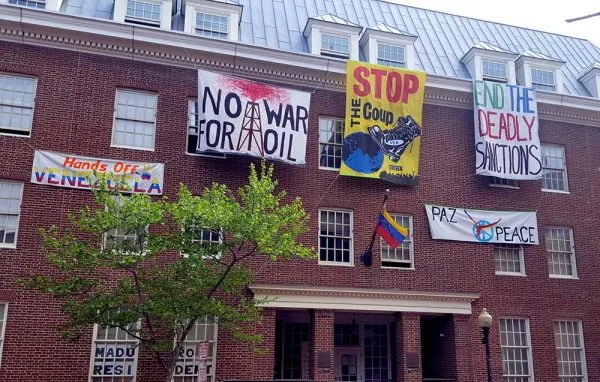
Mix a little socialism in with the oil and war may be unavoidable.
Thus, Secretary of State Mike Pompeo, talking about Venezuela: “The president has been crystal clear and incredibly consistent. Military action is possible. If that’s what’s required, that’s what the United States will do.”
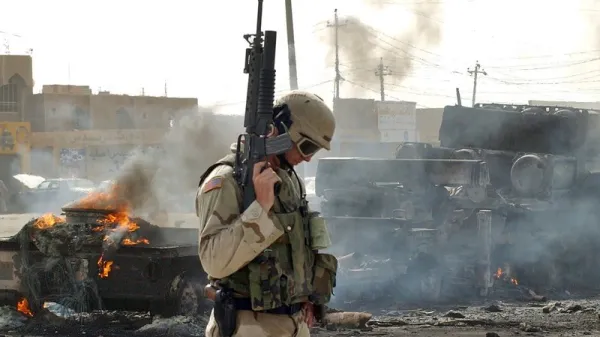
I don’t know if most people in the United States ever knew what Fallujah meant. It’s hard to believe the U.S. military would still exist if they did. But certainly it has been largely forgotten — a problem that could be remedied if everyone picks up a copy of The Sacking of Fallujah: A People’s History, by Ross Caputi (a U.S. veteran of one of the sieges of Fallujah), Richard Hill, and Donna Mulhearn.