Anti-War
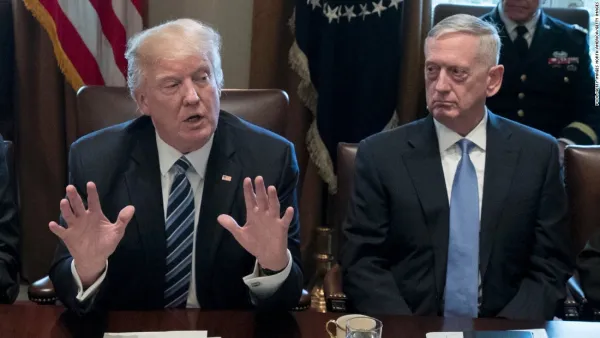
There is a vast industry in the United States that wants a hot war with Syria and Iran as well as increased confrontation with Russia and China. It is appropriate to refer to it as an industry because it has many components and is largely driven by money, much of which itself comes from Wall Street and major corporations that profit from war related business. Some prefer to refer to this monster as the Military Industrial Complex, but since that phrase was coined by President Dwight D. Eisenhower in 1961, it has grown enormously, developing a political dimension that includes a majority of congressmen who are addicted to receiving a tithe from the profits from the war economy to finance their own campaigns, permitting them to stay in office indefinitely and retire comfortably to a lobbying position or corporate directorship.
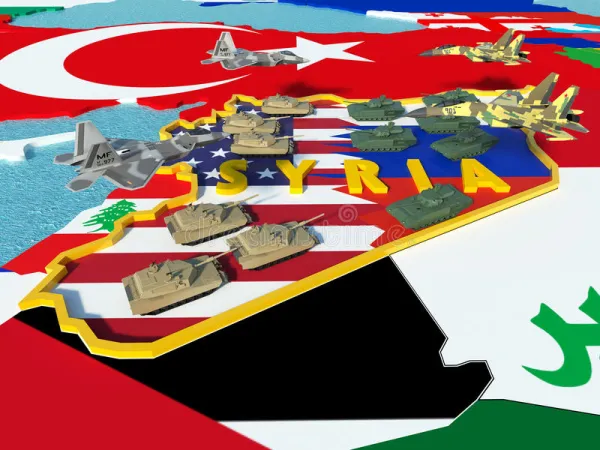
Politicians, pundits and activists who’ve routinely denounced President Trump as a tool of Vladimir Putin can now mull over a major indicator of their cumulative impacts. The U.S.-led missile attack on Syria before dawn Saturday is the latest benchmark for gauging the effects of continually baiting Trump as a puppet of Russia’s president.

Movements that are serious about human survival, economic justice, environmental protection, the creation of a good society, or all of the above, address the problem of militarism. Movements that claim to be comprehensive yet run screaming from any mention of the problem of war are not serious.
Toward the not-serious end of the spectrum sit most activist efforts devoted to political parties in a corrupt political system. The Women’s March, the Climate March (which we had to work very hard to squeeze the slightest mention of peace out of), and the March for Our Lives are not especially serious. While the March for Our Lives is a single-issue “march,” its issue is gun violence, and its leaders promote military and police violence while shunning any recognition of the fact that the U.S. Army trained their classmate to kill.
It’s certainly encouraging that some “Indivisible” groups have been opposing Trump’s latest disastrous nominations in part on anti-militarist grounds. But one should hesitate to look to partisan groups for a revaluation of moral values.
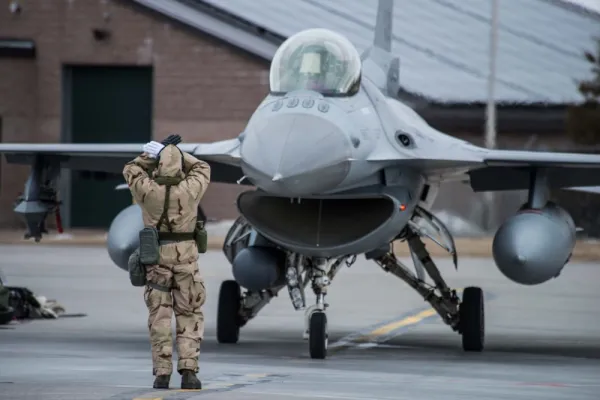
The politics of American imperialism are alive and well in Vermont, where elected officials are defending the military-industrial war-making machine against voters who reject ruling class priorities. At the symbolic center of this democratic confrontation is the notorious F-35 Joint Strike Fighter, the world’s most expensive weapons system, designed to kill in many ways, including a nuclear first strike. And the few times Vermonters have had the chance to vote, they’ve voted against basing this loud, health-harming, housing-destroying offensive war machine in the state’s most densely populated area. Now it’s coming to a head in a people versus career politicians face-off.
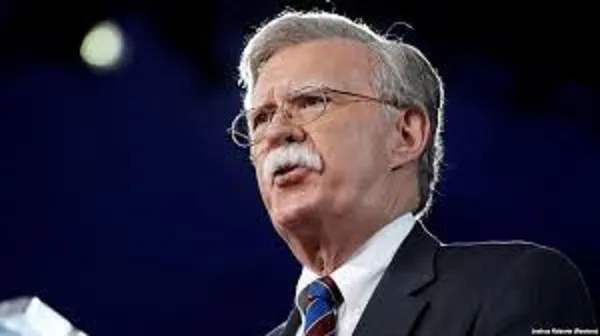
With the appointment of leading neoconservative John Bolton as National Security Advisor, the Zionist war-party takeover of the White House is nearly complete. With Mike Pompeo as Secretary of State, Nikki Haley at the U.N. and now Bolton whispering in the President’s ear, we have a fully endowed war cabinet that will make sure the Mullahs, Russkies and Rocket Man begin to pay attention. As Haley laid down the law in the United Nations last week, “Our patience is not unlimited.”

Tuesday’s debate and vote in the U.S. Senate on whether to end (technically whether or not to vote on whether to end) U.S. participation in the war on Yemen can certainly be presented as a step forward. While 55 U.S.
The United States of America spends something like $80 billion annually on intelligence gathering and analysis. When the CIA was founded by the National Security Act in 1947 the intention was to create a mechanism that would warn about an imminent threat. The memory of Pearl Harbor in 1941, when Japan attacked the U.S. naval base was still fresh, and the legislation was popularized by the slogan “no more Pearl Harbors.”
In spite of the dedication of considerable resources and manpower, there have been some major intelligence failures in the past seventy years, starting with the inability to anticipate the breakout of the Korean War and including the embrace of false intelligence on Saddam Hussein’s alleged weapons of mass destruction. But the most recent failure is perhaps more consequential than either Korea or Iraq.

It should come as no surprise to anyone that the Donald Trump administration has recently affirmed that it has a perfect legal right to remain in Syria as long as it wishes because it is fighting terrorism. The argument goes something like this: Congress has approved a bill that permits the US military to seek out and destroy al-Qaeda and associated groups wherever they may be. It is part of what is referred to as the Authorization to Use Military Force or AUMF. According to the White House, an associated group, the Islamic State in Syria (ISIS), remains currently active in Syria and the United States military presence is therefore legal until the group is completely eliminated, requiring no additional legislation or authority to remain in the country.

The deluge of recent reporting regarding possible conflict with nuclear armed North Korea has somewhat obscured consideration of the much higher probability that Israel or even Saudi Arabia will take steps that will lead to a war with Iran that will inevitably draw the United States in. Israel is particularly inclined to move aggressively, with potentially serious consequences for the U.S., in the wake of the recent incident involving an alleged Iranian drone and the shooting down of an Israeli aircraft. Prime Minister Benjamin Netanyahu has been repeatedly warning about the alleged threat along his northern border and has pledged that Israel will not be in any way restrained if there are any hostile moves directed against it.