
Anti-War
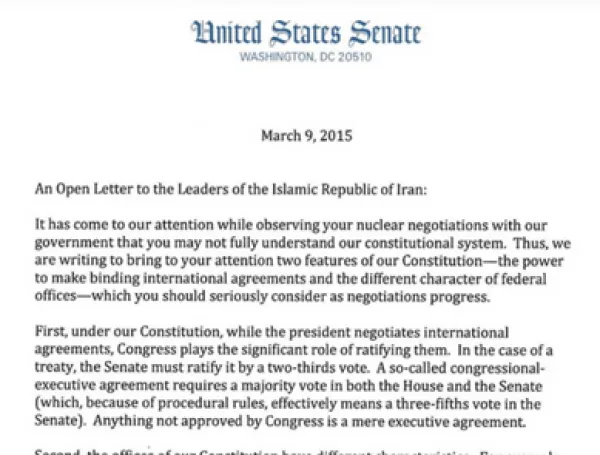
Last time, they committed treason to prolong a war.
This time, they’re apparently trying to start one....
The backstabbing letter sent by 47 Republican members of Congress warning Iran off a possible nuclear weapons treaty is a haunting re-run of what Richard Nixon did to Vietnam peace talks in 1968.
Back then, Nixon was in a close race for the presidency with Hubert Humphrey. Humphrey was Lyndon Johnson’s Vice President, both of them neck-deep in the catastrophic assault on Vietnam.
By fall 1968 the war had just about undone the Democrats. Draft card burnings, huge demonstrations at the Pentagon and around the US, and a deep malaise of anger and betrayal gripped the country. On March 31, Johnson announced he wouldn’t seek re-election. Four days later, Martin Luther King was murdered. Robert F. Kennedy was killed in June. In August the Democratic Convention in Chicago was torn to pieces.

If U.S. television and politicians started saying that Saudi Arabia should be bombed because it kills and tortures innocent people, within a week many millions of Americans would demand just that. And because those voices do say that about ISIS, many millions of Americans do favor a war on ISIS.
My point is not that bombs would be worse than the problem addressed and would make the problem itself worse as well, although that's all true. Rather, my point is that most people who favor wars do so in order to blindly support a nation, and in blindly supporting that nation they allow it to dictate which wars they will favor. Although war supporters will give you reasons for the wars they favor, they actually favor whichever wars they are told to favor, and no others. And they'll give you the reasons they are told to believe in as well.
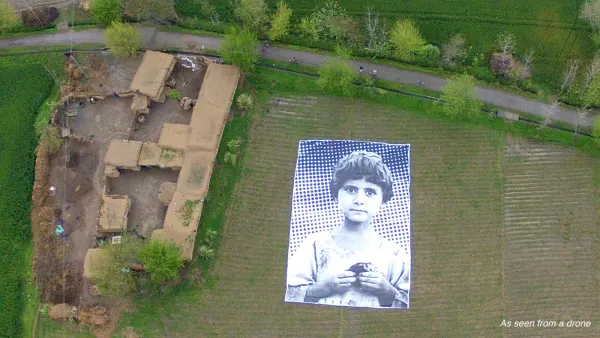
U.S. drone "pilots" refer to people they burn to death in places like Pakistan as "bug splat" because they look like bugs being squished to death on the pilots' video monitors and because it's easier to murder bugs than humans.
Hence the need for the brilliant artwork made visible to a drone (http://notabugsplat.com):
The human brain is a funny thing. Numerous human brains know that every human is a human, yet insist that various types of humans must be "humanized" before they can be recognized as humans. That is, even though you know someone must have a name and loved ones and favorite games and certain weaknesses and a couple of quirks that friends find endearing -- because each and every Homo sapiens does have such things -- you insist on being told what the details are, and only then readily admit that in fact this particular human is a human (and millions of others remain in doubt).
A drone killer must know that children have eyes and noses and mouths, hair and fingers. But this artwork presents it to the troubled brain of the humanization dependent observer.

As media ownership converges and technology “unites” us, the concept of national identity grows ever easier to exploit — and therefore, I fear, increasingly, and dangerously, simplistic.
This is the war on terror. This is the war on crime. They march on, despite the magnitude of their failures. They march on . . . because America is tough. America is exceptional.
If our news and mass-entertainment outlets valued complexity and expansion of the national IQ, we wouldn’t go to war. We’d be building our lives on the far side of fear and the far side of cynicism, which is the only place where peace is possible.

Cities and states across the United States have been taking various actions against drones, while the federal government rolls ahead with project fill the skies.
Robert L. Meola has been working for years now to get Berkeley to catch up with other localities and claim its usual spot at the forefront of movements to pass good resolutions on major issues. Now Berkeley has acted and Meola says "This is NOT what I/we asked for."
Here's what they asked for:
Establishing a Two Year Moratorium on Drones in Berkeley
From: Peace and Justice Commission
Recommendation: Adopt a Resolution adopting a two year moratorium on drones in Berkeley.
Financial Implications: Unknown
And what they got:
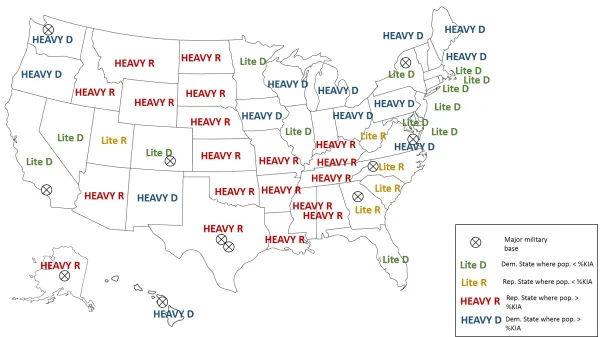
Evan Knappenberger, veteran turned peace activist, put together the following data and map.
Needless to say, most of the dead in recent U.S. wars are on the non-U.S. side -- about 97% in fact. These are one-sided slaughters. But that doesn't mean there aren't deaths on the side of the aggressor. And beyond the deaths, far more injuries, and far more suffering PTSD and moral injury.
Needless to say, as well, both Republican and Democratic party leaders in Washington have supported these wars and continue to do so.
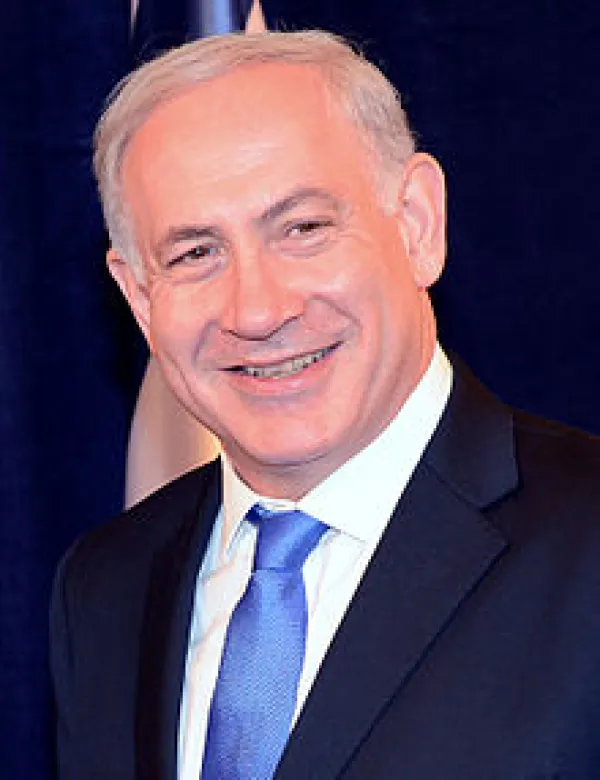
In proposing that Congress Members boycott or walk out on Prime Minister Benjamin Netanyahu's planned speech to Congress, expected to push for sanctions if not war on Iran, activists are drawing on actions engaged in by college students in recent years, as they have boycotted or walked out on or disrupted speeches by Israeli soldiers and officials on U.S. campuses. Netanyahu's noodle-headed move -- oblivious, apparently, to the U.S. government's effective evolution into a term-limited monarchy -- may provide a boost to both the movement to free Palestine and the movement to prevent a war on Iran.
Peace activists sometimes marvel at how young people have taken up environmentalist activism (with very little emphasis on the environmental destruction caused by militarism). Why, antiwar activists ask, don't young people get active opposing wars?
Ah, but they do. They are increasingly active, organized, strategic, bold, courageous, and determined about opposing a particular war: the ongoing war that the government of Israel wages -- with U.S. funding and support -- on the people of Palestine.

Whenever the word ‘refugee’ is uttered, I think of my mother. When Zionist militias began their systematic onslaught and ‘cleansing’ of the Palestinian Arab population of historic Palestine in 1948, she, along with her family, ran away from the once peaceful village of Beit Daras.
Back then, Zarefah was six. Her father died in a refugee camp in a tent provided by the Quakers soon after he had been separated from his land. She collected scrap metal to survive.
My grandmother Mariam, would venture out to the ‘death zone’ that bordered the separated and newly established state of Israel from Gaza’s refugee camps to collect figs and oranges. She faced death every day. Her children were all refugees, living in shatat – the Diaspora.
My mother lived to be 42. Her life was tremendously difficult. She married a refugee, my dad, and together they brought seven refugees into this world - my brothers, my sister and myself. One died as a toddler, for there was no medicine in the refugee camp’s clinic.
On November 7, 2014, while visiting Kabul, The Secretary General of NATO, Jens Stoltenberg, noted that NATO will soon launch a new chapter, a new non-combat mission in Afghanistan. But it’s difficult to spot new methods as NATO commits itself to sustaining combat on the part of Afghan forces.
Stoltenberg commended NATO Allies and partner nations from across the world, in an October 29th speech, in Brussels, declaring that for over a decade, they “stood shoulder to shoulder with Afghanistan.” According to Stoltenberg, “this international effort has contributed to a better future for Afghan men, women and children.” Rhetoric from NATO and the Pentagon regularly claims that Afghans have benefited from the past 13 years of U.S./NATO warfare, but reports from other agencies complicatethese claims.
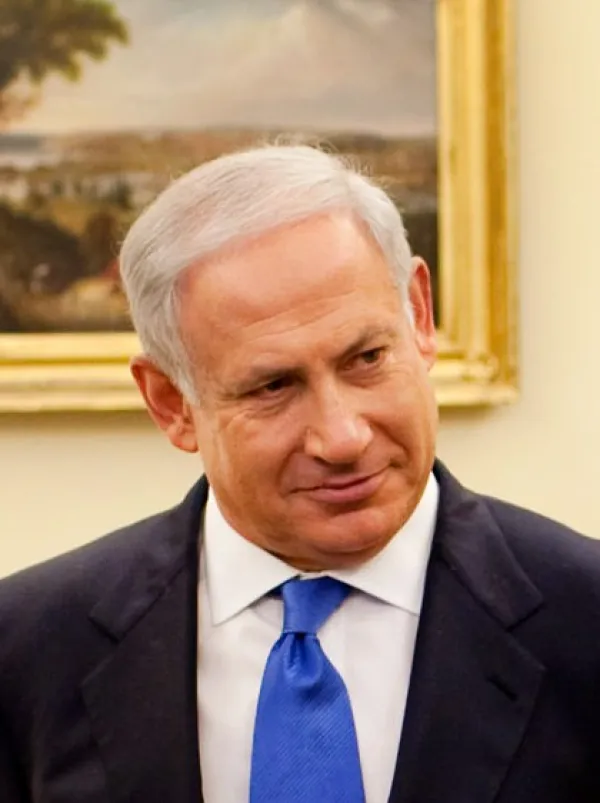
Netanyahu’s war-turned-genocide in Gaza has backfired badly - his strategy has helped resurrect Hamas, the very movement he tried desperately to crush
Aside from being a major military setback, Israel’s war on Gaza has also disoriented the policies of Prime Minister Benjamin Netanyahu like never before. Since the announcement of a ceasefire on 26 August, his statements appear erratic and particularly uncertain, an expected outcome of the Gaza war.
Since his first term as a prime minister (1996-99), Netanyahu has showed particular savviness at fashioning political and military events to neatly suit his declared policies. He fabricated imminent threats that were neither imminent nor threats, for example, Iraq’s non-existent weapons of mass destruction. Later, he took on Iran.
He created too many conditions and laid numerous obstacles for peace settlements to ever be realised. The late Palestinian leader, Yasser Arafat, laboured for years to meet Israel’s conditions, and failed. Abbas has taken the same futile road. But Netanyahu’s conditions are specifically designed to be unattainable.