
Duty to Warn
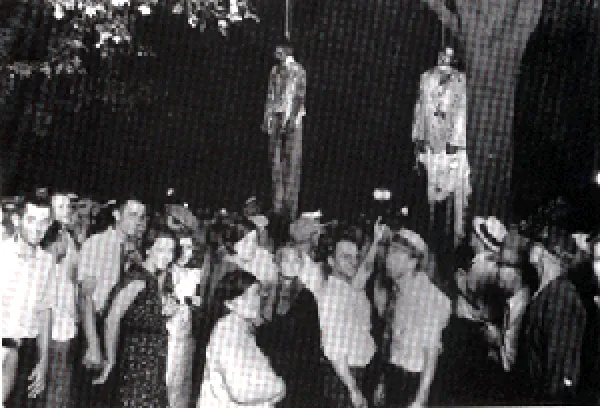
“You can hang him from a tree, but he can never sign with me . . .”
Yeah, something had to happen. The cellphone video went public and the frat boys on the bus, who were just having a little politically incorrect fun, y’know, singing about Jim Crow exclusionary practices and, well, lynching, suddenly found themselves thrust into a national context, embarrassing the hell out of their fraternity and their school.
Something had to happen, but I don’t think it was “zero tolerance” — that is to say, the immediate shutting of the door on a shocking, humiliating revelation that some students have bad attitudes and haven’t learned the national lesson: overt, casual racism against African-Americans is wrong.
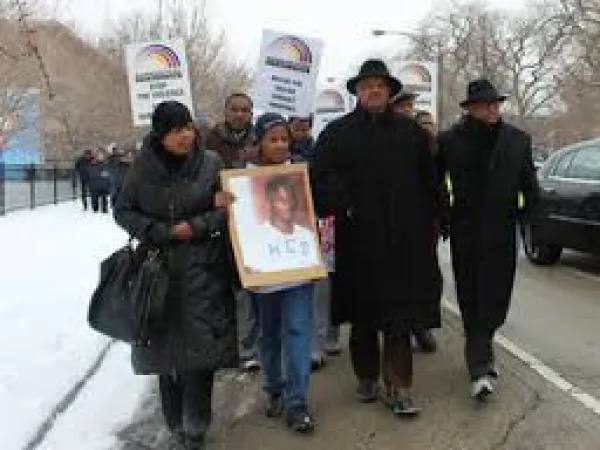
Experts have put urban violence under the microscope. You might call it the sociology of dead kids.
There’s a lot less here than meets the eye, or so it seemed when I read about a new study by researchers at Yale called “Tragic, but not random: The social contagion of nonfatal gunshot injuries.” It’s an attempt to create categories of likely future shooting victims in Chicago and, thus, determine who among us is most in danger. Well, sure, why not? But in the process, the study, at least as it was reported a few days ago in the Chicago Sun-Times, utterly depersonalized the potential victims, along with the communities in which they lived, reducing them to components in a mathematical formula.
The researchers “sought to go beyond a racial explanation for nonfatal shootings,” according to the Sun-Times. “They were trying to explain why a specific young African-American male in a high-crime neighborhood becomes a shooting victim, while another young black man in the same neighborhood doesn’t, the study said.”
By
Continuing to deliberate as this week gets underway, the jurors in the CIA leak trial might ponder a notable claim from the government: “This case is not about politics.”
The prosecution made that claim a few days ago in closing arguments — begun with a somber quotation from Condoleezza Rice about the crucial need to stop the spread of nuclear weapons. Of course prosecutor Eric Olshan was not foolish enough to quote Rice’s most famous line: “We don’t want the smoking gun to become a mushroom cloud.”
During the seven days of the trial, which received scant media coverage, Rice attracted the most attention. But little of her testimony actually got out of the courtroom, and little of what did get out illuminated the political context of the government’s case against former CIA officer Jeffrey Sterling.
A heavy shroud over this trial — almost hidden by news media in plain sight — has been context: the CIA’s collusion with the Bush White House a dozen years ago, using WMD fear and fabrication to stampede the United States into making war on Iraq.
“Sometimes they have drug and alcohol problems and when they feel that the VA is ignoring them, not answering the phone, failing to return calls for assistance or there are long wait times, they get more and more disgruntled. The VA is ripe for a mass killing but no one is listening to us.”
The speaker is John Glidewell, former chief of police at the Cheyenne, Wyo., VA medical center, who was quoted in a Washington Post story a few days ago. As I read his words, I realized they sounded a far deeper note of desperation than the story was addressing, even though, my God, the events being reported on were the fodder of scandal.
The story was a follow-up about a murder that took place at another VA clinic, in El Paso, Texas, on Jan. 6. Jerry Serrato, an Iraq vet whose claim of PTSD, and the subsequent treatment and benefits, was denied, fatally shot the clinic’s chief psychologist, Timothy Fjordbak, then killed himself.

The trial of former CIA officer Jeffrey Sterling, set to begin in mid-January, is shaping up as a major battle in the U.S. government’s siege against whistleblowing. With its use of the Espionage Act to intimidate and prosecute people for leaks in “national security” realms, the Obama administration is determined to keep hiding important facts that the public has a vital right to know.
After fleeting coverage of Sterling’s indictment four years ago, news media have done little to illuminate his case -- while occasionally reporting on the refusal of New York Times reporter James Risen to testify about whether Sterling was a source for his 2006 book “State of War.”
Risen’s unwavering stand for the confidentiality of sources is admirable. At the same time, Sterling -- who faces 10 felony counts that include seven under the Espionage Act -- is no less deserving of support.

A former Governor of Virginia is expected to be sentenced to a long stay in prison. The same fate has befallen governors in states across the United States, including in nearby Maryland, Tennessee, and West Virginia. A former governor of Illinois is in prison. Governors have been convicted of corruption in Rhode Island, Louisiana, Oklahoma, North Dakota, Connecticut, and (in a trumped-up partisan scam) in Alabama. The statewide trauma suffered by the people of states that have locked up their governors has been . . . well, nonexistent and unimaginable.
Did the CIA try to thwart the nation's last investigation of President Kennedy's assassination? "The CIA not only lied, it actively subverted the investigation," says G. Robert Blakey, the former general counsel of the House Select Committee on Assassinations (HSCA), which issued its report in 1979.
::::::::
Excerpted from Justice Integrity Project version
Did the CIA try to thwart the nation's last investigation of President Kennedy's assassination?
"The CIA not only lied, it actively subverted the investigation," says G. Robert Blakey, the former general counsel of the House Select Committee on Assassinations (HSCA), which issued its report in 1979.
"It is time that either Congress or the Justice Department conducts a real investigation of the CIA," Blakey said at a conference last month. "Indeed, in my opinion, it is long past time."
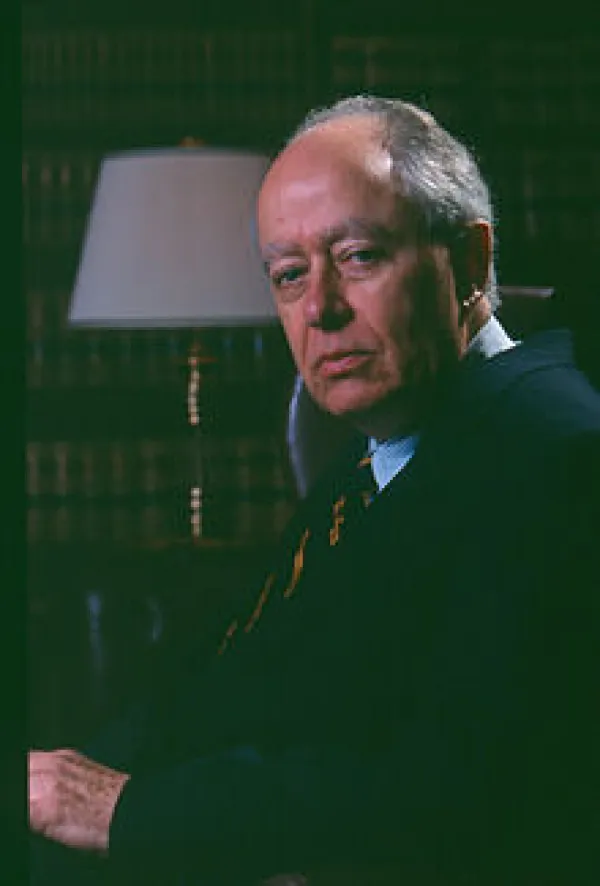
Blakey, shown above, urged the National Archives and Records Administration (NARA) to comply promptly with a federal law unanimously passed by congress in 1992 requiring release of JFK records.
According to a new Quinnipiac University poll released Thursday, Hillary Clinton leads New Jersey Governor Chris Christie 48% to 35% among Iowa voters. These numbers are striking because Christie was leading Clinton by 5 points in a Quinnipiac poll in December. The Governor’s Bridgegate fiasco having largely contributed to the downslide, it is still fair to say the gulf is impressive and will undoubtedly provide wind for the sails of Clinton supporters. As the clear and steadfast front-runner for the Democratic nomination at the moment, numbers like these confirm what one already suspects about Secretary Clinton’s decision to run.
A truthful answer to that question could not possibly be “whistleblower.” It may already be a historic fact that Senator Feinstein’s speech on March 11, 2014 blew a whistle on CIA surveillance of the Senate intelligence committee, which she chairs. But if that makes her a whistleblower, then Colonel Sanders is a vegetarian evangelist.
In her blockbuster Tuesday speech on the Senate floor, Feinstein charged that the CIA’s intrusions on her committee’s computers quite possibly “violated the Fourth Amendment.” You know, that’s the precious amendment that Feinstein -- more than any other senator -- has powerfully treated like dirt, worthy only of sweeping under the congressional rug.
A tidy defender of the NSA’s Orwellian programs, Feinstein went on the attack against Edward Snowden from the outset of his revelations last June. Within days, she denounced his brave whistleblowing as “an act of treason” -- a position she has maintained.
I grew up just outside Detroit and have felt an ache in my heart for this bleeding city for so many years now. It’s long been one of the country’s designated loser cities, beginning in the 1960s, when change hit it hard. The phrase at the time was “urban blight,” a social cancer with unexamined causes that, in the ensuing years, has gotten progressively worse.
A year ago this week, the city, which is predominantly African-American, lost its self-governance when the Republican governor of Michigan appointed an emergency financial manager, an overboss with powers superseding that of all elected officials — including the ability to rewrite laws, break contracts, privatize services and much more — on the premise that only an autocrat could straighten out the city’s disastrous finances. Four months later, Detroit made headlines as the largest city to file for Chapter 9 bankruptcy, but of course it wasn’t “the city” that did so; it was the emergency manager.
The city, in all its soul and complexity, had been reduced to a single voice: the voice of austerity and, of course, corporate interests.