
Free Press History
Richard Conglianese, Ohio Assistant Attorney General, is seeking a court order to protect Blackwell from testifying under oath about how the election was run. Blackwell, who administered Ohio's November 2 balloting, served as co-chair of the Bush-Cheney campaign.
James R. Dicks, Miami County Assistant Prosecuting Attorney, filed a motion to block a deposition in his county while Conglianese filed to block depositions in ten key Ohio counties.
Another major national demonstration will follow in Washington on January 6, as Congress evaluates the Electoral College. Should at least one US Representative and one Senator challenge the electors' votes, a Constitutional crisis could ensue.
Meanwhile, volunteer attorneys have poured into Columbus from around the US to help investigate the bitterly contested presidential vote that has allegedly given George W. Bush Ohio's electoral votes and thus a second term. A lawsuit filed at the Ohio Supreme Court charges that a fair vote count would give the state and the presidency to John Kerry rather than Bush.
On December 21, notice of depositions were sent to President George Bush, Vice President Dick Cheney, Karl Rove and Ohio Secretary of State J. Kenneth Blackwell to appear and give testimony regarding the legal challenge of Ohio's elections results in the case Moss v Bush et al.
Monday, December 13, saw a triple play that will live in electoral infamy. But every new day brings still more stunning revelations -- this time from Toledo -- of vote theft and fraud and a towering wall of resistance and sabotage against a fair recount of the votes that allegedly gave George W. Bush four more years in the White House.
Three major events made December 13 a monument to electoral theft: a lawsuit filed in the morning at the Ohio State Supreme Court demanding a recount of all Ohio ballots; a Congressional hearing held in Columbus City Council chambers filled with angry, high-profile testimony of vote fraud and disenfranchisement and the illegal sabotaging of a recount; and then, at noon, a block away at the statehouse, the vote of Ohio's twenty illegitimate electors designating their choice of George W. Bush to be president.
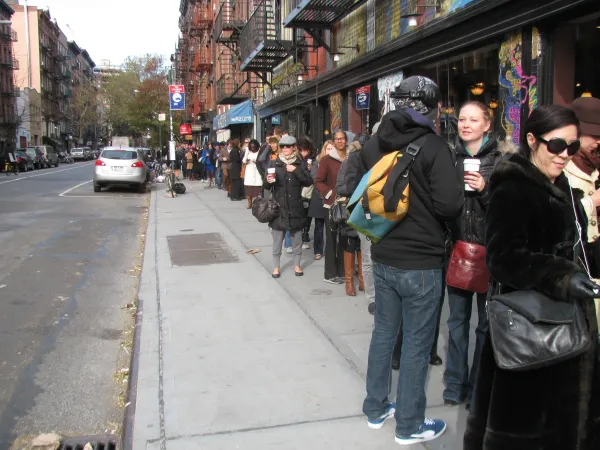
Opponents of a recount and revote in Ohio say the first won't change the election's outcome and the second is unwarranted. But history demands them both.
Lets deal with the recount first. Various Republican minions complain that a full recount of the Ohio vote will cost upwards of $1.5 million and won't shift the state from George W. Bush to John Kerry.
But that money represents less than 0.1% of the $200 billion minimum figure the Bush Administration will spend to "bring democracy to Iraq." The litany of fraud and manipulation that has surrounded the 2004 Ohio election is staggering ... and growing. Its footprints are posted in part at http://freepress.org and numerous other web sites.
The Ohio election, which will determine this most heavily contested of all US presidential campaigns, has no credibility with tens of millions of Americans and hundreds of millions the world over.
Jackson plans to return to Columbus on Thursday as his organization Rainbow/PUSH files a legal challenge to overturn Ohio's election results. On Saturday, December 4, Jackson will join voter rights advocates for a symposium at Columbus' Africentric School on the near east side. Earlier in the day, demonstrators will gather at the Ohio Statehouse to protest voter suppression and irregularities that occurred on November 2.
Meanwhile, the Democratic Party has finally joined a legal challenge to the 2004 Ohio vote.
Let’s see. In the 1920s, Indiana had more Klan members than any state in the U.S. West Virginia broke off from the slave state Virginia and is one of the poorest states in the nation. But, how do you explain the Buckeyes siding with the traditional forces of reaction in the country?
The Columbus Dispatch, central Ohio's dominant conservative daily newspaper, which endorsed Bush for the presidency, says Damschroder “has faced criticism locally and across the country from groups that contend an already short supply of voting machines were shifted from Democratic precincts in Columbus to Republican areas outside the city.”
As indicated in the sworn testimony below, offered here for the first time, the election was engineered to make voting as difficult as possible for inner city residents, and to drive away those who could not afford to stay away from work or families, or whose health made it imprudent or impossible to endure the long, cold, wet lines.
Amidst one of the hottest presidential elections in US history, voters in Columbus, capitol of Franklin County and of Ohio, faced 35 separate ballot choices. Eleven were extensively worded Issue questions. For Columbus voters, it was one of the longest ballots in history. Yet in many inner city precincts, the Republican-run Board of Elections demanded voters cast their ballots within five minutes after waiting in many cases more than three hours.
In order to understand the extent of the voter suppression in the inner city of Columbus and Franklin County, overwhelmingly Democratic wards, start with the phrase: “Machines Placed By Close Of Polls” on the last page of the county’s 17-page voting machine allocation report.
This phrase at the end of the spreadsheet may be the key in unraveling a deliberate and unprecedented plan to repress African American and poor central city voters. In statistics, when you see a bizarre definition or measurement, it sends up red flags. Why doesn’t the Franklin County Board of Elections have a number for “Machines Placed By Opening Of Polls”?
It now appears that the Franklin County BOE placed scores of machines too late in the day to alleviate the long lines of voters who gathered to vote before work and at lunchtime.