
THE G-20 IN PITTSBURGH
by Tom Over 9-23-09
<br><br>
On Tuesday, Sept 22, activists from Philadelphia, New York City, Pittsburgh and other cities held a mock funeral procession to demand better policies for addressing the AIDS pandemic, a day ahead of the arrival of delegates for the G-20.
<br><br>
The approximately 50 participants in the New Orleans-style funeral march drew a mix of interest, irritation, and amusement from onlookers in the business district of downtown Pittsburgh.
<br><br>
At the head of the funeral march where pallbearers carried a cardboard coffin, a man shouted into a microphone while someone else carried a portable amplifier, “when people with AIDS are under attack, what do we do ?” and marchers shouted in unison, “fight back!”
<br><br>
Amidst the early afternoon bustle of an weekday, the demonstrators repeated this call-and-answer and similar chants as the funeral march made its way around the perimeter of the David L. Lawrence Convention Center, the site of the G-20 Summit later this week.
<br><br>
Erica Goldberg works with ACT UP Philadelphia. She said global health is not on the agenda of the G-20 Summit.
“One of the things that some of the G-20 nations have promised us is funding for the global fund to fight, TB, malaria, and HIV/AIDS. This is all really important, especially if we want to meet the United Nations’ Millennium goal of eradicating these diseases by 2015. As of right now, this won’t be met. We have to hold our leaders accountable. They are the ones making decisions for the poorer countries,” Goldberg said.
<br><br>
She commented on the timing of the demonstration. “We wanted this to be the first thing they (the G-20 delegates) see. They’re coming here tomorrow. We’re holding them accountable. This needs to be on the agenda.”
<br><br>
She said AIDS activists chose Sept 22, two days before the official start of the G-20 Summit, and one day before the arrival of the delegates, so as to not have to compete with other protests. Also, she said the AIDS activists figured there would be less of a chance of conflict with police if they staged their protest earlier in the week.
<br><br>
“We hope that this will hit the papers tomorrow, that it’s the first thing they see when they walk in, that they have this on their conscience and know we’re not going away,” Goldberg said. She urges people to contact legislators about supporting the Global Fund to Fight AIDS, Tuberculosis, and Malaria.
“President Obama, as much as I love him, went back on his promise to fulfill the funding,” Goldberg said.
<br><br>
She commented on how drug companies factor into all of this. “ Medication does not need to be this expensive. They can definitely lower their prices. We have big drug interests lobbying to prevent AIDS medication from getting” to developing nations.
<br><br>
Goldberg said debt cancellation for developing nations is a factor that comes into play.
“When you don’t cancel debts of nations and they have to pay back loans to the IMF and the World Bank, they won’t have the funds necessary for getting AIDS medication, or they might get the medication but can’t pay the health professional because of their debt.
<br><br>
She said vested interested motivated by huge profits stand in the way of doing a better job of addressing tuberculosis, malaria, and HIV/AIDS. “We have the power, the ability, and the medication.”
World News

Chinese Criminals' International Scams & Kidnappings
By Richard S. Ehrlich
BANGKOK, Thailand -- Beijing and Bangkok are trying to stop criminal gangs from China scamming and kidnapping Chinese travelers in Thailand, causing frightened Chinese to cancel their holidays to this tourist-friendly tropical country which they now perceive as wild and dangerous.
"I have instructed security agencies to raise the level of security for tourists," Thai Prime Minister Paetongtarn Shinawatra said in January after two high-profile Chinese disappeared in Thailand and emerged after being trapped in Myanmar.
"Tourism is the country's main source of income. I don't want it to be affected."
Scammers even imitated President Donald Trump's voice in a failed attempt to convince Ms. Paetongtarn to send money to Hong Kong.
Organized crime gangs from China allegedly influence Thailand's interior ministry, police, and immigration department to get lengthy Thai visas, invest in property, run nightclubs, marry Thais, smuggle drugs, and use this relatively laidback Southeast Asian country as a hedonistic sanctuary, officials said.

BANGKOK, Thailand -- The horrific suffering of five Thai farmworkers held by Palestinian militants ended with their freedom on January 30, alongside three released Israelis, after intense diplomatic efforts frayed relations between Bangkok and Tel Aviv.
Surprisingly, throughout the 15-month hostage crisis, tens of thousands of Thais continued to flock to the coveted higher-paying agricultural and construction jobs in the Jewish state after the October 2023 attack.
The hostages' desperate families have been waiting in anguish in this Buddhist-majority Southeast Asian nation, praying at temples and frantically trying to get officials to help them.
"It is confirmed, my son did not die," a weeping Wiwwaeo Sriaoun, mother of one freed hostage, said.
"I will hug him when I see him. I want to see if his health is OK. I am worried about his health," she told Agence-France Presse while watching the news at their home in northeast Thailand's Isaan region.
Only one Thai hostage Pinta Nattapong, along with the bodies of two dead Thais, remained in Gaza. The dead were identified as Sudthisak Rinthalak and Sonthaya Oakkharasri.
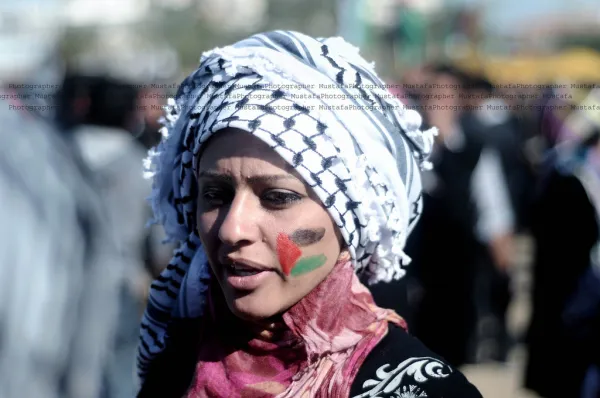
Even those of us who have long emphasized the importance of the Palestinian people’s voice, experience, and collective action in Palestinian history must have been shocked by the cultural revolution resulting from the Israeli war on Gaza.
By cultural revolution, I mean the defiant and rebellious narrative evolving in Gaza, where people see themselves as active participants in the popular resistance, not just mere victims of the Israeli war machine.

The problem with political analysis is that it often lacks historical perspective and is mostly limited to recent events.
The current analysis of the Israeli war on Gaza falls victim to this narrow thinking. The ceasefire agreement, signed between Palestinian groups and Israel under Egyptian, Qatari, and US mediation in Doha on January 15, is one example.
Some analysts, including many from the region, insist on framing the outcome of the war as a direct result of Israel's political dynamics. They argue that Israel's political crisis is the main reason the country failed to achieve its declared and undeclared war objectives—namely, gaining total "security control" over Gaza and ethnically cleansing its population.
However, this analysis assumes that the decision to go to war or not is entirely in Israel's hands. It continues to elevate Israel's role as the only entity capable of shaping political outcomes in the region, even when those outcomes do not favor Israel.
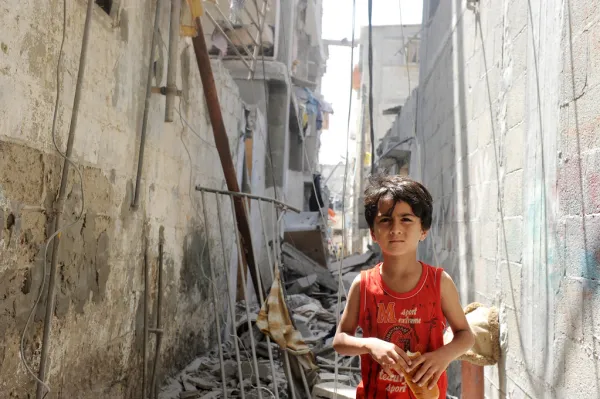
The eminent Roman historian Publius Cornelius Tacitus in a biography of his illustrious father-in-law Gnaeus Julius Agrippa famously wrote “Auferre, trucidare, rapere, falsis nominibus imperium, atque, ubi solitudinem faciunt, pacem appellant.” Which translates in the Loeb Classical Library edition as “To plunder, butcher, steal, these things they misname empire: they make a desolation and they call it peace.” Lord Byron, in his poem the Bride of Abydos, rendered the Tacitus Latin as “Mark where his carnage and his conquests cease! He makes a solitude, and calls it — peace.” Per Tacitus’ no doubt second hand account , the words were originally spoken by the Caledonian chieftain Calgacus who was addressing his assembled warriors concerning Rome’s insatiable appetite for conquest and plunder. The chieftain’s sentiment can be contrasted to pax in terra “peace on earth” which was sometimes inscribed on Roman medals (phalera) awarded to soldiers returning from the imperial wars.

The headline in the Times of Israel says it all: "For the First Time, Israel Just Lost a War."
Regardless of the reasoning behind this statement, which the article divides into fourteen points, it suggests a shattering and unprecedented event in the 76-year history of the State of Israel. The consequences of this realization will have far-reaching effects on Israelis, impacting both this generation and the next. These repercussions will penetrate all sectors of Israeli society, from the political elite to the collective identity of ordinary Israelis.
Interestingly, and tellingly, the article attributes Israel’s defeat solely to the outcome of the Gaza war, confined to the geographical area of the Gaza Strip. Not a single point addresses the ongoing crisis within Israel itself. Nor does it explore the psychological impact of what is being labeled as Israel’s first-ever defeat.

Following every Israeli war on Gaza, numerous narratives emerge. Some claim victory for one side and defeat for the other, while others—knowingly or unknowingly—attempt to exploit the aftermath for their own purposes.
The latter is not always nefarious, as the humanitarian calamities resulting from Israel's actions are undeniable—especially as Israel and its allies often use aid to Palestinians as bargaining chips for political concessions or to exert pressure on the Strip and its leadership.
This dynamic often results in the exploitation of Palestinian suffering to raise funds, sometimes by organizations with high overhead costs, leaving independent researchers puzzled over the discrepancies between the funds collected and the funds allocated.
Additionally, Gaza lacks an independent commission to track all received funds and their usage, which leads to controversies and public accusations at times.
Exploiting Gaza

The negotiations in Doha involving the United States, Israel, Hamas, Egypt and Qatar remind me of Frank Sinatra’s query “Is it an earthquake or only a shock?, is it a good turtle soup or only a mock?” Given the history of the various Middle Eastern peace proposals of one kind or another that have briefly raised their heads only to die ingloriously, it would perhaps be wise to consider the latest Israel-Gaza ceasefire, originally due to start on Sunday, to be, like Sinatra’s soup, a work in progress. And maybe not even really in progress due to likely hidden agendas and understandings that might run counter to what is being put down on paper. I am particularly thinking of possible commitments to Israel by the United States that will give Prime Minister Benjamin Netanyahu options that will enable him to resume hostilities by citing Hamas violations of details in the ceasefire terms, whether they have actually occurred or not.
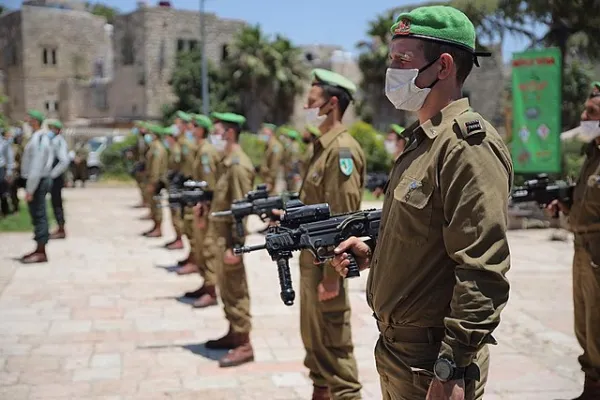
A dramatic escape was cited by Israeli media as the reason that Yuval Vagdani, a soldier in the Israeli army, managed to escape justice in Brazil.

Suddenly, Yoav Gallant, Israel's notorious Minister of Defense, disappeared into obscurity. The man who served in his country's military for about 35 years, in politics for nearly 10, and oversaw major wars, including the ongoing genocide in Gaza, quickly retreated from headlines and political significance.
In his resignation letter, Gallant accused Israeli Prime Minister Benjamin Netanyahu, who fired him on November 5, along with his replacement, Israel Katz, of endangering the country's security. However, he kept his criticism largely focused on the issue of military conscription for Israel's ultra-Orthodox community.