
THE G-20 IN PITTSBURGH
by Tom Over 9-23-09
<br><br>
On Tuesday, Sept 22, activists from Philadelphia, New York City, Pittsburgh and other cities held a mock funeral procession to demand better policies for addressing the AIDS pandemic, a day ahead of the arrival of delegates for the G-20.
<br><br>
The approximately 50 participants in the New Orleans-style funeral march drew a mix of interest, irritation, and amusement from onlookers in the business district of downtown Pittsburgh.
<br><br>
At the head of the funeral march where pallbearers carried a cardboard coffin, a man shouted into a microphone while someone else carried a portable amplifier, “when people with AIDS are under attack, what do we do ?” and marchers shouted in unison, “fight back!”
<br><br>
Amidst the early afternoon bustle of an weekday, the demonstrators repeated this call-and-answer and similar chants as the funeral march made its way around the perimeter of the David L. Lawrence Convention Center, the site of the G-20 Summit later this week.
<br><br>
Erica Goldberg works with ACT UP Philadelphia. She said global health is not on the agenda of the G-20 Summit.
“One of the things that some of the G-20 nations have promised us is funding for the global fund to fight, TB, malaria, and HIV/AIDS. This is all really important, especially if we want to meet the United Nations’ Millennium goal of eradicating these diseases by 2015. As of right now, this won’t be met. We have to hold our leaders accountable. They are the ones making decisions for the poorer countries,” Goldberg said.
<br><br>
She commented on the timing of the demonstration. “We wanted this to be the first thing they (the G-20 delegates) see. They’re coming here tomorrow. We’re holding them accountable. This needs to be on the agenda.”
<br><br>
She said AIDS activists chose Sept 22, two days before the official start of the G-20 Summit, and one day before the arrival of the delegates, so as to not have to compete with other protests. Also, she said the AIDS activists figured there would be less of a chance of conflict with police if they staged their protest earlier in the week.
<br><br>
“We hope that this will hit the papers tomorrow, that it’s the first thing they see when they walk in, that they have this on their conscience and know we’re not going away,” Goldberg said. She urges people to contact legislators about supporting the Global Fund to Fight AIDS, Tuberculosis, and Malaria.
“President Obama, as much as I love him, went back on his promise to fulfill the funding,” Goldberg said.
<br><br>
She commented on how drug companies factor into all of this. “ Medication does not need to be this expensive. They can definitely lower their prices. We have big drug interests lobbying to prevent AIDS medication from getting” to developing nations.
<br><br>
Goldberg said debt cancellation for developing nations is a factor that comes into play.
“When you don’t cancel debts of nations and they have to pay back loans to the IMF and the World Bank, they won’t have the funds necessary for getting AIDS medication, or they might get the medication but can’t pay the health professional because of their debt.
<br><br>
She said vested interested motivated by huge profits stand in the way of doing a better job of addressing tuberculosis, malaria, and HIV/AIDS. “We have the power, the ability, and the medication.”
World News

Mr. Anutin's victory is partly a reward for the U.S.-backed military's strong performance against Cambodia during their smoldering border war, which he inherited when became prime minister in September.
Mr. Anutin thanked "all Thais, no matter if you voted for us or not," after his Bhumjaithai (Proud to be Thai) Party's unassailable lead appeared in the vote counting.
When 94 percent of the votes were counted Mr. Anutin's BJT won 193 seats, the People's Party scored 118, the Pheu Thai party took 74, and a new Klatham Party nabbed 58.
The results showed Mr. Anutin's party winning the most seats in parliament's 500-member House of Representatives but not a majority.
In Thailand, if no party scores a majority of at least 251 seats, parliamentarians must agree on a majority coalition and name a prime minister.
Anti-imperialism has long served as a central organizing principle of leftist political thought, particularly in relation to the Global South. Opposition to Western military intervention, economic domination, and political coercion is historically grounded and normatively defensible. Yet in recent years, anti-imperialism has increasingly been theorized—and practiced—through a narrowed geopolitical lens that equates resistance to Western power with emancipatory politics as such. Within this framework—visible in strands of campist analysis, sovereigntist Marxism, and contemporary “multipolar” discourse—state sovereignty is often treated as a proxy for popular sovereignty, and opposition to U.S. hegemony is taken as sufficient evidence of progressive political content.
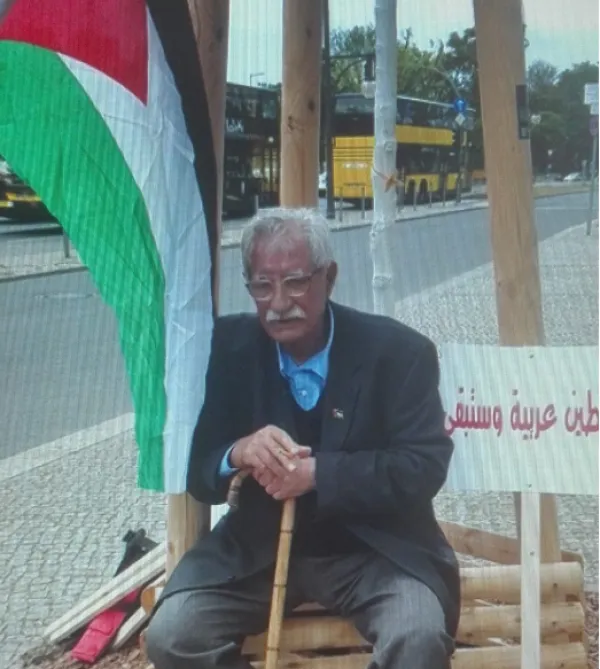
In recent weeks, the United Arab Emirates has begun to put forward an initiative concerning the management of civilian affairs in the Gaza Strip after the war through organizing economic and service sectors, managing markets and commercial activities, and establishing logistical centers for distributing goods within the Strip.
What is striking about this initiative is that it was not presented within a comprehensive Palestinian or Arab framework but rather through direct talks with the United States and Israel, in a clear attempt to obtain their political and security approval. This suggests that the administration of Gaza is a matter to be decided in consultation with the occupying power and its main ally, not with the people of the land themselves.
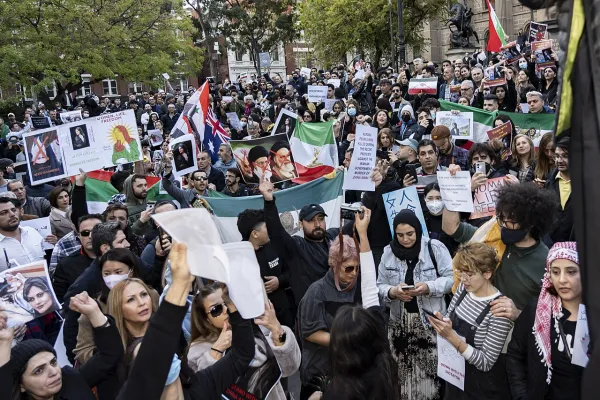
Analyses of Iran’s political system often emphasize overt coercion: imprisonment, torture, executions, and episodic violence against widespread protests. These instruments are real and consequential. Yet an exclusive focus on repression obscures a more pervasive and durable mechanism of rule: the sanctification of political authority. The Iranian regime does not govern by force alone. It has cultivated a political environment in which obedience is experienced as moral intuition rather than contingent political choice. Through a dense network of religious institutions, ritual practices, and managed historical memory, political power is rendered sacred, dissent morally suspect, and compliance endowed with spiritual significance.

Trump aims to drop oil to $50 a barrel; Chavez offered that years ago.
The US press is confused. Nothing new there. They are confused about the Acting President of Venezuela, Delcy Rodriguez.
The New York Times says Rodriguez “Went From Revolutionary to Trump’s Orbit”
Oh no, she didn’t.
Rodriguez still attacks Trump as an outlaw kidnapper and imperialist invader. But, at the same time, she says she’s seeking the restoration of diplomatic relations with the US and offers tens of millions of barrels of oil to Trump.
I’ve known Rodriguez for years. Is she a militant Leftist or a moderate pragmatist?
The answer is, “Yes.” I’d call Rodriguez a “radical pragmatist.”

After 748 days of committing war crimes in Gaza, Lebanon, and Syria, Joshua Boon, who was born in Iowa, United States, committed suicide. He chose to leave home in Idaho to volunteer for the Israel Defense Forces. He is a traitor who enlisted in the Israeli Death Forces instead of the US armed forces.
"Lone Soldier" is a sugarcoated term that the media often uses to refer to Jewish Americans "mercenaries" who enlist in the IDF. However, the same media outlets refer to Muslims who join ISIS or fight against US and NATO occupation force in the Middle East as "terrorists." A Muslim volunteer gets automatically 20 years behind bars whereas a Jewish mercenary receives a hero welcome.
Many Americans are unaware of the fact that many Jewish high school students chose to enlist in the Israeli Death Forces (IDF) after graduation instead of enlisting in the US armed forces. Those people have taken part in the Gaza genocide and massacres in Lebanon. Some of them were captured on October 7 while armed and in IDF uniform. In fact, you would be more accurate by calling them as "Israeli POWs" instead. That should be an affront to all veterans and patriotic Americans.

Lolwah Al-Khater is a prominent Qatari diplomat and the current Minister of Education who is known for her significant contributions to Qatar's foreign relations and education sector. Al- Khater is a Phd candidate at the University of Oxford in the area of Oriental Studies. Al-Khater is a female rising star in the Arab world. The name Lolwah translates to "pearl" in Arabic.
The Arab world is witnessing a new wave of young women rising to prominence and shaping the future with their bold vision, creativity, and influence. Lolowah Al-Khater the Qatari diplomat is one among those women.
This woman speaks the truth, a quality that is rare among kings and presidents in the Arab and Muslim world and only those whom God has blessed can utter it. She is truly an honor to all Muslim women. Al-Khater supported the Palestinian cause through the media and showed the world that the Palestinian issue is the most important issue in the world. May God reward her immensely.

Crime Minister Netanyahu told the UN recently that Israel is the only place in the Middle East where Christians feel safe. He even asserted that. He even has the nerve to claim that Israel is the guardian of Christianity. "No, Israel is not the guardian of Christianity," and Netanyahu is a habitual liar. He denied the IDF has thousands of children in Gaza even though the IDF admitted recently that over 83% of people killed in Gaza were civilians. And who can forget in 2015 when he suggested it was not Hitler's idea to slaughter Jews, but it was rather the idea of Jerusalem’s then-Grand Mufti Haj Amin al-Husseini who met with the Nazi leader in Germany in the early 1940s. A bird flies and Bibi lies!
Yesterday, Israeli Police attacked Christians celebrating Christmas in Haifa's Wadi Nisnas neighborhood. On Monday evening, the Police broke into a cultural center where a Christmas show was on based on a "noise complaint," destroyed musical equipment and arrested 3 participants, including one dressed as Santa Claus.


BANGKOK, Thailand -- The U.S.-trained Royal Thai Navy is gearing up to stop all Thai ships in the Gulf of Thailand transporting fuel and military supplies to Cambodia, the first major use of the artillery-firing navy in the five-month-long border war.
The U.S. Seventh Fleet uses the Gulf of Thailand when its aircraft carriers and other vessels dock near Bangkok at Sattahip port where Thailand's First Naval Area Command is based to secure the gulf, which is peppered with inhabited Thai and Cambodian islands, navy facilities, and oil rigs.
In addition to intercepting Thai ships, including fishing and commercial vessels, the navy said it would stop Thai-owned ships sailing under foreign flags and registrations, if they are suspected of transporting fuel, weapons, ammunition, or other military equipment across the gulf to reach Cambodia's south coast.
Thai shipping companies facilitating their travel, vessels' owners, suppliers, chandlers and others linked to Thai ships violating the ban would also be held responsible, officials said.