
Op-Ed
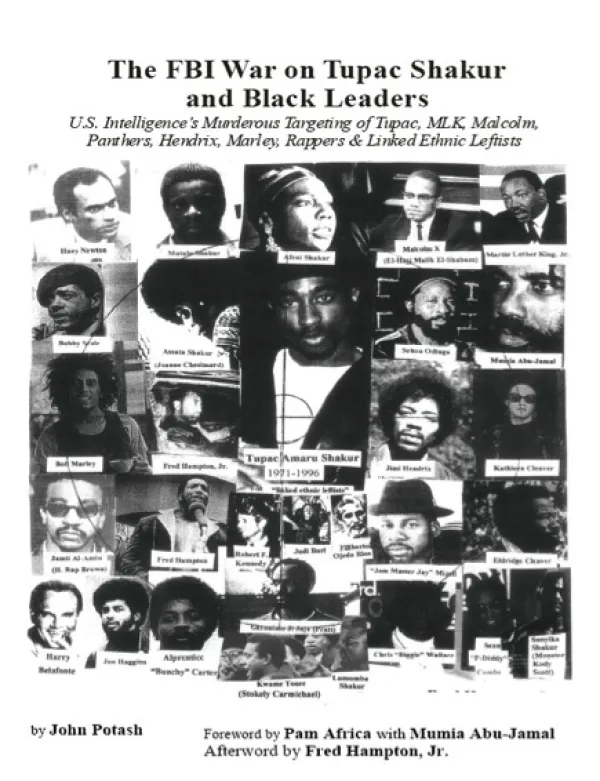
All Eyez On Me Spotlights Tupac’s Leftist Activism & Repression
Leftist black activists don’t get represented in Hollywood productions much, unless they represent the more mainstream Civil Rights movement. All Eyez On Me gives the radical leftist angle on rap icon Tupac Shakur’s family, upbringing, and his little-known political activism. Despite some of the movie’s small departures from eyewitness accounts, it surprisingly creates a pretty close approximation of Tupac, and the U.S. intelligence apparatus that murderously targeted him and his Black Panther family.
The movie opens with a filmed interview that Vibe magazine conducted with Tupac in prison. This interview frames the first two thirds of the film, until it reaches the point when Tupac is recalling the reason he ended up there.

Reactionaries howl in outrage at Kathy Griffin’s photo of the comedienne holding a faux severed, bloody head of the president and against Shakespeare in the Park’s modern dress version of Julius Caesar, wherein the assassinated emperor is a Trump look-alike. Of course, these condemnations of exercises in free expression are spewed by the same cry babies waging holy war against whatever they perceive as “political correctness.” Trump and his minions denounce efforts to protect religious, ethnic and LGBTQ minorities from public insults and hate speech as infringements on their First Amendment right - but cry bloody murder whenever their sacred cows are mocked and raked over the coals.
For the past many years and for many years to come, “extremism” has been unacceptable in U.S. politics. One must be in favor of more fossil fuel pipelines under certain strict conditions, not against them entirely. That would be extreme.
The moment when extremism becomes acceptable, or ceases to be extremism, will be the instant before the last human being breathes his or her last breath on a baked and ravaged planet. On that last breath may be the words: “I’ll be a leftist now, I suppose.”
Today, of course, one must be in favor of the good wars and against the bad ones — but not too much against the bad ones. One must not try to abolish war entirely. That would be extreme. So would be banning nuclear weapons.
But in that moment when we know that the nuclear missiles have been launched by the dozens, someone may have the presence of mind to mutter: “Perhaps banning them might have been sort of pragmatic after all. Of course it’s not something worth voting for a third party over. I loved you. Good bye.”

There has been a lot of media coverage mostly written by Israelis or American Jews regarding Israel’s “victory” fifty years ago during the so-called Six Days War directed against its Arab neighbors but I have yet to see an account that mentions the fate of the U.S.S. Liberty. Nevertheless, the Liberty is not forgotten. This Thursday at noon at Arlington National Cemetery there will be a small gathering for the annual coming together with the survivors and friends of the most decorated ship in the history of the U.S. Navy, a victim of a particularly brutal and unprovoked attack by Israel that has been covered up for half a century by the powers that be in Washington.
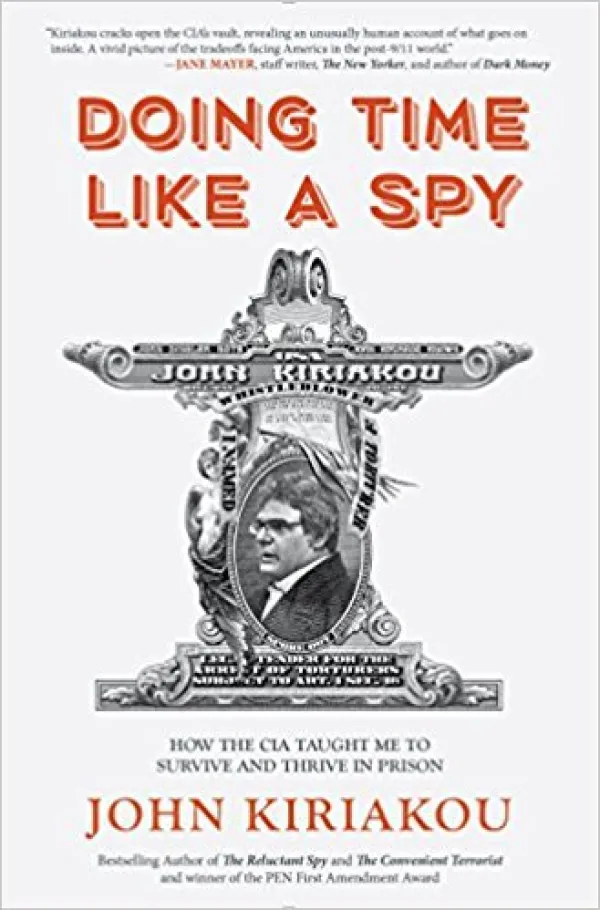
John Kiriakou’s Doing Time Like a Spy: How the CIA Taught Me to Survive and Thrive in Prison paints a disturbing portrait of a U.S. prison in which Kiriakou spent time as retribution for having admitted that the CIA used torture. His ongoing whistleblowing on the state of U.S. prisons, as well as on the ways in which the U.S. government has gone after him, is as valuable as his opposition to CIA torture.
The prison as described in the book is largely unaccountable to the rule of law. Prisoners in need of medical attention are simply allowed to die, or hastened along toward death by sadistic or incompetent malpractice. Education for prisoners is nonexistent. Rehabilitation efforts are nonexistent. Slave labor is universal. Those who leave, leave having acquired additional skills and attitudes of criminals. This prison system serves not to protect, not to rehabilitate, not to compensate or make restitution, and not to reduce crime.
As 'mental health' issues gain more attention, sympathetic and
otherwise, in a wide variety of contexts and countries around the world,
the opportunity for inaccurate perceptions of what causes these issues,
and how to treat them, are likewise expanded.
So if you or someone you know is supposed to have a 'mental illness'
such as anxiety, depression, schizophrenia, obsessive-compulsive
disorder (OCD), bipolar disorder, anorexia nervosa or post-traumatic
stress disorder (PTSD), I would like to give you the opportunity to
consider an explanation and a way forward that you are unlikely to have
come across.
My first suggestion is that you ignore any label that you have been
given. These labels are an inaccurate and unhelpful way of labeling the
appropriate, diverse and complex emotional responses that a normal human
being will have to emotionally disturbing events. It is inaccurate
because words such as these imply a 'disorder' that a normal individual
should not have in response to emotionally challenging events in their

In Moscow earlier this week I mentioned to a Russian friend that racists in my town in Virginia were chanting fascist and confederate slogans plus “Russia is our friend!” He replied: “But we never had slavery; we had serfdom.” He didn’t grasp why Russia was being grouped together with slavery.
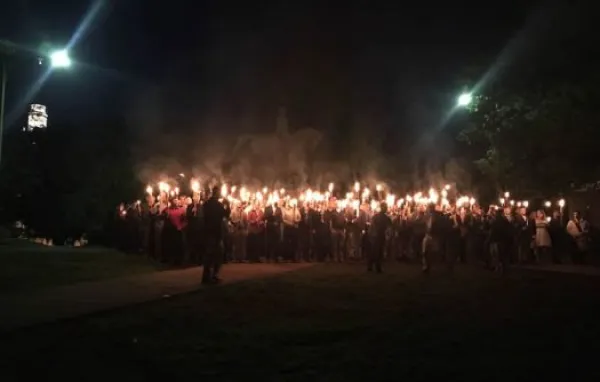
While I’ve been in Russia trying to make friends, back home in Charlottesville, Virginia, USA, a group of torch-bearing supporters of Robert E. Lee has held a rally generally understood as a proclamation of white supremacy.

Just back from a week in Moscow, I feel obliged to point out a few things about it.