
Op-Ed

Intelligence agencies and senior government officials tend to use a lot of jargon. Laced with acronyms, this language sometimes does not translate very well into journalese when it hits the media.
For example, I experienced a sense of disorientation two weeks ago over the word “sensitive” as used by several senators, Sally Yates, and James Clapper during committee testimony into Russiagate. “Sensitive” has, of course, a number of meanings. But what astonished me was how quickly the media interpreted its use in the hearings to mean that the conversations and emails that apparently were recorded or intercepted involving Trump associates and assorted Russians as “sensitive contacts” meant that they were necessarily inappropriate, dangerous, or even illegal.
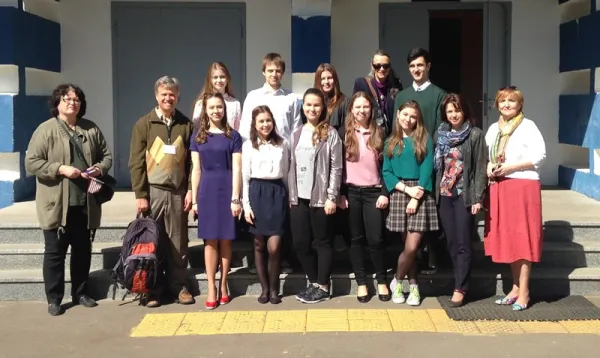
As I was heading off to visit Russia, a friend told me of a friend who knew a Russian school teacher. I asked if I could visit the school, and I brought along a couple of American friends.
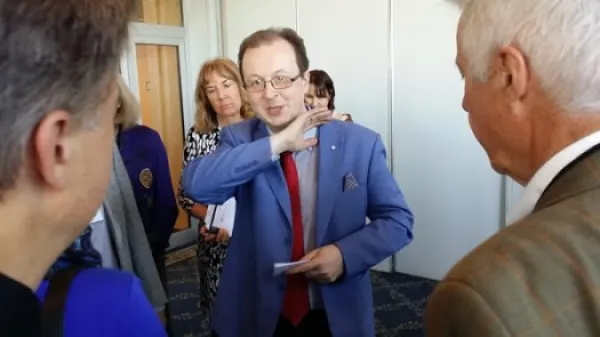
Dmitri Babich has worked as a journalist in Russia since 1989, for newspapers, news agencies, radio, and television. He says that he used to always interview people, while lately people interview him. According to Babich, myths about Russian media, such as that one cannot criticize the president in Russia, can be dispelled simply by visiting Russian news websites and using Google Translator. More newspapers in Russia oppose Putin than support him, Babich says. If Russian news is propaganda, Babich asks, why are people so afraid of it? Was anyone ever afraid of Brezhnev’s propaganda? (One might reply that it wasn’t available on the internet or television.) In Babich’s view the threat of Russian news lies in its accuracy, not in its falsehood. In the 1930s, he says, French and British media, in good “objective” style, suggested that Hitler wasn’t anything much to worry about. But the Soviet media had Hitler right. (On Stalin perhaps not so much.) Today, Babich suggests, people are making the same mistake that the British and French media made back then, failing to appropriately stand up to a dangerous ideology. What ideology? That of neoliberal militarism.

I’ve been in Moscow some days now and have yet to meet an oligarch (although perhaps they don’t identify themselves). I have met an entrepreneur named Andrei Davidovich.
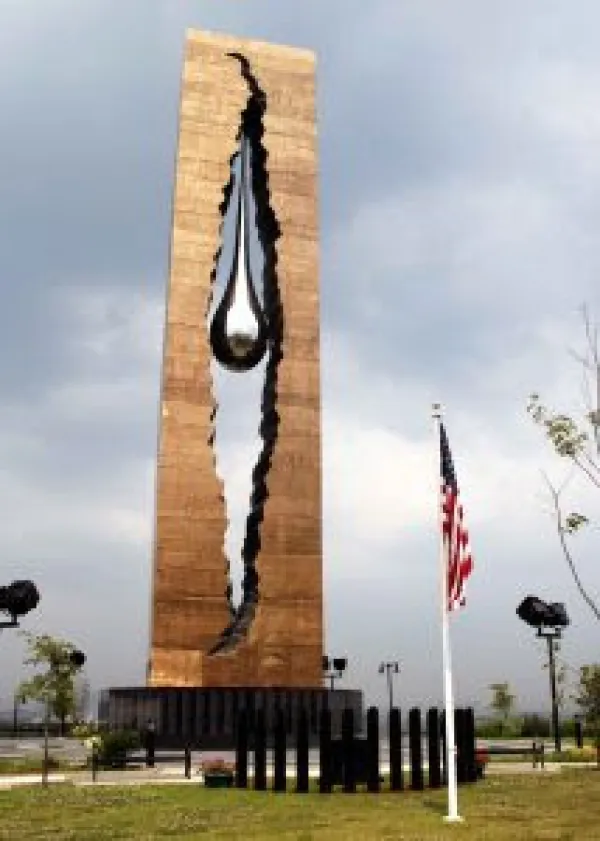
On Wednesday, I flew out of a New York airport around which armed soldiers in camouflaged uniforms wandered — a New York area that had long ago hidden in the hardest to reach corner of New Jersey the monument that Russia gave the United States in sympathy with the horror of September 11, 2001. I left a country where the corporate media used “ties to Russia” as the equivalent of “servant of Satan,” and treated financial and criminal corruption as honorable or offensive depending purely on whether anyone Russian was involved.
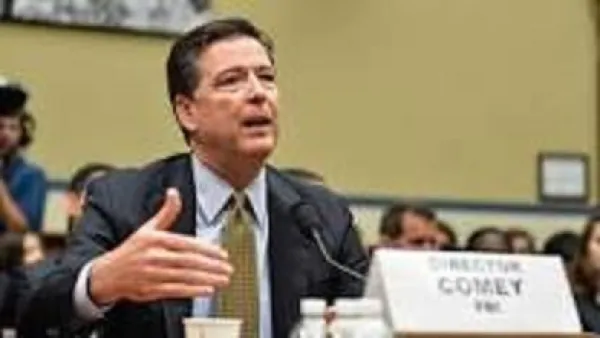
The firing of FBI Director James Comey may have been a surprise to some, most particularly in the media, but there was a certain inevitability about it given the bureau’s clear inability to navigate the troubled political waters that developed early last summer and have continued ever since. The initial reaction that it may have been triggered by Comey’s recent maladroit comments regarding the Huma Abedin emails would appear to miss the mark as that issue was not raised either by Attorney General Jeff Sessions or by the White House in their written explanations of what had taken place and why.

Dear brothers and sisters of Ireland, your ambassador to the United States Anne Anderson spoke at the University of Virginia Tuesday afternoon.
After consulting one of your fine citizens named Barry Sweeney, I asked her this: “Since the U.S. government assures the Irish government that all U.S. military aircraft being refueled at Shannon are not on military operations and are not carrying weapons or munitions, and since the Irish government insists on this in order to comply with Ireland’s traditional policy of neutrality, why does the Irish department of transportation almost daily approve civilian aircraft on contract to the U.S. military to carry armed U.S. troops on military operations, weapons, and munitions through Shannon Airport in clear breach of international laws on neutrality?”
Ambassador Anderson replied that the U.S. government at the “highest levels” had informed Ireland that it was in compliance with the law, and Ireland accepted that.
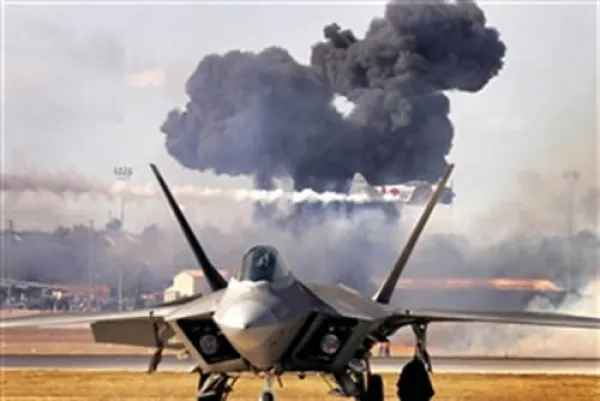
Remarks in Burlington, Vermont, April 22, 2017
http://worldbeyondwar.org/f-35-incinerating-ski-slope/
Thank you all for inviting me. There is no place I’d rather be on earth day. And that includes marching for science at the March for Science in Washington. Although I certainly support marching for honesty, and I’d even march for the cause of getting more scientists to march — and any other group that hasn’t yet found the time to bother.
Unless resisting madness becomes mainstream, the madmen will decide our fate.

The American Israel Public Affairs Committee (AIPAC) concluded its annual conference late last month, triggering the usual debate in various alternative media outlets. Why does so much U.S. taxpayer money go to a small and not particularly useful client state that has a vibrant European-level economy and is already a regional military colossus?
Those who support the cash flow argue that Israel is threatened, most notably by Iran; they claim the assistance, which has been largely but not completely used to buy American-made weapons, is required to maintain a qualitative edge over the country’s potential enemies. Those who oppose the aid would counter that the Iranian threat is largely an Israeli and Saudi Arabian invention, used to justify continued American support for the national-security policies of both countries. And they would add that Tel Aviv is more than able to defend itself and pay for its own military establishment.
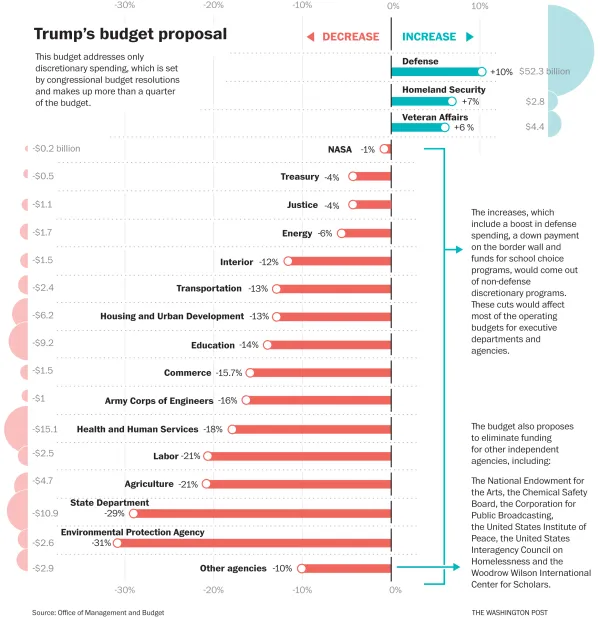
“Our environmental and human needs are desperate and urgent. We need to transform our economy, our politics, our policies and our priorities to reflect that reality. That means reversing the flow of our tax dollars, away from war and militarism, and towards funding human and environmental needs, and demanding support for that reversal from all our political leaders at the local, state and national levels.
We and the movements we are part of face multiple crises. Military and climate wars are destroying lives and environments, threatening the planet and creating enormous flows of desperate refugees. Violent racism, Islamophobia, misogyny, homophobia and other hatreds are rising, encouraged by the most powerful voices in Washington DC.