Op-Ed

It’s the smallest thing in the world. Does the tennis ball land inside the line or outside? But somehow, as I watched this 60-second YouTube clip of an Australian tennis match last January, and heard an explosion of joyous approval surge from the crowd, I could feel the planet shift.
Or at least it seemed that way for an instant.
In the clip, a tennis player named Jack Sock tells his opponent, Lleyton Hewitt, whose serve has just been declared out, that he should challenge the call. A little humorous disbelief bounces around the court, but eventually Hewitt says, “Sure, I’ll challenge it.” A judge reviews the tape and declares that the serve was in . . . and the crowd lets loose an enormous cheer.

If your name is Donald Trump, or Dick Cheney, or George W Bush, then don’t bother reading this. This article is to help the rest of us to better understand how Donald Trump et al think. The psychiatric literature has long known that people with narcissistic personality disorder, also called the narcissistic sociopath, are far more common at the upper end of politics and business in the United States. About 1% of people in general show the criteria of the condition, yet 20% of CEOs in “Fortune 500” companies and many politicians in this country have these characteristics.
So it pays to know how these people think since it allows us to accurately predict their behavior. The cause of narcissistic personality condition can be summarized in three words: low self-esteem. The person’s thinking process is overwhelmed with the need to show them as powerful and important. It is much more common in men than women, and, thus, testosterone, one of the key driving forces of emotional behavior, powers this condition.

 hat’s the money quote that was widely reported as what Republican Presidential nominee Donald Trump said that day about Russia and Hillary Clinton’s emails. It is hard to read those sentences as anything but cynical joking, but most of the media, the empty-headed commentariat, and Democratic shills all made a fundamentally bad-faith effort to inflate the joke into something sinister to serve their various agendas.
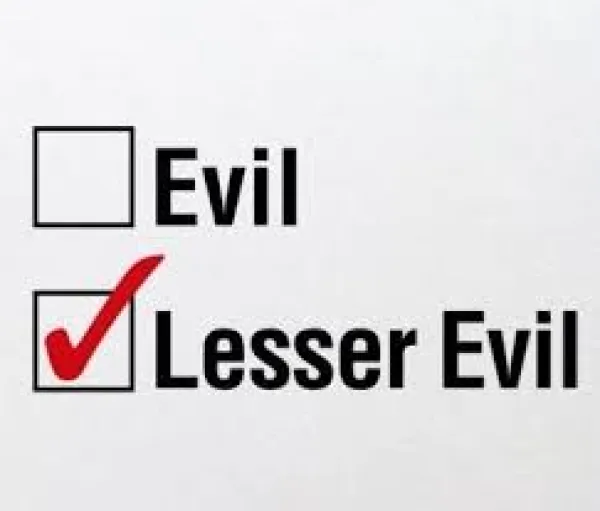
According to supporters of Hillary Clinton, anything other than a vote for her is "a vote for Trump," and according to supporters of Donald Trump, anything other than a vote for Trump is "a vote for Hillary." Whether you declare that you will vote for Jill Stein, vote for Gary Johnson, write in LeBron James, swear off elections, move to Canada, commit suicide, or take a job for a corporate media outlet that frowns on participation in democracy, no matter what it is you do, it's "a vote" for the undesired candidate. (Sorry to go morbid with that corporate media option!)
What is the appropriate reply to this?

One of the many interesting details to be learned by understanding human psychology is how a person's unconscious fear works in a myriad of ways to make them believe that they bear no responsibility for a particular problem.
This psychological dysfunctionality cripples a substantial portion of the human population in ways that work against the possibility of achieving worthwhile outcomes for themselves, other individuals, communities and the world as a whole. In an era when human extinction is now a likely near-term outcome of this dysfunctionality, it is obviously particularly problematic. So why does this happen and how does it manifest?
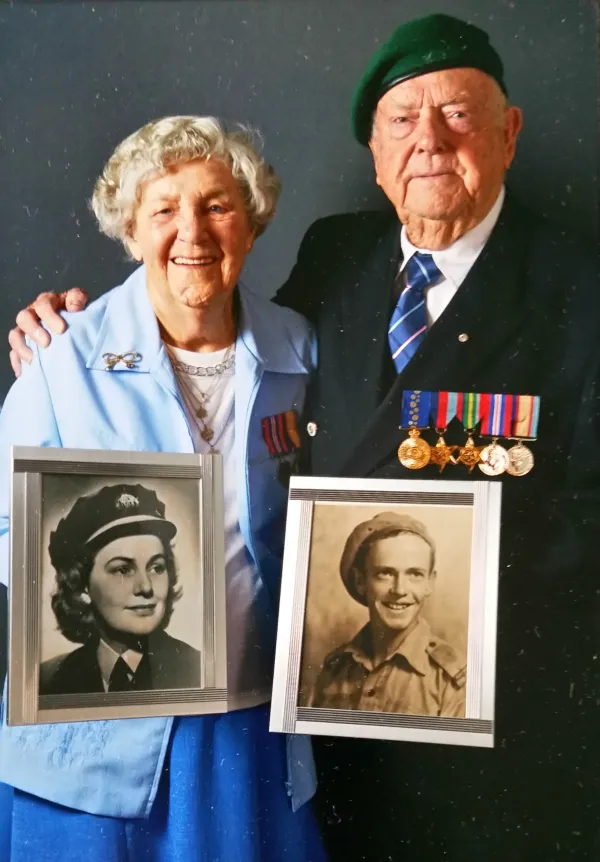
Deeply affected by the death of my two uncles in World War II, on 1 July 1966, the 24th anniversary of the 'USS Sturgeon' sinking of the Japanese prisoner-of-war ship 'Montevideo Maru' which killed the man after whom I am named, I decided that I would devote my life to working out why human beings are violent and then developing a strategy to end it.
The good news about this commitment was that it was made when I was nearly 14 so, it seemed, anything was possible. Now I am not so sure.
Here is my report on 50 years of concerted effort to understand and end human violence.
In 1966 one of my immediate preoccupations was war. The US genocidal war on Vietnam was raging and, as a sycophantic ally of the United States, Australia had been drawn into it some years previously. Trying to understand what this war was really about was challenging, particularly given the limited (mainstream) sources of information available to me at the time.

 hat’s the difference between these two Democrats, Sen. Chris Murphy of Connecticut and Rep. Barbara Lee of California? Chris Murphy puts on a pointless, pompous filibuster to achieve a meaningless vote on gun control measures he knows will never pass. Rep. Barbara Lee is in her 15th year of quietly trying to persuade ANY other Representative or Senator to accept constitutional responsibility for deciding whether or not the US should go to war. Guess who gets more attention?
What is wrong, truly, profoundly wrong with Democrats? Republicans are easy, they embrace their commitment to naked power without principle beyond a simple-minded checklist of ideological bumper sticker thoughts. That made voting for NRA-sponsored mass murder a no-brainer for Republicans (except those in states with a possibly conscious electorate).

As with becoming a whistleblower or an activist or an artist there must be numerous reasons why any individual becomes a terrorist -- whether military, contract, or independent. Various irrational hatreds and fears (and promises of paradise after death) and the ready availability of weaponry certainly play roles.
But did you know that every single foreign terrorist in the United States in recent decades, plus domestic terrorists claiming foreign motivations, plus numerous poor suckers set up and stung by the FBI, plus every foreign terrorist organization that has claimed or been blamed for attempted or successful anti-U.S. terrorism have all claimed the same motivation? I'm not aware of a single exception.
If one of them claimed to be motivated by the needs of Martians, we might set that aside as crazy. If every single one of them claimed to be acting on behalf of Martians, we would at least get curious about why they said that, even if we doubted Martians' existence. But every single one of them says something much more believable. And yet what they say seems to be a secret despite being readily available information.
An atheist's sermon on Luke 7: 36-50 delivered at Saint Joan of Arc in Minneapolis, Minn., on June 12, 2016.
Forgiveness is a universal need, among those of us who are not religious and among believers in every religion on earth. We must forgive each other our differences, and we must forgive much more difficult occurrences.
Some things we can forgive easily -- by which, of course, I mean eliminating resentment from our hearts, not granting an eternal reward. If someone kissed my feet and poured oil on them and begged me to forgive her, frankly, I would have a harder time forgiving the kisses and oil than forgiving her a life of prostitution -- which is, after all, not an act of cruelty toward me but the violation of a taboo into which she was likely compelled by hardship.
But to forgive men who were torturing and killing me on a cross? That I would be very unlikely to succeed at, especially as my nearing end -- in the absence of a crowd to influence -- might convince me of the pointlessness of making my last thought a magnanimous one. As long as I live, however, I intend to work on forgiveness.