
Op-Ed

“Since the people are sovereign under our Constitution . . .”
Ralph Nader writes in a recent essay that we should demand acknowledgement of this fact from our presidential candidates and ask what they will do to restore this sovereignty to the American people, in their various manifestations as voters, taxpayers, workers and consumers.
“Regardless of their affiliation with either of the two dominant parties,” he writes, “politicians are so used to people being spectators rather than participants in the run-up to Election Day that they have not thought much about participatory or initiatory democracy.”
“Spectator,” “participant” . . . these are trigger words for me. I deeply fear the reckless ascendance of that first word in our cultural and political structures, as world events are increasingly reduced to reality TV mélanges of celebrity and violence. Meanwhile, the second word shrivels. This is America the superpower, its management the province of a shadowy consensus of corporate militarists.
I’m sitting in the aftermath of Paris, feeling emotions tear me apart. One of the emotions is joy. My daughter, who lives there, is safe.
Has “joy” ever felt so troubling?
The aftermath of Paris seems likely to be intensified (“pitiless”) bombing raids in Syria, closed borders, heightened fear-based security and the deletion of “the gray zones of coexistence” across the planet.
Oh, it’s so nice to have an enemy who is truly evil! And the logic of war is so seductive. It simplifies all these complex emotions. Just watch the news.
The news is that terror wins. Indeed, terror is the cornerstone of civilization.
I couldn’t get that notion out of my head. That’s because I couldn’t stop thinking about an act of extraordinary terror that took place just over a dozen years ago, and its relevance to the world’s current state of shock and chaos. Doing so made it impossible to contemplate the raw savagery of the ISIS killings in Paris and Beirut and everywhere else — the “my God!” of it all, as innocent lives are cut short with such indifference — in a simplistic context of us vs. them.
 he attacks in Paris have already created yet another distorting lens through which Western nations view reality darkly. The tragedy on the ground in the city of light is real enough, but the greater tragedy is the greater reality of assuming that the politics of endless war is some sort of answer to the vicious circle it creates and perpetuates. The impulsive rush to war is also a rush to ignore history and context: French colonial control of Syria ended less than 70 years ago, French bombing of Syria is intensifying.
And then there’s Yemen.
Yemen is a key to understanding the perverse puzzle of the Middle East morass. Yemen embodies the collective savagery that American policy unintentionally promotes and spreads.
We are all France. Apparently. Though we are never all Lebanon or Syria or Iraq for some reason. Or a long, long list of additional places.
We are led to believe that U.S. wars are not tolerated and cheered because of the color or culture of the people being bombed and occupied. But let a relatively tiny number of people be murdered in a white, Christian, Western-European land, with a pro-war government, and suddenly sympathy is the order of the day.
"This is not just an attack on the French people, it is an attack on human decency and all things that we hold dear," says U.S. Senator Lindsey Graham. I'm not sure I hold ALL the same things dear as the senator, but for the most part I think he's exactly right and that sympathy damn well ought to be the order of the day following a horrific mass killing in France.
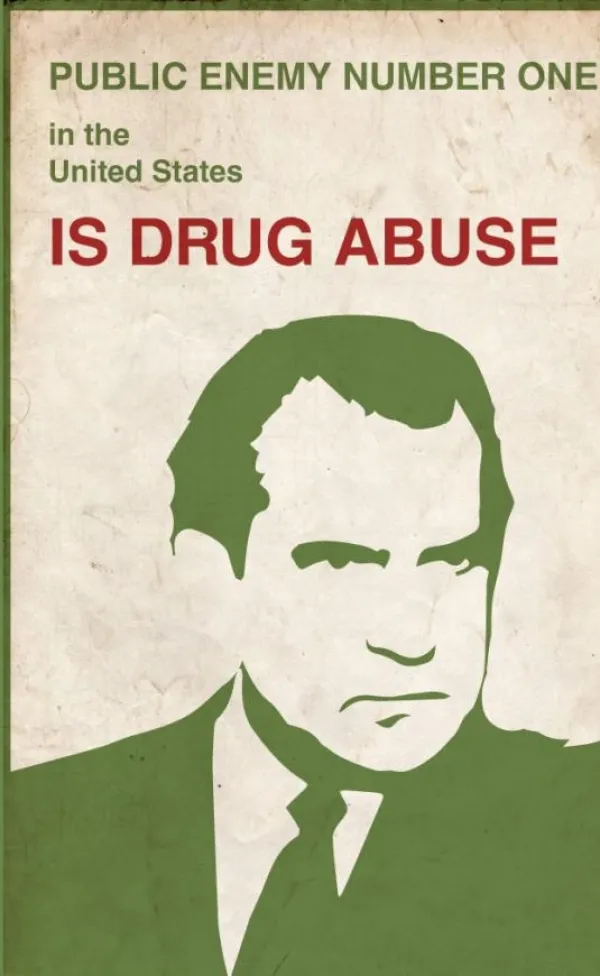
The Drug War has been a forty-year lynching….
…the corporate/GOP response to the peace and civil rights movements.
It’s used the Drug Enforcement Administration and other policing operations as a high-tech Ku Klux Klan, meant to gut America’s communities of youth and color.
It has never been about suppressing drugs. Quite the opposite.
And now that it may be winding down, the focus on suppressing minority votes will shift even stronger to electronic election theft.
The Drug War was officially born June 17, 1971, (http://www.drugpolicy.org/new-solutions-drug-policy/brief-history-drug-war) when Richard Nixon pronounced drugs to be “Public Enemy Number One.” In a nation wracked by poverty, racial tension, injustice, civil strife, ecological disaster, corporate domination, a hated Vietnam War and much more, drugs seemed an odd choice.
In fact, the Drug War’s primary target was black and young voters.
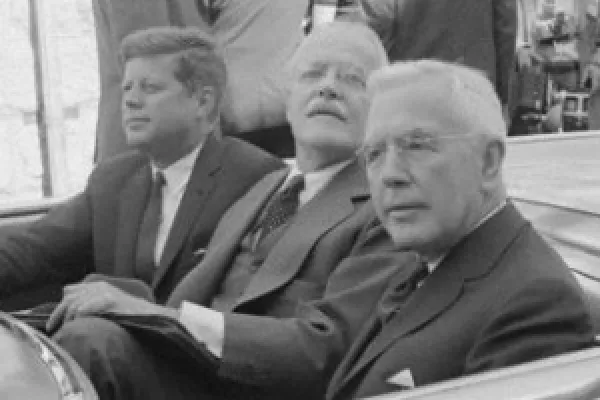
We all need to thank Phil Shenon for bringing attention to the CIA’s latest position in their continuing stonewalling of the truth in regard to the JFK assassination. The new limited hang-out that Shenon helps test float in his October 6, 2015, Politico piece, “Yes, the CIA Director was Part of the JFK Assassination Cover-Up,” is acknowledgment that DCI John McCone participated in a “benign-coverup” by withholding crucially important information from the Warren Commission. Once again, we can benefit from what is normally gleaned from a limited hangout: 1) it will fill in some blanks; 2) point the way to further avenues of investigation; 3) illustrate the continued lying while admitting to past lying; 4) illuminate the real issues by its misdirection; and 5) ultimately contribute to the long unravelling leading to the eventual revelation of truth. In this case, Shenon’s latest spin on the CIA’s new limited hangout does all this and more. I say “his spin” deliberately because Mr. Shenon’s latest article in Politico1 doesn’t even accurately represent his cited CIA source.
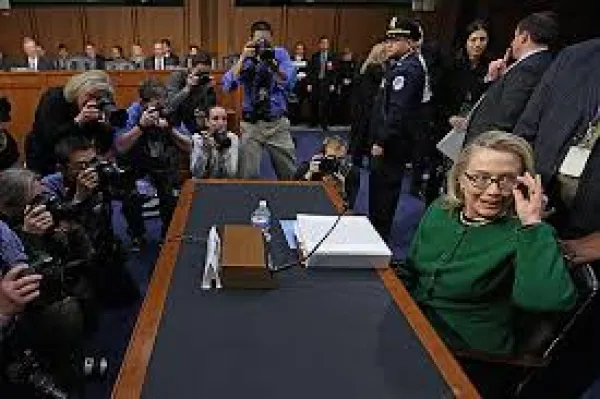
There are dozens of Hillary Clinton scandals that I have no wish to minimize. But how is it that her habits of secrecy themselves attract more interest than the secrets already exposed?

When the United States is identified as an empire, albeit of a different sort than some others, it's common to point to the fate of ancient Rome or the empires of Britain, Spain, Holland, etc., as a warning to the Pentagon or even to CNN debate moderators.
But a closer analogy to the current United States than ancient Rome, in a certain regard, might be the Vikings. The United States doesn't create colonies in the places it wages war or wields influence. It raids. It pillages. It plunders resources. It manufactures smart phones. It fracks. It sets up isolated settlements, heavily fortified, also known as military bases, embassies, green zones, safe zones, and moderate rebel training camps. It sails for home.
What ever happened to the Vikings anyway?
I'd like to see a survey done on that question. I'm afraid many people would answer that the Vikings died out or got themselves slaughtered or slaughtered each other. That would certainly be an anti-imperial moral for the Viking story. It would also fit with the idea that violence controls people rather than the other way around.

“The Pentagon said on Saturday that it would make ‘condolence payments’ to the survivors of the American airstrike earlier this month on a hospital run by Doctors Without Borders in Kunduz, Afghanistan, as well as to the next of kin of those who died in the attack.”
Such a small piece of news, reported a few days ago by the NewYork Times. I’m not sure if anything could make me feel more ashamed of being an American.
Turns out the basic payout for a dead civilian in one of our war zones is . . . brace yourself . . . $2,500. That’s the sum we’ve been quietly doling out for quite a few years now. Conscience money. It’s remarkably cheap, considering that the bombs that took them out may have cost, oh, half a million dollars each.
If we valued human life, we would never go to war. Everybody knows this. It’s the biggest open secret out there, buried under endless public relations blather and — since the bombing of the hospital in Kunduz on Oct. 3, and the killing of 22 staff members and patients — a sort of international legalese.