
Op-Ed
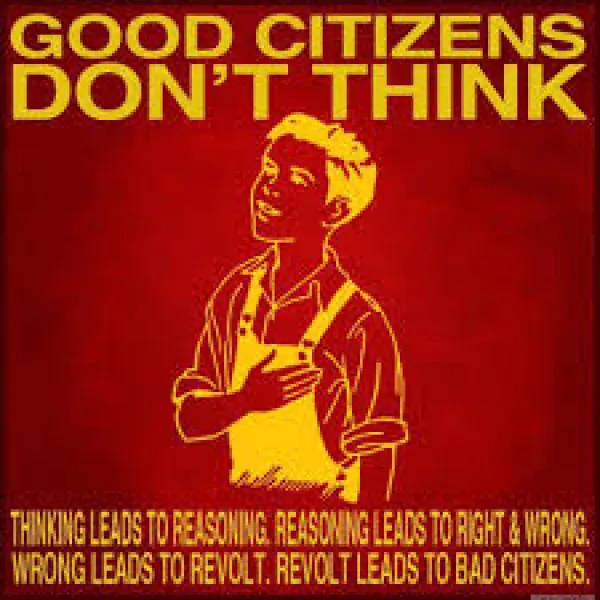
Back in the winter of 1982, Air Florida flight 90 took off from National Airport. The first officer noticed dangerous readings on some instruments and pointed them out to the captain. The captain told him he was wrong, and he accepted the captain's authority. He did nothing. Thirty seconds later the plane crashed into the 14th Street Bridge. Everyone on board died except for four passengers rescued out of the icy river.
During the latter decades of the 20th and first part of the 21st century, millions and millions of first officers on spaceship earth noticed that climate and nuclear dangers loomed. But every authoritative captain in sight, from elected officials to CEOs to media pundits, said "Don't be a fool. I've got this." And millions upon millions sat back and mumbled "Oh, all right, if you're sure."
The people pushing through the vote this week at the United Nations to create a treaty next year banning nuclear weapons are engaged in necessary disobedience to mainstream authority and acceptance. The people putting their bodies in the way of a pipeline in North Dakota are disobeying immoral orders.
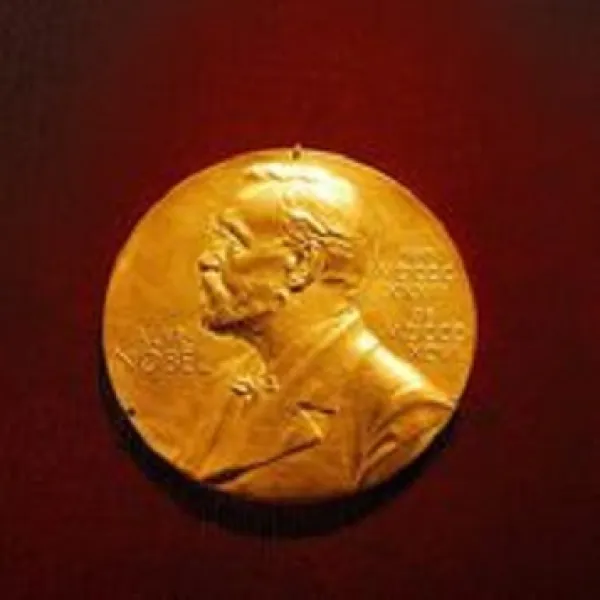
Juan Manuel Santos is not a grassroots advocate for disarmament and the abolition of war. He's someone who has used war but been willing to turn to peace. He is not in need of funding for his work toward global disarmament and peace because he doesn't do such work and because he is wealthy. He also is one side of a very tentative and precarious peace effort; why the Nobel Committee would give a prize to one side only in such a situation without considering the harm it could do to the process I do not know.
This is a better pick than many other recent picks, which have gone to either major war makers like Barack Obama or the European Union or to do-gooders whose good deeds were not related to war and peace at all, like Kailash Satyarthi, Malala Yousafzai, or Liu Xiaobo.
But this pick follows the pattern of giving the prize to high office holders rather than peace activists that has plagued the Nobel for decades.
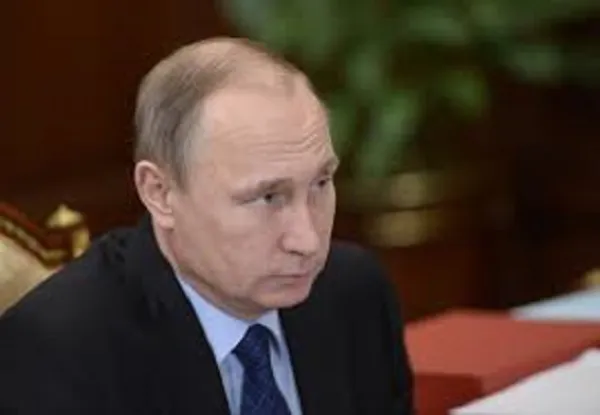
"Russia Wants to Undermine Faith in the U.S. Election. Don't Fall For It." Thus reads the cover of Time magazine with a photo of Vladimir Putin on the cover staring at me from shelves as I sit in an airport. Genuinely curious, I check out Massimo Calabresi's article online.
Of course, U.S. elections are almost completely unverifiable and do not even pretend to meet international standards. Jimmy Carter doesn't even try to monitor them because there's no way to do it. Much voting is done on machines that simply must be trusted on faith. Whether they accurately count the votes entered is simply unknowable, and reason to wonder is fueled by the machines' frequently changing a vote visibly just as it's cast, and by the ease with which people have been able to hack the machines. Never mind all the problems with registration, intimidation, inconvenience, discrimination, etc.

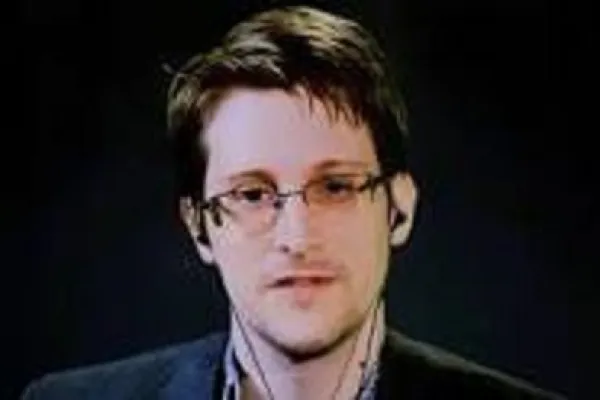
Snowden is the most entertaining, informing, and important film you are likely to see this year.
It's the true story of an awakening. It traces the path of Edward Snowden's career in the U.S. military, the CIA, the NSA, and at various contractors thereof. It also traces the path of Edward Snowden's agonizingly slow awakening to the possibility that the U.S. government might sometimes be wrong, corrupt, or criminal. And of course the film takes us through Snowden's courageous and principled act of whistleblowing.
We see in the film countless colleagues of Snowden's who knew much of what he knew and did not blow the whistle. We see a few help him and others appreciate him. But they themselves do nothing. Snowden is one of the exceptions. Other exceptions who preceded him and show up in the film include William Binney, Ed Loomis, Kirk Wiebe, and Thomas Drake. Most people are not like these men. Most people obey illegal orders without ever making a peep.
This is our lucky day for quite a few reasons. We haven't yet rendered the climate of this planet uninhabitable for our species. For those of us who are not in prison: we're not in prison -- and not because of some significant difference between us and many who are. For those of us not hungry or scared . . . (see note above re prisons). But there's another big reason that this is our lucky day -- a reason that is different in kind from these.
Laura Bentz of Keybridge Communications describes her company as "a boutique PR firm -- founded by a former writer for the Wall Street Journal -- that specializes in writing and placing op-eds. With some of the country's most influential trade groups and global corporations as clients, we run many of the major op-ed campaigns in the U.S. We place roughly 3,000 op-eds per year."
Now it is Milwaukee. On Saturday, a car with two African-American men was stopped for “suspicion.” The men fled, the policeman pursued, and the driver, reportedly armed, was shot and killed.
And Milwaukee exploded. Angry crowds confronted police, set fires, threw rocks. At least half-dozen businesses — including a grocery store, a gas station and an auto parts shop — were robbed or destroyed. The Saturday shooting was part of a weekend filled with violence in Milwaukee. Five people were shot and killed overnight Friday.
Milwaukee law mandates an investigation of any police shooting. Immediately, focus goes to the harsh relations between police and the community. But to understand the reaction to the shooting, it is necessary to go much deeper.