
THE G-20 IN PITTSBURGH
by Tom Over 9-23-09
<br><br>
On Tuesday, Sept 22, activists from Philadelphia, New York City, Pittsburgh and other cities held a mock funeral procession to demand better policies for addressing the AIDS pandemic, a day ahead of the arrival of delegates for the G-20.
<br><br>
The approximately 50 participants in the New Orleans-style funeral march drew a mix of interest, irritation, and amusement from onlookers in the business district of downtown Pittsburgh.
<br><br>
At the head of the funeral march where pallbearers carried a cardboard coffin, a man shouted into a microphone while someone else carried a portable amplifier, “when people with AIDS are under attack, what do we do ?” and marchers shouted in unison, “fight back!”
<br><br>
Amidst the early afternoon bustle of an weekday, the demonstrators repeated this call-and-answer and similar chants as the funeral march made its way around the perimeter of the David L. Lawrence Convention Center, the site of the G-20 Summit later this week.
<br><br>
Erica Goldberg works with ACT UP Philadelphia. She said global health is not on the agenda of the G-20 Summit.
“One of the things that some of the G-20 nations have promised us is funding for the global fund to fight, TB, malaria, and HIV/AIDS. This is all really important, especially if we want to meet the United Nations’ Millennium goal of eradicating these diseases by 2015. As of right now, this won’t be met. We have to hold our leaders accountable. They are the ones making decisions for the poorer countries,” Goldberg said.
<br><br>
She commented on the timing of the demonstration. “We wanted this to be the first thing they (the G-20 delegates) see. They’re coming here tomorrow. We’re holding them accountable. This needs to be on the agenda.”
<br><br>
She said AIDS activists chose Sept 22, two days before the official start of the G-20 Summit, and one day before the arrival of the delegates, so as to not have to compete with other protests. Also, she said the AIDS activists figured there would be less of a chance of conflict with police if they staged their protest earlier in the week.
<br><br>
“We hope that this will hit the papers tomorrow, that it’s the first thing they see when they walk in, that they have this on their conscience and know we’re not going away,” Goldberg said. She urges people to contact legislators about supporting the Global Fund to Fight AIDS, Tuberculosis, and Malaria.
“President Obama, as much as I love him, went back on his promise to fulfill the funding,” Goldberg said.
<br><br>
She commented on how drug companies factor into all of this. “ Medication does not need to be this expensive. They can definitely lower their prices. We have big drug interests lobbying to prevent AIDS medication from getting” to developing nations.
<br><br>
Goldberg said debt cancellation for developing nations is a factor that comes into play.
“When you don’t cancel debts of nations and they have to pay back loans to the IMF and the World Bank, they won’t have the funds necessary for getting AIDS medication, or they might get the medication but can’t pay the health professional because of their debt.
<br><br>
She said vested interested motivated by huge profits stand in the way of doing a better job of addressing tuberculosis, malaria, and HIV/AIDS. “We have the power, the ability, and the medication.”
World News
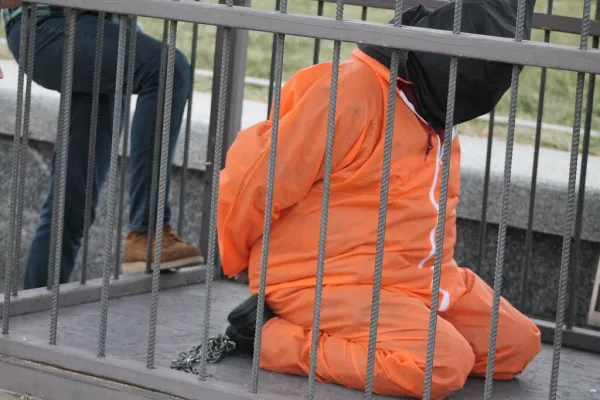
“That's certainly our goal and our intention.” This was the non-committal answer given by White House Press Secretary, Jen Psaki, when, on February 12, she was asked by a reporter whether the new Joe Biden Administration intends to shut down the notorious Guantánamo Bay Prison by the end of the president’s first term in office.
Psaki’s answer may have seemed reassuring, that the untold suffering experienced by hundreds of men in this American gulag - many of whom were surely innocent – would be finally coming to an end. However, considering the history of Guantánamo and the trail of broken promises by the Barack Obama Administration, the new administration’s pledge is hardly encouraging.

At a glance, it may appear that the split of Arab political parties in Israel is consistent with a typical pattern of political and ideological divisions which have afflicted the Arab body politic for many years. This time, however, the reasons behind the split are quite different.

On February 4, representatives from the Palestinian Movement, Hamas, visited Moscow to inform the Russian government of the latest development on the unity talks between the Islamic Movement and its Palestinian counterparts, especially Fatah.
This was not the first time that Hamas’s officials traveled to Moscow on similar missions. In fact, Moscow continues to represent an important political breathing space for Hamas, which has been isolated by Israel's Western benefactors. Involved in this isolation are also several Arab governments which, undoubtedly, have done very little to break the Israeli siege on Gaza.

What is taking place in Burma right now is a military coup. There can be no other description for such an unwarranted action as the dismissal of the government by military decree and the imposition of Min Aung Hlaing, the Commander-in-Chief of the Army, as an unelected ruler.
However, despite the endless talk about democratization, Burma was, in the years leading up to the coup, far from being a true democracy.
Aung San Suu Kyi, leader of the country’s erstwhile ruling party, the National League for Democracy (NLD), has done very little to bring about meaningful change since she was designated State Counselor.
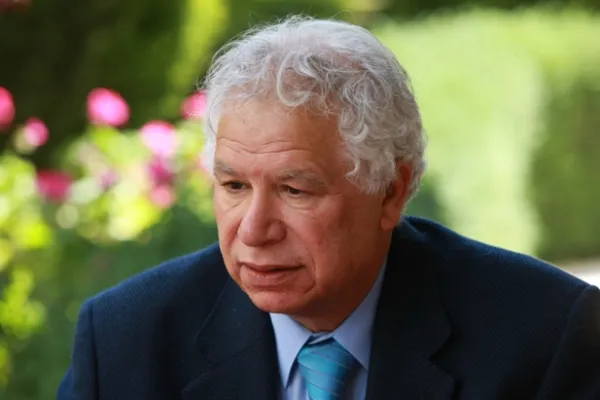
For Palestinians, exile is not simply the physical act of being removed from their homes and their inability to return. It is not a casual topic pertaining to politics and international law, either. Nor is it an ethereal notion, a sentiment, a poetic verse. It is all of this, combined.
The death in Amman of Palestinian poet, Mourid Barghouti, an intellectual whose work has intrinsically been linked to exile, brought back to the surface many existential questions: are Palestinians destined to be exiled? Can there be a remedy for this perpetual torment? Is justice a tangible, achievable goal?
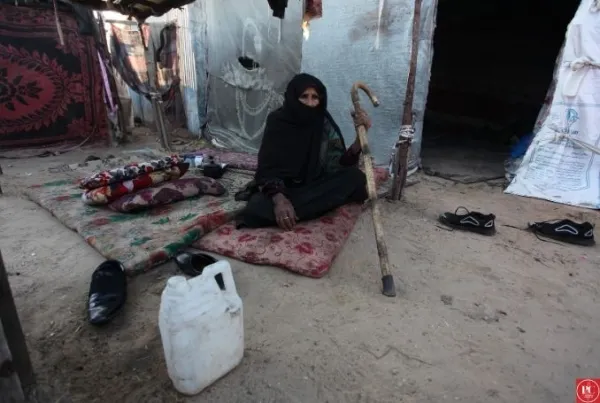
Motivated by their justifiable aversion to former US President Donald Trump, many analysts have rashly painted a rosy picture of how Democrats could quickly erase the bleak trajectory of the previous Republican administration. This naivety is particularly pronounced in the current spin on the Palestinian-Israeli discourse, which is promoting, again, the illusion that Democrats will succeed where their political rivals have failed.
There are obvious differences in the Democrats’ approach to the Palestinian-Israeli conflict, but only in semantics and political jingoism, not policy. This assertion can be justified if the Democratic administration’s official language on Palestine and Israel is examined, and such language considered within the context of practical policies on the ground.

BANGKOK, Thailand -- Myanmar's coup leader may be lucky his Southeast Asian country is wedged among authoritarian regimes which are interested in making money by accessing its natural resources and strategic geography, instead of condemning the destruction of its fledgling democracy.
Nearby key investors, including China and Thailand, muted their responses to the coup in Myanmar, a France-sized nation also known as Burma.
But the U.S., Europe, Australia and several other more distant lands denounced Commander-in-Chief Senior General Min Aung's bloodless coup at dawn on February 1.
"We call upon the military to immediately end the State of Emergency, restore power to the democratically-elected government, to release all those unjustly detained, and to respect human rights and the rule of law," the Group of Seven major economic powers said after the coup.
The G7 comprises the U.S., Canada, France, Germany, Italy, Japan, and the U.K.
In contrast, China did not support a UN Security Council's effort on February 2 to produce a joint statement condemning the putsch.

The Pakistani government should never, under any circumstances and no matter the pressure, normalize with Israel. Doing so is not only dangerous - as it will embolden an already vile, racist, violent apartheid Israel - but it would also be considered a betrayal of a historic legacy of mutual solidarity, collective affinity and brotherhood that have bonded Palestinians and Pakistanis for many generations.

BANGKOK, Thailand -- By seizing power, Myanmar's new coup leader Commander-in-Chief Senior General Min Aung Hlaing has protected his murky financial investments and the military's domination, but some of his incoming international cash flow might now be up for grabs.
Sr. Gen. Min spent much of his military career as a quiet, publicity-shy officer steadily promoted to higher positions before grabbing absolute power at dawn on February 1, six months before his mandatory retirement on his 65th birthday July 3.
Among other goals, Sr. Gen. Min apparently hopes he has protected himself, his family, and military colleagues from possible investigation over their extensive, lucrative financial deals.
"His financial interests must be considered as a motive for his coup," the Justice for Myanmar campaign group of activists said.
"Senior General Min Aung Hlaing has ultimate authority over Myanmar’s two military conglomerates -- Myanmar Economic Corporation (MEC) and Myanmar Economic Holdings Limited (MEHL)," the group said.

BANGKOK, Thailand -- Myanmar's military seized power in a coup on February 1, detained internationally disgraced civilian leader Aung
San Suu Kyi and other recently elected officials, and declared a one-year State of Emergency because voting was marred by "terrible
fraud."
Commander-in-chief Senior Gen. Min Aung Hlaing's security forces moved at dawn -- six months before his term expires in June -- prompting
speculation he may have been motivated to protect his extensive, murky financial investments and block any weakening of the military's
political domination.
The military's Myawaddy Television announced Sr. Gen. Min was now ruling and a State of Emergency would be enforced for one year,
starting immediately.
"The voter lists which were used during the multiparty general election which was held on the 8th of November were found to have huge
discrepancies and the Union Election Commission failed to settle this matter," the televised statement said.
"There was terrible fraud in the voter list."
The announcement pointed to the 2008 constitution which states: