
Global
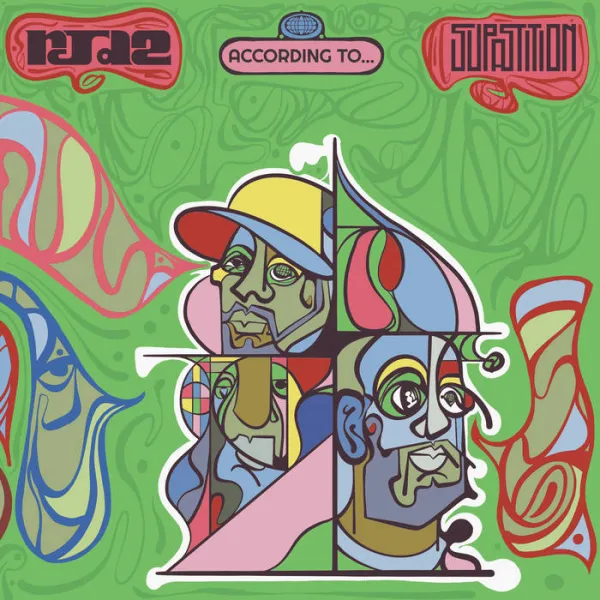
I wasn’t surprised Columbus, Ohio’s RJD2’s new album is with North Carolina’s SUPASTITION.
Supastition rapped from RJD2’s 2022 album with Philadelphia’s STS. We know there are various perspectives at understanding 2000’s underground rap.
RJD2 is from Columbus. New York’s El-P and Minneapolis’ Slug owned Columbus’ biggest platforms from a national perspective. RJD2 lived in Philly for awhile. RJD2 is a one of Columbus, Ohio most revered creatives. New York and Philly are sorta equally the same driving distance from North Carolina and Columbus.
Supastition is someone I associate with Phonte, 9th Wonder, Foreign Legion and adult North Carolina rap. RJD2’s and Superstition “According To..” raps about middle class life, aspirations, vocations and family. RJD2’s “According To’” production sounds like RJD2 studied his own instrumental albums. RJD2 picked up a guitar, drum, bass and Moog. RJD2 played and then chopped extensions of his body of work. “According To” isn’t RJD2 playing Dead Ringer and sampling himself

Following the Twelve-Day War in June 2025, the United States and Israel launched a new war against Iran on February 28, 2026—an illegal war neither authorized by Congress nor supported by the American public. The Trump administration has scrambled to manufacture justifications for this war, attempting to sell it to a skeptical public as a preemptive mission to eliminate a dangerous regime in Tehran. Yet the brutality and authoritarianism of the Iranian state cannot serve as a blank check for foreign aggression. The repression of the Iranian regime is real, but it does not legitimize an unprovoked war carried out in the name of “liberation.”
The struggle against the regime belongs to the Iranian people alone. It is not a cause to be hijacked by Donald Trump or Benjamin Netanyahu, nor a pretext for yet another catastrophic war imposed from outside. Iranians have resisted their rulers for decades—through protests, strikes, and immense personal sacrifice. Their struggle does not need bombs, opportunistic saviors, or cynical geopolitical theater masquerading as humanitarian concern.
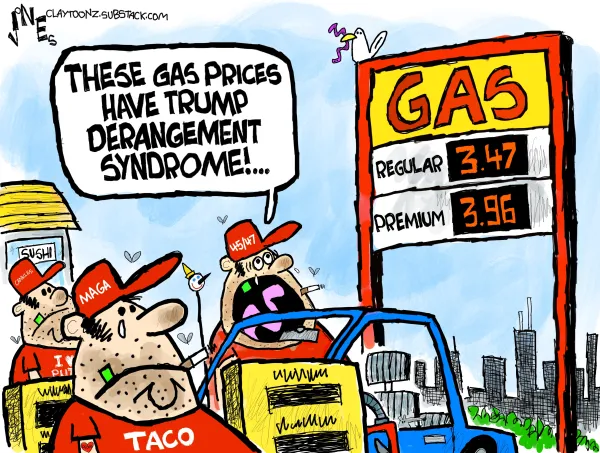

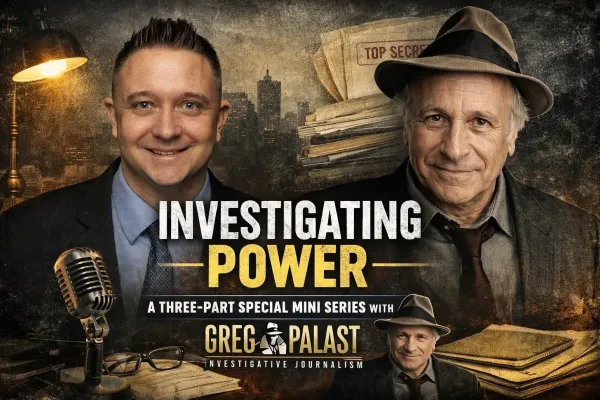
From Epstein and MI6 to voter suppression, coups, and the insiders who risk everything to expose them — Kevin Patrick interviews Greg Palast in this three-part special miniseries.
Over the course of more than an hour, investigative journalist Greg Palast spoke candidly about the world’s most powerful people we never get to see — a world of insiders, whistleblowers, secret networks, and the fragile systems that quietly determine the fate of governments, elections, and nations.
The conversation covers allegations involving high-level political figures, intelligence agencies, and the individuals who risk everything to expose what powerful institutions work hard to keep hidden. Palast shares firsthand accounts of undercover investigations, being arrested while reporting on a coup attempt in Kazakhstan, and what happens when journalism crosses paths with real power.
We talked about voter suppression, the systematic removal of tens of thousands of voters, and how entire populations can be quietly blocked from participating in democracy — not just in the past, but today.


Solar will dominate in 2026
Despite the rhetoric coming from Washington politicians and changes in federal policy that favor fossil fuels, clean energy is poised to once again dominate new generation facilities installed across the nation in 2026.
According to the latest estimates from the Energy Information Administration based on existing permits, this year, solar will provide 51 percent of the new utility-scale electricity capacity slated to come online, batteries will deliver 28 percent, and wind will add 14 percent. Natural gas will make up only 7 percent of that new capacity. There are no coal or nuclear power plants scheduled for construction this year. The Nuclear Regulatory Commission recently issued its first commercial reactor construction permit in nearly a decade to TerraPower for a 345-MW plant in Wyoming, with completion targeted for 2030.
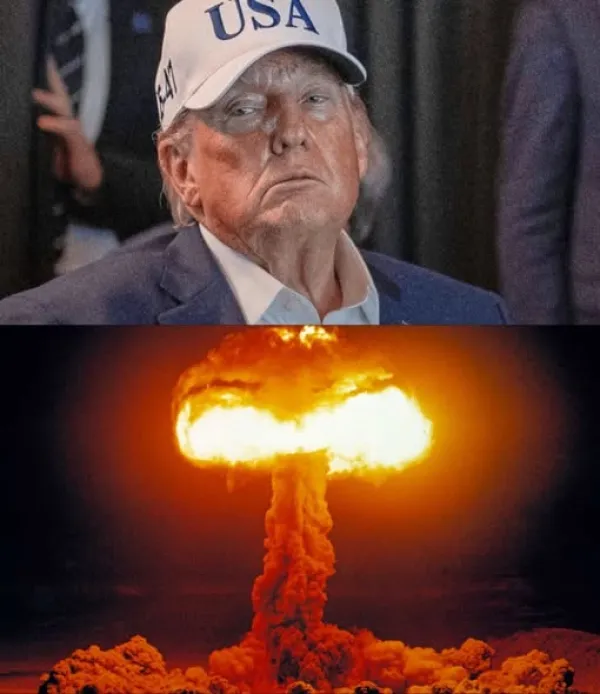
I had a premonition earlier this week, based on this knowledge.
I watched Trump, Hegseth and his team of psychopaths pretend like they are winning in Iran, acting tough, manly and confident. At the same time as suggesting they might be planning to send “boots on the ground”.
The reason there are no stated objectives for the war is that the objective is to turn Iran into a failed state like Libya and Syria.
When we understand the goal, it becomes obvious that Trump will use a nuclear weapon before he will agree to end the war. Rather than settle, he will kill millions (the population of Tehran is 9,840,100).
I had a premonition that Trump will murder millions of people in Iran rather than lose face.
Israel and the rest of the American Empire are heavily censoring information and flooding the zone with propaganda, I want to share with readers the sources that suggest the war is going badly. There is no offsetting information supporting the idea that the Empire is winning. All one has to do is turn on the TV to find that information. What a fool believes.....

Decades before social media existed, sociologist Erving Goffman described social life as a series of performances. Individuals, he argued, present curated versions of themselves depending on the audience they face. Social media did not invent this dynamic—it industrialized it. Today, platforms measure performance in likes, shares, reposts, and views. Attention becomes a currency. Visibility becomes evidence. In this environment, repetition can be mistaken for consensus and prominence for legitimacy. Political authority is no longer built solely through institutions, parties, or policy platforms. It can also be manufactured through algorithmic amplification.
The rise of Donald Trump illustrates this transformation.

Israel’s war on Iran reveals a deeper crisis: the collapse of a psychological doctrine built on fear and invincibility.
Origins of Israel’s Psychological Warfare
Wars are rarely fought only on battlefields. They are also fought in the minds of societies, in the perception of power and vulnerability, and in the political imagination of entire regions. Israel understood this principle early in its history, and psychological dominance became a central component of its military doctrine.
From the earliest years of the Zionist project, the idea that power must appear overwhelming was openly articulated. In 1923, the Revisionist Zionist leader Ze’ev Jabotinsky wrote in his famous essay The Iron Wall that Zionism would only succeed once the indigenous population became convinced that resistance was hopeless. Only when Palestinians realized they could not defeat the Zionist project, he argued, would they accept its permanence.