
Global
PHILADELPHIA -- We all had our debate moments, but the one that stunned me was, "It's (Iraq is) hard work. I see it on the TV screens."
Watching it on TV, boy that is tough work all right. And what was the "hard work" thing about? Did Rove poll and find out people think the president vacations too much?
I also came to a full stop after the one about sending troops to die. "I never -- when I was running -- when we had the debate in 2000, never dreamt I'd be doing that." He never dreamt it?
It never occurred to him? Was this man prepared for the job? Help!
I lean to the "bubble president" theory of Bush's peevish, petulant performance in debate. They've kept him surrounded by people who keep telling him he's great. I blame Karl Rove, of course. Bush is not used to being questioned. In Bob Woodward's book "Bush at War," the president is quoted: "I'm the commander in chief, see, I don't need to explain, I do not need to explain why I say things. That's the interesting part about being president. Maybe somebody needs to explain to me why they say something, but I don't feel like I owe anybody an explanation."
Watching it on TV, boy that is tough work all right. And what was the "hard work" thing about? Did Rove poll and find out people think the president vacations too much?
I also came to a full stop after the one about sending troops to die. "I never -- when I was running -- when we had the debate in 2000, never dreamt I'd be doing that." He never dreamt it?
It never occurred to him? Was this man prepared for the job? Help!
I lean to the "bubble president" theory of Bush's peevish, petulant performance in debate. They've kept him surrounded by people who keep telling him he's great. I blame Karl Rove, of course. Bush is not used to being questioned. In Bob Woodward's book "Bush at War," the president is quoted: "I'm the commander in chief, see, I don't need to explain, I do not need to explain why I say things. That's the interesting part about being president. Maybe somebody needs to explain to me why they say something, but I don't feel like I owe anybody an explanation."
The RAD ALERT Conference: Nuclear Dollars versus the Common Good was held in Columbus on Sept. 25th complete with national and international level speakers. It seemed to be of a greater relative interest to the domestic psyops corps of the US Military. The central intent of the conference was to provide the necessary information to understand several current nuclear issues.
What I am most interested in here is the coverage given to the conference by the Columbus Dispatch. It actually provides several insights into the motivations of its editorial staff in its effort to provide what they tell us is "news." It is true that the subject matter of the conference had a strong technical element. It is also true that typical journalism graduates tend toward the liberal arts range of preferences and less toward the technical side of issues. This indicates a deficiency in our educational expectations. It is also true that corporate filtered news tend toward the bland and the pretense of fairness, rather than the substance
What I am most interested in here is the coverage given to the conference by the Columbus Dispatch. It actually provides several insights into the motivations of its editorial staff in its effort to provide what they tell us is "news." It is true that the subject matter of the conference had a strong technical element. It is also true that typical journalism graduates tend toward the liberal arts range of preferences and less toward the technical side of issues. This indicates a deficiency in our educational expectations. It is also true that corporate filtered news tend toward the bland and the pretense of fairness, rather than the substance
John Kerry came across as the clear winner in Thursday night's debates
on foreign policy. As George W. Bush bumbled and stumbled his way
through the debates, John Kerry was clear, concise and showed how
Bush's bungled plan on Iraq was wrong and was a diversion from our
goal; finding and killing Osama bin Laden. Bush tried to mislead the
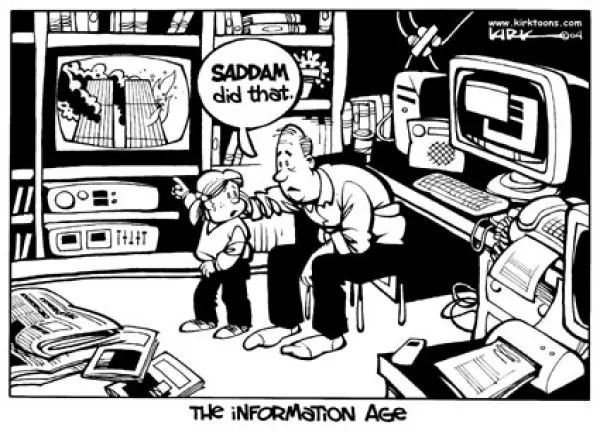
public about a connection between Saddam Hussein and Iraq, but Kerry
wouldn't let him do it. Bush was not able to handle the heat that
John Kerry was putting on him by forcing him to answer the tough
questions that he hasn't been asked before.
Bush's unwillingness to see the reality of Iraq and the war on terrorists only shows that he is unable to serve effectively as president.
Bush's unwillingness to see the reality of Iraq and the war on terrorists only shows that he is unable to serve effectively as president.
It was Bush’s sophomoric pandering to the "average Joe" that ruined the
quality of the debate and his insistence on untruth. That really was not a
debate but a facade that needed more propping in the hurricane of truth
from Kerry.
It was suggested by some media outlets that Kerry has a poor record in the Senate but the time he spent on these very issues that indited the right is then not referenced. His 2 investigations, one being the BCCI investigation and the Iran Contra investigation were both started by him.
He threatened the right and obviously has more guts to stick it out despite criticism and pressure from the "powers that be" as he did when he came back from Viet Nam.
It is these same guts that he used in the "debate" to enlighten the American public about the reality of the current administration and its present state.
Stephen Caruso
It was suggested by some media outlets that Kerry has a poor record in the Senate but the time he spent on these very issues that indited the right is then not referenced. His 2 investigations, one being the BCCI investigation and the Iran Contra investigation were both started by him.
He threatened the right and obviously has more guts to stick it out despite criticism and pressure from the "powers that be" as he did when he came back from Viet Nam.
It is these same guts that he used in the "debate" to enlighten the American public about the reality of the current administration and its present state.
Stephen Caruso
In an election likely to be decided as much by voter turnout as by
convincing the remaining undecided, how do we maintain the hope that's
necessary to keep making the phone calls, knocking on the doors, funding the
key ads, and doing all the other critical tasks to get Bush out of office?
Even those of us working hard for change hit walls of doubt and uncertainty about whether our actions really matter. Our spirits rise and fall as if on a roller coaster with each shift in the polls. In a time when lies too often seem to prevail, we wonder whether it's worthwhile to keep making the effort.
We need to remind ourselves that we never can predict all the results of our actions. A few years ago, I met a Wesleyan University student who, with a few friends, registered nearly three hundred fellow students concerned about environmental threats and cuts in government financial aid programs. The Congressman they supported won by twenty-one votes. Before they began, the student and her friends feared that their modest efforts would be irrelevant.
Even those of us working hard for change hit walls of doubt and uncertainty about whether our actions really matter. Our spirits rise and fall as if on a roller coaster with each shift in the polls. In a time when lies too often seem to prevail, we wonder whether it's worthwhile to keep making the effort.
We need to remind ourselves that we never can predict all the results of our actions. A few years ago, I met a Wesleyan University student who, with a few friends, registered nearly three hundred fellow students concerned about environmental threats and cuts in government financial aid programs. The Congressman they supported won by twenty-one votes. Before they began, the student and her friends feared that their modest efforts would be irrelevant.
AUSTIN, Texas -- This column is not about the presidential debate. It's about Other Stuff. Particularly eye-catching are the updates on the price of gasoline, your overtime pay, why the company most likely to hold the mortgage on your house could go broke, why you're getting peanuts from new tax cuts just passed by Congress and how the government is kicking hundreds of thousands of kids off health insurance while promising not to. Cheer all around.
-- The price of a barrel of oil went over $50 for the first time early this week, and the price of gassing up my vehicle, Truck Bob the Ford, is now $36 a pop. According to oil-ologists, this is on account of the unrest in oil-producing countries and rising global demand destabilizing world energy markets. Don't you love the jargon? The petro experts also say this ain't gonna get better.
-- The price of a barrel of oil went over $50 for the first time early this week, and the price of gassing up my vehicle, Truck Bob the Ford, is now $36 a pop. According to oil-ologists, this is on account of the unrest in oil-producing countries and rising global demand destabilizing world energy markets. Don't you love the jargon? The petro experts also say this ain't gonna get better.
I read your article about George Dumbass Bush being the biggest
environmental terrorist of all time (I agree) and his many other
too-long-to-list violations (I agree) but when you ran down a list of
history's bad guys, you did NOT list Christopher Columbus... why?
The Republicans have posted a "Debate Facts" section on their website. As is shown below, there is nothing factual about their claims.
1. Kerry On The Threat Posed By Saddam Hussein
Republicans charge that Kerry once supported and is now critical of the decision to go to war against Saddam Hussein and Iraq. This, in their minds, is a flip flop.
RESPONSE: A huge amount of information has been uncovered since 2002, including a great deal of evidence that the intelligence Bush used to the war was incorrect or even forged. Kerry and the rest of Congress voted on Bush’s bad information. Now that we know the justification for the war was invalid, it is by definition a mistake. As a Senator and as a Presidential candidate, it is Kerry's duty to use this information to improve our government's global policy -- to correct a mistake propagated by Bush and his cabinet.
2. Kerry Flip Flop On Iraq
RESPONSE: See point 1.
3. Breaking Debate Fact: Kerry Said President Has Lost Support Among Military Officials
Defending against this statement the Republicans publish nothing more than a list of names of Flag Officers.
1. Kerry On The Threat Posed By Saddam Hussein
Republicans charge that Kerry once supported and is now critical of the decision to go to war against Saddam Hussein and Iraq. This, in their minds, is a flip flop.
RESPONSE: A huge amount of information has been uncovered since 2002, including a great deal of evidence that the intelligence Bush used to the war was incorrect or even forged. Kerry and the rest of Congress voted on Bush’s bad information. Now that we know the justification for the war was invalid, it is by definition a mistake. As a Senator and as a Presidential candidate, it is Kerry's duty to use this information to improve our government's global policy -- to correct a mistake propagated by Bush and his cabinet.
2. Kerry Flip Flop On Iraq
RESPONSE: See point 1.
3. Breaking Debate Fact: Kerry Said President Has Lost Support Among Military Officials
Defending against this statement the Republicans publish nothing more than a list of names of Flag Officers.
Robert F. Kennedy was greeted with a standing
ovation on Wednesday at Campbell Hall on the OSU
campus. A Harvard graduate, Kennedy is a professor at
the Pace University School of Law, senior attorney for
the National Resources Defense Council, and chief
prosecuting attorney for the Hudson Riverkeeper Fund.
More than two hundred people came to hear him talk about his new book, Crimes Against Nature, and the Bush administration's irresponsible environmental policies.
Kennedy blamed the public's ignorance of President Bush's environmental abuse on the timidity of the national press and the White House Press Corps, whom he referred to as "stenographers."
More than two hundred people came to hear him talk about his new book, Crimes Against Nature, and the Bush administration's irresponsible environmental policies.
Kennedy blamed the public's ignorance of President Bush's environmental abuse on the timidity of the national press and the White House Press Corps, whom he referred to as "stenographers."