
Global
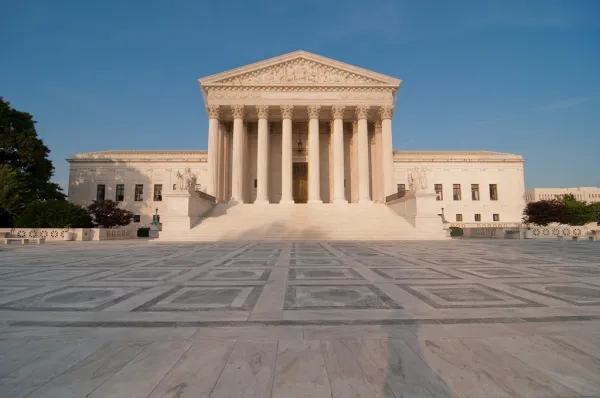
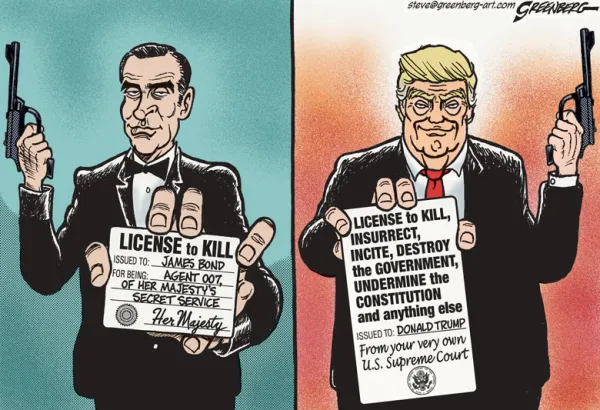
Rulings by the conservative majority on the Supreme Court favor Trump and right-wing, anti-democratic interests and values, threatening to upend an already weakened American democracy. The right-wing bias of the court goes back to Trump’s successful nominations of three reactionary justices to the court while he was president. As it stands now, there are six right-wing justices on the court and 3 “liberals.”
In one of its most disturbing recent rulings on June 2022 the court overturned Roe v. Wade, the 1973 law that gave women the right to an abortion. The story of this ruling is told in masterful detail by Elizabeth Dias and Lisa Lerer in their book, “The Fall of Roe, The Rise of a New America” (publ. 2024).
In this post, the contention about the court’s right-wing bias is exemplified by three recent Supreme Court rulings dealing with expanding gun ownership rights, deregulation, and presidential immunity.
-------------
Bump Stocks
Supreme Court Rejects Ban on Gun Bump Stocks

The United States tax code allows exemptions from federal taxes for certain categories of nonprofit organizations or groups that frequently serve either an educational or charitable purpose. Such organizations are categorized as 501(c)(3) and exempt from Federal income taxes while the donors who contribute to their support can deduct the total donations up to the limits imposed by their own overall tax liability. The Internal Revenue Service (IRS) recognizes more than 30 types of nonprofit organizations but only those that qualify for 501(c)(3) status can say that donations made to them are tax deductible.
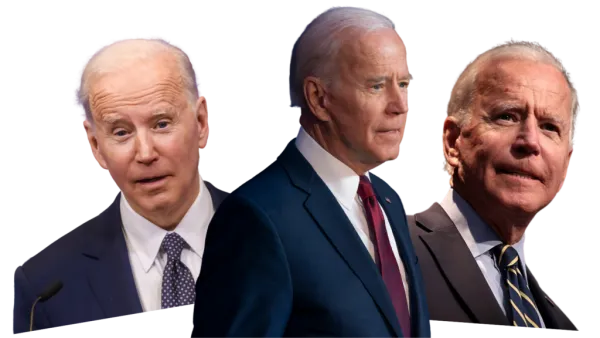
When Joe Biden’s ABC News interview aired on Friday night, it made clear that he should not be running for re-election. Rather than reduce the concerns sparked by his abysmal debate performance eight days earlier, the interview underscored that the president is in denial about his current political standing and unable to offer reassurance that his mental capacities are unimpaired.
Notably, Biden kept dodging and refusing to reply in the affirmative when journalist George Stephanopoulos asked whether he has had “a full neurological and cognitive evaluation” and if he would “be willing to have the independent medical evaluation.”

BANGKOK, Thailand -- Thailand is allowing 5,000 impoverished Thais to fly to Israel to work for better-paying jobs in desert "safe areas," and wants to send 40,000 more, despite the deaths of 41 Thais and 31 kidnapped during the October attack by Hamas and other Palestinian fighters.
Six Thais remain among the hostages in Gaza.
“Thai nationals must be only employed in safe areas, or green areas, confirmed by Israeli authorities and the Royal Thai Embassy in Tel Aviv,” Thai Labor Minister Phiphat Ratchakitprakarn said.
Mr. Phiphat traveled on May 26 to Tel Aviv to lobby for an increase in their quota for how many Thai men and women, aged 25-41, can go to Israel for work, mostly at agriculture and construction sites.
"Even though it is their choice to return to Israel, it can't be denied that Thailand's economy is not appealing enough to keep these workers here," Thai Prime Minister Srettha Thavisin said in April.
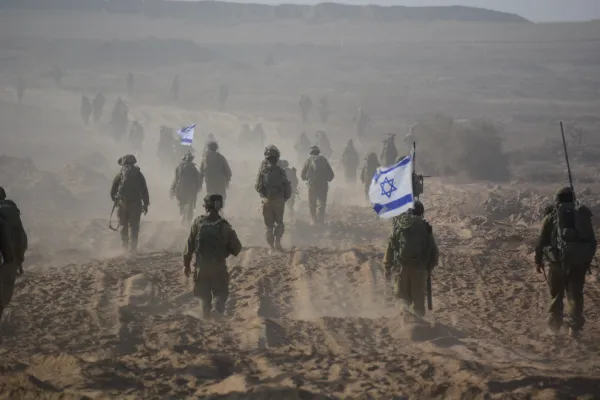
Israel never learns from its mistakes.
What Israeli Prime Minister Benjamin Netanyahu is trying to implement in Gaza is but a poor copy of previous strategies that were used in the past by other Israeli leaders. If these strategies had succeeded, Israel would not be in this position in the first place.
The main reason behind Netanyahu's lack of clarity about his real objectives in Gaza is that neither he nor his generals can determine the outcomes of their futile war on the Strip, a war that has killed tens of thousands of innocent civilians.
And, no matter how hard he tries, Netanyahu will not be able to reproduce the past.

. . . Your soul comes out of hiding.
I understand
that you are blessing me.. . .
I find myself — still — groping in wonder. What a coincidence this was. About a week ago my friend Mike emailed me, telling me he and his wife had been going through boxes and drawers and files in their house, and one of the items they came upon was an old poem I had written — twenty-plus years ago, while I was still grieving my wife Barbara’s death.
I had reclaimed poetry at that point in my life because, as I put it at the time, the narrative of my life had been shattered. I was a writer and I needed to write. I needed to put my feelings into words in order to keep on with my life — and poetry allowed me to do so: to reach deeply into the unknown that is grief, to connect with the unknown without “understanding” it.