
Global

At first, I admit, I was a bit flattered to learn that online entrepreneurs are selling study guides for my new book. I thought of CliffsNotes from long ago, helping fellow students who were short on time or interest to grasp the basics of notable works. Curiosity quickly won. I pulled out my credit card, paid $9.99 plus tax for one of the offerings, and awaited its arrival in the mail.
The thin booklet got off to a reasonable enough start, explaining with its first sentence, “The U.S. media coverage that makes it easier to sell wars to the public, as well as the often-hidden cost of civilian casualties from errant U.S. attacks, are all harshly criticized by journalist Solomon.” That wasn’t a bad sum-up of my book.
But the study guide’s second sentence was not nearly as good: “He guarantees that when Russia designated Ukrainian communities during the new attack, the U.S. media was everyone available and jumping into action with compassionate, piercing revealing.” Rereading that sentence a few times didn’t improve it, and I began to worry.
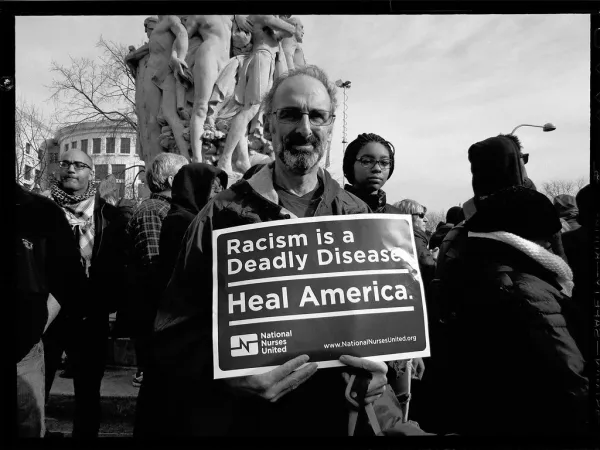
Racism goes beyond the use of certain words or the discriminatory practices of everyday life. It is also about political perceptions, intellectual depictions, and collective relationships.
Consider the way that Africa is currently portrayed in the news.
From a political viewpoint, Africa is seen as a totality, and not in a positive way, as in a united Africa.
For example, mainstream Western media coverage of the US-Africa Summit, held in Washington last December, presented all of Africa as poor and desperate. The continent, one can glean from headlines, was also willing to pawn its political position in the Russia-NATO conflict, in exchange for money and food.
"Biden tells African leaders US is 'all in' on the continent," an Associated Press headline announced on December 15.
The phrase 'all in' - a lingo used in Poker when someone is willing to risk it all - was cited many times in the US and Western media.

Backstage at Carnegie Hall during the mid-1980s I found myself standing next to a tall, older gentleman. Looking up, I gasped, realizing I was in the presence of arguably the world’s greatest living playwright. I blurted out: “God bless you, Mr. Miller!”
Arthur Miller, author of the immortal masterpiece Death of a Salesman, is high up on my list of must-see bards. Whenever I get word that one of his plays is being mounted on L.A.’s boards, for me “It’s Miller time!” and I make a beeline to that stage to bask in the brilliance of his Arthurian dramatics and wordplay. (See: https://hollywoodprogressive.com/stage/all-my-sons; https://www.peoplesworld.org/article/broken-glass-what-it-means-to-be-a-jew-in-america/.) And so it was with the Ruskin Group Theatre’s stellar, gut-punching production of A View from the Bridge (which I’d never had the opportunity to see before on stage or screen) way down yonder at Santa Monica – and I wasn’t disappointed.
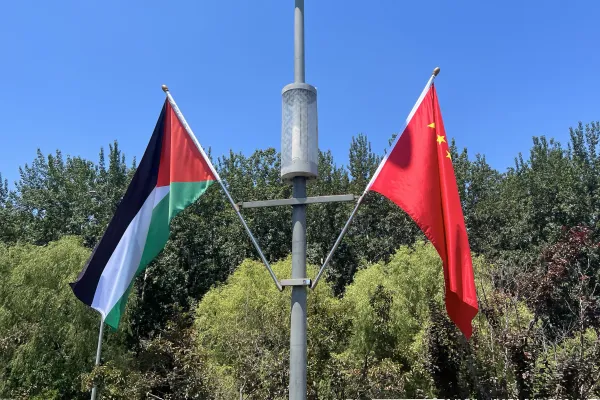
It is feasible for China to continue playing an important role in mediating Middle
East conflicts. In fact, it already has. In the case of the Israeli occupation of Palestine,
however, mediation is hardly the issue.
Even before Beijing successfully managed to achieve reconciliation between Saudi
Arabia and Iran last April, Chinese diplomacy has shown exceptional maturity.
For many years, China has been perceived to be an outsider to global affairs,
supposedly contending itself to economic expansion or to regional economic
integration.
Former US President Donald Trump forced, or rather, accelerated China’s global
outreach when, in 2018, he launched an unprecedented trade war on the powerful
Asian country.
Trump’s plan backfired. Not only did Washington fail to dissuade Beijing from
bowing to American diktats, it also inspired what became known as China’s wolf
diplomacy – a self-assertive Chinese approach to foreign policy.
From an American - or Western - viewpoint, the new tactic was perceived to be
hostile and aggressive.