
Global
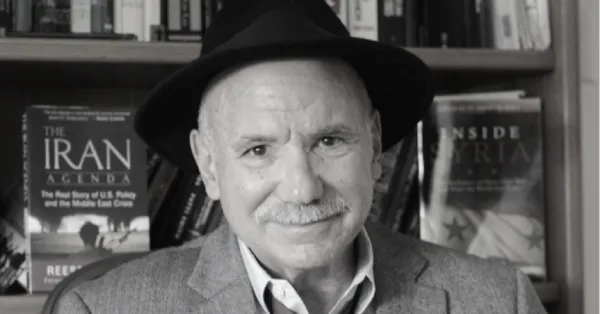
When Reese Erlich died in early April, we lost a global reporter who led by example. During five decades as a progressive journalist, Reese created and traveled an independent path while avoiding the comfortable ruts dug by corporate media. When people in the United States read or heard his reporting from more than 50 countries, he offered windows on the world that were not tinted red-white-and-blue. Often, he illuminated grim consequences of U.S. foreign policy.
The first memorable conversation I had with Reese was somewhere over the Atlantic Ocean on the way to Iraq in September 2002—as it turned out, six months before the U.S. invasion. He was one of the few journalists covering a small delegation, including Congressman Nick Rahall and former Senator James Abourezk, which the Institute for Public Accuracy sponsored in an attempt to establish U.S.-Iraqi dialogue and avert the looming invasion.

The annual Academy Awards ceremony – wherein a pack of swag bag schlepping celebs clad in brand name couture pat themselves on the back on live TV, while thanking their agents, hair stylists, managers, makeup artists, etc. – is set for Sunday, April 25. To be fair, a number of films competing for those coveted golden statuettes do have artistic excellence and/or social significance. The 1960s/70s New Left is ready for its close up, with the Black Panther-themed Judas and the Black Messiah and The Trial of the Chicago 7, about the antiwar movement, each nominated for six Oscars, including for Best Picture. Time, a timely meditation on African Americans and our criminal (in)justice system, is contending for Best Documentary.
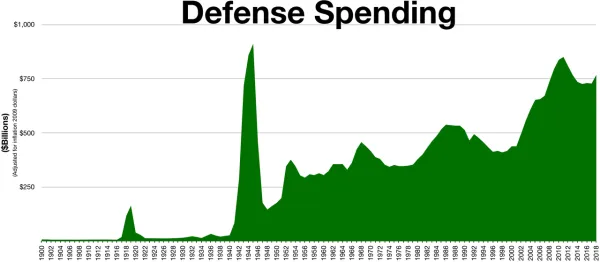
When Democrats were handed the U.S. Congress in 2006 to end the war on Iraq, and they escalated it in order to “oppose” it in the 2008 elections, it’s possible some of them were not being completely forthright and respectful toward you, their loyal supporters.
When the Democratic legislature in California passes single-payer healthcare whenever it can count on a Republican governor to veto it, but never during Democratic governorships, or when the U.S. Congress ends the war on Yemen when it can count on a Trump veto but not when Biden is in, it’s possible that certain politicians’ expressions of concern for people lacking healthcare or people lacking bomb-free skies are less than completely sincere.
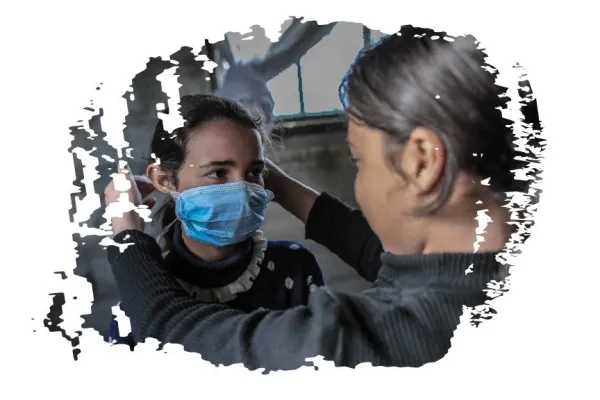
COVID-19 cases in Palestine, especially in Gaza, have reached record highs, largely due to the arrival of a greatly contagious coronavirus variant which was first identified in Britain.

Let’s use up the planet and bless the future with its corpse.
If politics involved speaking the truth, those words could well be the core slogan of mainstream politicians and their media cohorts, with the purpose of the election process (you know, democracy) being, simply, to choose the specific ways in which we continue exploiting the planet and ignoring the consequences.
Should we destroy the rainforests quickly or slowly? How much should be invest in the next generation of nuclear weapons and — come on! — when do we get to use them to protect our freedoms? We can’t afford to save the planet but we can definitely afford to kill it. But let’s do it carefully and responsibly.
There’s an alternative to this thinking, but I’m not sure when or how it will gain sufficient political and economic traction in today’s world to have an impact: to change official thinking and basic assumptions about the nature of reality. This alternative emerges from wisdom at the core of human consciousness, which the “developed” world chose to abandon and forget in millennia past. It’s often referred to these days as indigenous thinking, but it doesn’t belong in a museum.
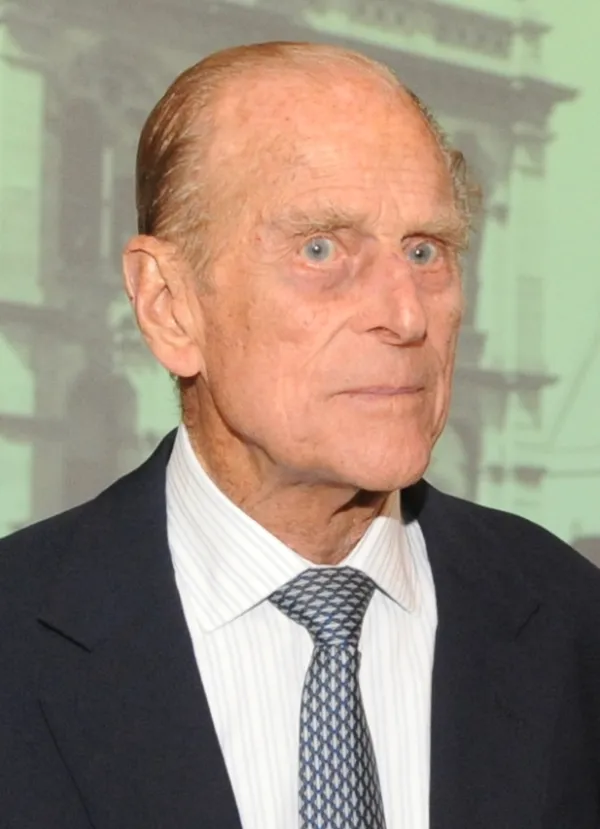
I write this as the annual Academy Awards ceremony approaches; Hollywood’s landmark Cinerama Dome, with its iconic concave screen, closes; and Prince Philip has made his last journey from Windsor Castle to St. George’s Chapel for one final pageant: His Royal Highness’ funeral. The confluence of these events has moved this film/TV historian to meditate on the audio-visual medium of moving images, the evolution of the art of storytelling from Telemachus to television, Sophocles to cinema to streaming.
The Duke of Edinburgh was actually something of an innovator in terms of screen productions. It was Prince Philip’s brainstorm to televise the 1953 coronation of his wife, which took millions around the world inside of Westminster Abbey to observe the crowning of Elizabeth II, for what was then the largest viewership of any live event out there in TV-land.

“Only when the last tree has died, the last river has been poisoned and the last fish has been caught will we realize we cannot eat money.” -- Cree Indian Proverb
“Oh Beautiful for smoggy skies, insecticided grain,
For strip-mined mountain's majesty above the asphalt plain.
America, America, man sheds his waste on thee,
And hides the pines with billboard signs, from sea to oily sea.” ~George Carlin
“We do not inherit the earth from our ancestors, we borrow it from our children.” ~ Native American Proverb
“Always drink upstream from the herd.” -- from “A Cowboy’s Guide to Life”

Australia’s Labor Party’s recognition of Palestine as a State on March 30 is a welcomed position, though it comes with many caveats.
Pro-Palestinian activists are justified to question the sincerity of the ALP’s stance and whether Australia’s Labor is genuinely prepared to fully adopt this position should they form a government following the 2022 elections.

When I met a seven-year-old girl named Guljumma at a refugee camp in Kabul a dozen years ago, she told me that bombs fell early one morning while she slept at home in southern Afghanistan’s Helmand Valley. With a soft, matter-of-fact voice, Guljumma described what happened. Some people in her family died. She lost an arm.
Troops on the ground didn’t kill Guljumma’s relatives and leave her to live with only one arm. The U.S. air war did.
There’s no good reason to assume the air war in Afghanistan will be over when -- according to President Biden’s announcement on Wednesday -- all U.S. forces will be withdrawn from that country.

The popular narrative of plucky little Israel prevailing over hordes of bloodthirsty Arabs has captured the Western imagination even though it is manifestly false in almost every detail. But Israel’s greatest accomplishment might well be something else, it’s ability to make things disappear. It plausibly all began in June 1967 when Israel attacked the USS Liberty, a lightly armed but well identified US naval vessel cruising in international waters under a large American flag. Fighter bombers and torpedo boats sought to sink the ship, destroying the lifeboats so no one would escape. In the engagement, 34 American military personnel were killed and a further 171 wounded, before a heroic defense by the crew managed to save the vessel. President Lyndon Johnson, who said he would rather see the ship sink than embarrass his friend Israel, started a cover-up which has lasted to this day. There has been no legitimate court of inquiry into the attack and when the ship’s captain received a Medal of Honor for his heroism, it was awarded secretly in the Washington Navy Yard rather than openly at the White House.