
Global
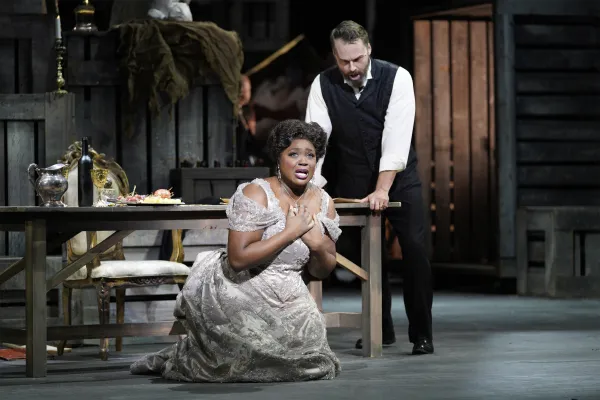
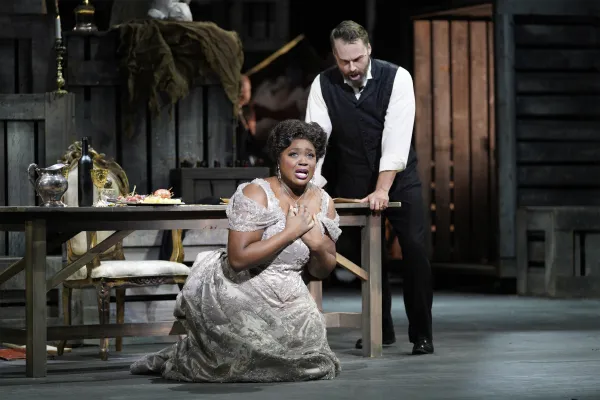
Having returned to L.A. after my voyage from Tahiti to Pitcairn Island aboard the cargo/cruiser Aranui, I’m happily back in the reviewer’s seat and was enraptured by LA Opera’s production of Giacomo Puccini’s Tosca, which premiered in Rome 122 years ago. Those in the TikTok generation and others who consider opera to be a stuffy, bourgeois art form should consider the plot of Tosca, which could be proverbially ripped from today’s headlines. Tosca centers around political prisoners, secret police, torture, executions and direct action against tyrants. I kid thee not, Dear Reader!
Having returned to L.A. after my voyage from Tahiti to Pitcairn Island aboard the cargo/cruiser Aranui, I’m happily back in the reviewer’s seat and was enraptured by LA Opera’s production of Giacomo Puccini’s Tosca, which premiered in Rome 122 years ago. Those in the TikTok generation and others who consider opera to be a stuffy, bourgeois art form should consider the plot of Tosca, which could be proverbially ripped from today’s headlines. Tosca centers around political prisoners, secret police, torture, executions and direct action against tyrants. I kid thee not, Dear Reader!
Part 1: ELECTION MADNESS IN GA AND ARIZONA, & THE SANITY OF SCANNED PAPER BALLOTS
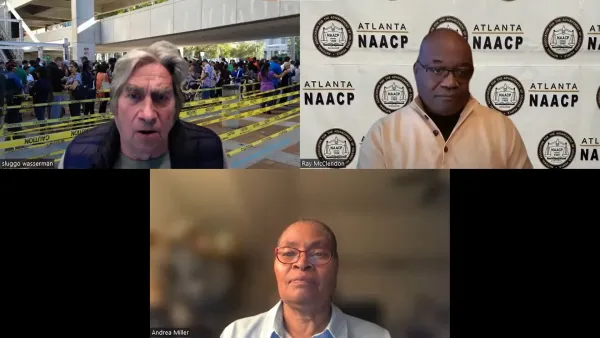
On GREEGREE zoom #118 we begin with a “How To” session from ANDREA MILLER of the Center for Common Ground and RAY MCCLENDON of the Georgia NAACP.
Ray and Andrea explain how citizens from inside Georgia and around the US can plug into help turn out the vote in the upcoming December 6 US Senate runoff in Georgia.
This historic election will determine whether the US Senate will be 50-50 or 51-49, and will have enormous impacts on the fate of the nation.
JOHN BRAKEY of Audit USA then updates us on the “Lake Effect” in Arizona, in which a MAGA gubernatorial candidate is finally forced to concede defeat.
We also discuss major electoral studies confirming that the fairest and most reliable way to conduct a vote is with hand marked paper ballots that are then scanned.
The scanners provide the initial—very fast—results, which can then be checked with risk limiting audits and, if necessary, actual hand counting.
The election protection movement has fought for this outcome since Ohio 2004.
“Guinea Pig Nation: How the NRC's new licensing rules could turn communities into test beds for risky, experimental nuclear plants,” is what physicist Dr. Edwin Lyman, Director of Nuclear Power Safety with the Union of Concerned Scientists, titled his presentation last week.
The talk was about how the U.S. Nuclear Regulatory Commission is involved in a major change of its “rules” and “guidance” to reduce government regulations for what the nuclear industry calls “advanced” nuclear power plants.
Already, Lyman said, at a “Night with the Experts” online session organized by the Nuclear Energy Information Service, the NRC has moved to allow nuclear power plants to be built in thickly populated areas. This “change in policy” was approved in a vote by NRC commissioners in July.
For a more than a half-century, the NRC and its predecessor agency, the U.S. Atomic Energy Commission, sought to have nuclear power plants sited in areas of “low population density”—because of the threat of a major nuclear plant accident.

A dark cloud will threaten the future of Pacifica until it re-establishes good faith and trust with its listener-supporters, and with the public at large.
Along with the staff of KPFA, KPFK and KPFT, a strong majority—more than 6800 voters—approved a change of by-laws in July, 2021.
That clear majority voted in the well-founded belief that the previous by-laws had failed, and that the structure of Pacifica’s management needed to be reformed if the Network were to survive.
In denying that rightfully approved change of by-laws, and then denying the rightful election of a number of candidates to the KPFK board, Pacifica broke its good faith and trust with its listener-supporters, and with the public.
The results have been painfully obvious.
As Myla Reson has pointed out, Pacifica INITIATED the lawsuit against New Day---and a number of individuals--- in direct opposition to the wishes of the majority of listener-supporters.
Money donated by those listener-supporters was somehow paid to the legal team to deny those very listener-supporters their own clearly stated mandate for new by-laws.


Soon after arriving in Oslo, my taxi zigzagged through the city's well-organized streets and state-of-the-art infrastructure. Large billboards advertised the world's leading brands in fashion, cars, and perfumes. Amid all the expressions of wealth and plenty, an electronic sign by a bus stop flashed the images of poor-looking African children needing help.
Over the years, Norway has served as a relatively good model of meaningful humanitarian and medical aid. This is especially true if compared to other self-serving western countries, where aid is often linked to direct political and military interests. Still, the public humiliation of poor, hungry and diseased Africa is still disquieting.
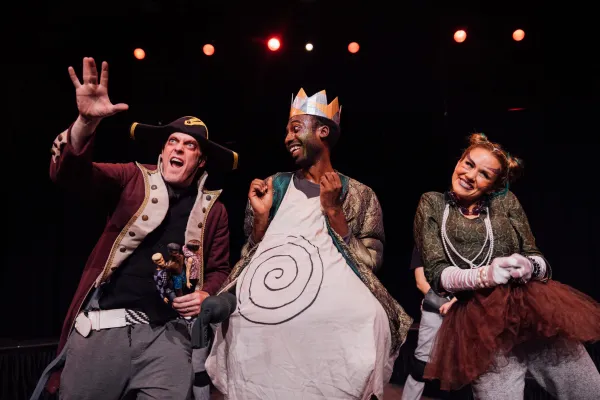
Upon returning from Tahiti and Pitcairn Island I was glad I hadn’t missed The Actors’ Gang’s 40th Anniversary production of Ubu the King, which has been extended. Especially as this veteran reviewer has never seen anything quite like this inspired insanity performed on a live stage before. The playbill includes credits for, and I quote, “fartists” (cast members Adam Dugas and Guebri Van Over hold that honor), and before the proverbial curtain lifts a bilingual woman announces house rules, such as where emergency exits (presumably for faint of heart ticket buyers) are located and warns audience members against committing acts of “terrorism,” like talking during the show.
The latter admonitions may reference the outraged disruptions that punk-tuated the world premiere of Ubu Roi (for readers who don’t parlez vous, “roi” is French for “king”). The ensuing 90-minutes of merry madcap mayhem on the boards of The Actors’ Gang’s Culver City theater clearly reveal what triggered Parisian spectators to riot during the apparently not-so-“Gay Nineties,” and the subsequent banning, of symbolist Alfred Jarry’s surreal satire.