
Global
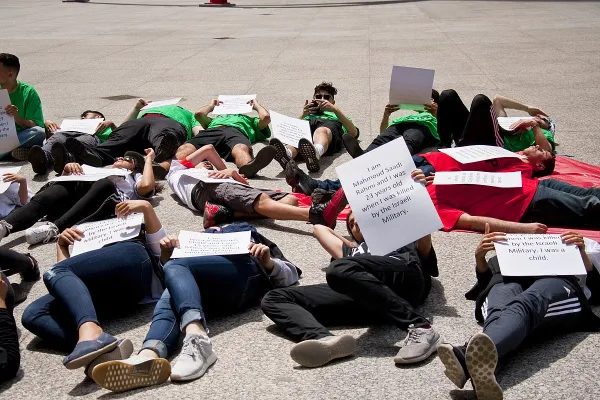
While US and western mainstream and corporate media remain biased in favor of Israel, they often behave as if they are a third, neutral party. This is simply not the case.
Take the New York Times coverage of the latest Israeli war on Gaza as an example. Its article on August 6, "Israel-Gaza Fighting Flares for a Second Day" is the typical mainstream western reporting on Israel and Palestine, but with a distinct NYT flavor.
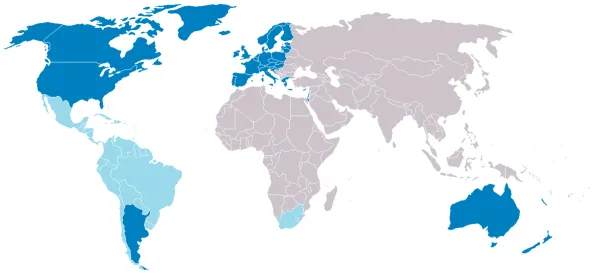
The ‘West’ is not just a term, but also a concept that acquires new meanings with time. To its advocates, it can be analogous to civilization and benevolent power; to its detractors, mostly in the 'East' and 'South', it is associated with colonialism, unhinged violence, and underserved wealth.
The current, seismic shifts in world affairs, however - namely, the Russia-Ukraine war, and the budding conflict in the Strait of Taiwan - compels us to re-examine the 'West', not only as a historical concept, but also as a current and future idea.

My daughter, Alison, who is 36 years old, flew into town the other day (angel that she is) and I can’t let go of the wonder and miracle of it all . . . being alive.
I had intended to write a column this week about the nature of the U.S. security state and the country’s trillion-dollar, only minimally challenged annual “defense” — actually, offense — budget, but then I came upon a journal entry I wrote in 1988, when my daughter, who is a stained-glass artist and poet living in Paris, was 2 years old.
Was this the birth of her career?
I wrote:
“Oh gosh, here it is, the morning of my 42nd birthday. I just dropped Alison off at Katy, Patrick and Erin’s. For some reason, she was real reluctant to go this morning. She was feeling her own brand of tension and disorientation. When Alison gets disoriented, she has to find some small, tangible, happy thing to focus on — for instance, the stained-glass teddy bear in Katy’s porch window. To psych herself up for her day at the babysitter this morning, Alison had to say, ‘I’m going to see the teddy bear!’ And imitating me as we walked down the sidewalk toward Katy’s house, ‘Where’s that teddy bear?’
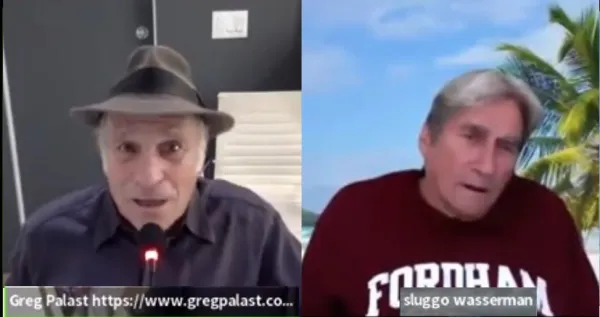
In our GREEN GRASSROOTS EMERGENCY ELECTION PROTECTION zoom #107 we open with WENDI LEDERMAN explaining how Florida’s extreme right-wing Gov. Ron DeSantis has arrested 20 citizens for the crime of voting while black. Despite a huge public referendum win confirming the right of ex-felons to vote, DeSantis and his fellow vigilantes are intent on terrorizing the electorate.
The great GREG PALAST then introduces his new film VIGILANTE: GEORGIA’S VOTER SUPPRESSION HITMAN. Legendary investigative reporter Palast introduces the astonishing reality of Georgia’s Gov. Brian Kemp, scion of an historic slave-owning family, and his all-out assault on the ability of thousands of Georgia citizens to cast ballots at all. Greg’s hour-long presentation includes powerful questions from DANNETT ABBOTT, DR. RUTH STRAUSS, RAY MCCLENDON, DENNIS BERNSTEIN, MARY BUTLER-STONEWALL, STEVE SPITZ, ALEX WILLIAMS, PAUL SHERMAN, GEORGE RIPLEY and many more.
HELENA BUCHMANN tells us how grassroots organizing defeated anti-choice conservatives in Kansas.
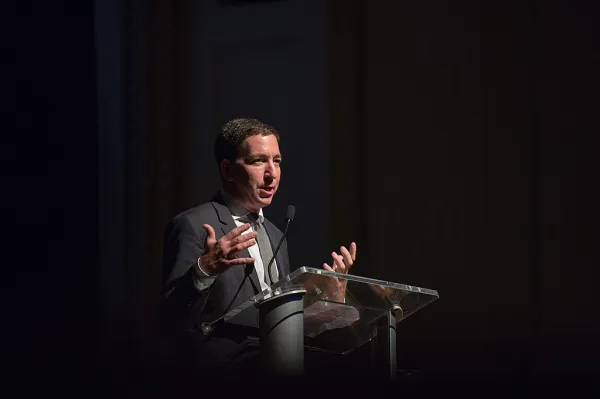
In 2022, Pride month — June — gave way to an explosion of invective against LGBTQ rights, helped along by allies in right-wing media, particularly Fox News. But there’s also rising anti-trans sentiment in the liberal-left sphere, and it’s being driven by some elements of what might be called the “post-left,” onetime champions of progressive outlooks who have now tilted to the right. Former Intercept writer) Glenn Greenwald is one of those leading the charge, turning his audience on to fringe elements of a growing hate movement.
It wasn’t always like this. Greenwald was once a stalwart defender of trans rights — perhaps in connection with his advocacy for U.S. Army whistleblower Chelsea Manning and his friendship with since-assassinated Brazilian politician and activist Marielle Franco. “If you want to get a taste for how widespread warped & creepy hostility against trans people is, mention Chelsea Manning & survey the bile,” Greenwald tweeted on Sept. 10, 2016.

Information Collated by Gary G. Kohls, MD - October 4, 2021 (2162 words)
https://nuremberg.law.harvard.edu/nmt_1_intro
Summary
The Medical Case, U.S.A. vs. Karl Brandt, et al. (also known as the Doctors' Trial), was prosecuted in 1946-47 against twenty-three doctors and administrators accused of organizing and participating in war crimes and crimes against humanity in the form of medical experiments and medical procedures inflicted on prisoners and civilians.
Physician and surgeon Karl Brandt, the lead defendant, was the senior medical official of the German government during World War II; other defendants included senior doctors and administrators in the armed forces and SS. Brandt had been appointed by Adolf Hitler to head the Euthanasia Program, Aktion T4. The defendants were indicted on four counts:
1. Conspiracy to Commit War Crimes and Crimes Against Humanity;
2. War Crimes (I.E., Crimes Against Persons Protected by the Laws of War, Such as Prisoners of War);
3. Crimes Against Humanity (Including Persons Not Protected by The Laws of War); and

Why does the United States have more civilian gun deaths then the entire rest of the world combined? Is it because people in the US are more violent? NO.
Is it because people in the US are more unstable, have more mental problems, and we have more sociopaths? NO.
Is it because more people in the US are mean, vicious, deadly? NO.
There is only one thing that the US has more of than any other country – guns. Easy and simple. We have more guns, a lot more guns, and far more deadly guns. And they are often easily attainable and accessible.
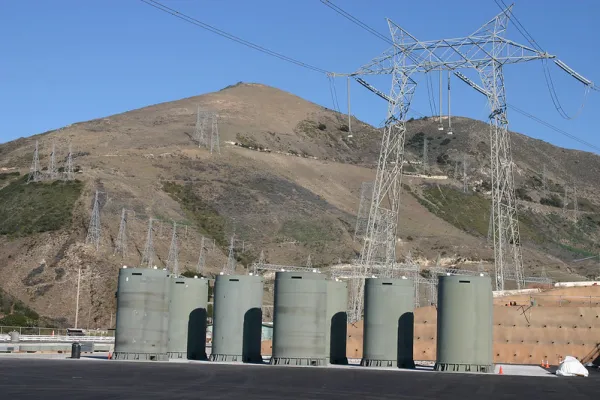
The likelihood of such a disaster is now being actively promoted by Gov. Gavin Newsom, with legislation he wants rubber-stamped in less than two weeks. Concerned citizens must call California legislators to stop Newsom’s plan and prevent disaster.
Within five hours of the first explosions, southbound winds have blown lethal isotopes over all living things—human, plant, animal—coating them with radioactive emitters guaranteed to kill, wound, burn and mutate for countless generations.
Diablo’s twice-bankrupt owner, Pacific Gas & Electric, has twice pled guilty to federal manslaughter charges. In 2010 it incinerated a neighborhood in San Bruno, killing eight people. Later it sparked northern California fires that turned hundreds of square miles of forest—-plus the town of Paradise—-into deadly ash, slaughtering more than eighty humans.
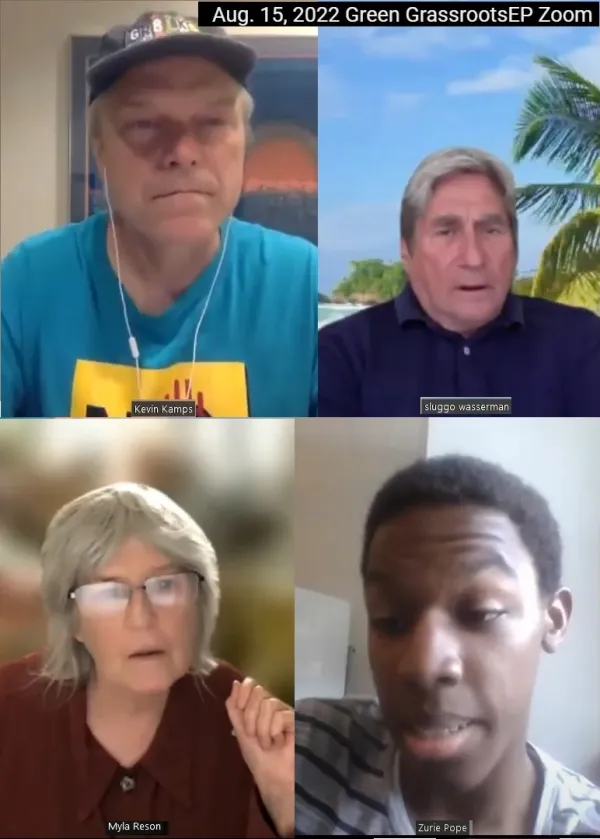
At GREE-GREE #106, WENDI LEDERMAN starts us off with an astounding listing of grassroots 2022 groups around the US workin on election protection.
We also hear from ZURIE POPE about fascist chaos in Ohio.
And from SUZANNE GORDON on the shafting of the Veterans Administration nationwide.
We then do a deep dive on the atomic chaos in Zaporizhzhia, California and elsewhere.
KEVIN KAMPS of Beyond Nuclear, MYLA RESON & TATANKA BRICCA, DOROTHY REIK, DENNIS BERNSTEIN and others in California and elsewhere.
We’re finally re-joined by BRYNN TANNEHILL to discuss the fascist reaction to the FBI on Mar-a-Lago.
What comes next? It’s up to you...

Texas and Arizona have begun busing refugees at their border – at a cost of millions – up to a couple liberal Northern cities . . . let’s see how they like it!
Texas, according to Gov. Greg Abbott, “has had to take unprecedented action to keep our communities safe” – you know, from the hordes of rapists or whatever storming across America’s insecure border, which of course is 100 percent the fault of President Joe Biden.