
Global

LA Opera’s latest star-studded production, The Light in the Piazza, is a version of the musical that opened on Broadway in 2005, based on the 1960 novella by Elizabeth Spencer. This love story about an American mother and daughter, Margaret Johnson (legendary Renée Fleming) and Clara (Disney actress Dove Cameron), visiting Florence has a unique twist: Clara is developmentally challenged. While in Italy she falls in love with the Florentine Fabrizio Naccarelli (English actor Rob Houchen, a Les Mis co-star of a West End show production), son of a shopkeeper (two-time Tony Award-winner Brian Stokes Mitchell and Tony-nommed in 1998 for Ragtime; Mitchell’s film/TV work includes playing Hawaiian surfer Duke Kahanamoku in the 1999 TV-movie Too Rich).

A terrifying series of gestapo-style assaults, petition buying, bribery, mass media manipulation and systematic intimidation has smacked into the attempt of Ohio citizens to repeal a billion-dollar bailout for two dangerously failing atomic reactors on Lake Erie.
The unprecedented assault threatens the referendum process in Ohio and across the nation.
It also threatens to keep on line two very old, dangerously decayed reactors where melt-downs and explosions could forever contaminate the Great Lakes region and more. (For a full explanation, hear this one-hour discussion at:
The story may end Monday, October 21, when signatures are due to qualify an anti-nuclear referendum for the fall 2020 ballot.

The discussion, if one might even call it that, regarding the apparent President Donald Trump decision to withdraw at least some American soldiers from Syria has predictably developed along partisan, ideologically fueled lines. Trump has inevitably muddied the waters by engaging in his usual confusing explanations coupled with piles of invective heaped upon critics. The decision reportedly came after a telephone call with Turkish president Recep Tayyip Erdogan, but what exactly was agreed upon and who else might have been present in the room to report back to the intelligence community remains uncertain. Trump clearly believed that he had obtained some assurances regarding limits to any proposed Turkish military action from Erdogan, who almost immediately launched air attacks followed by ground troop incursions against the former U.S. supported Kurdish Syrian Democratic Forces (SDF).

ntrigued by the controversy that erupted over Secretary of State Mike Pompeo’s speech before the American Association of Christian Counselors last week in Nashville — it was titled “Being a Christian Leader” and was eventually removed from the State Department website — I wound up reading the whole speech. And I actually found one paragraph that I liked.
I’ll get to that in a moment, but first, ta tum, the controversy:
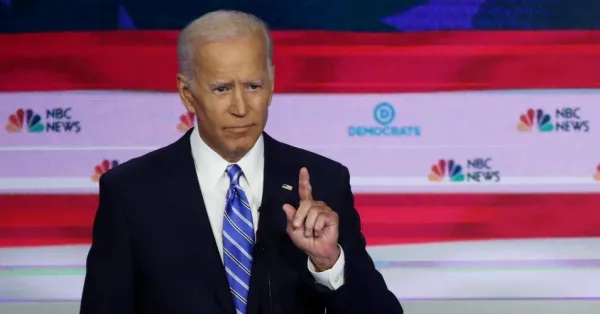
The Democratic Party's most powerful donors are running out of options in the presidential race. Their warhorse Joe Biden is stumbling, while the other corporate-minded candidates lag far behind. For party elites, with less than four months to go before voting starts in caucuses and primaries, 2020 looks like Biden or bust.
A key problem for the Democratic establishment is that the "electability" argument is vaporizing in the political heat. Biden's shaky performances on the campaign trail during the last few months have undermined the notion that he's the best bet to defeat Donald Trump. The latest polling matchups say that Biden and his two strong rivals for the nomination, Elizabeth Warren and Bernie Sanders, would each hypothetically beat Trump by around 10 points.

The committee that awards the Nobel Peace Prize was right not to give the prize to Greta Thunberg, who deserves the highest prizes available, but not one created to fund the work of abolishing war and militaries. That cause ought to be central to the work of protecting the climate, but it is not. The question of why no young person working to abolish war is given access to television networks ought to be raised.
The vision that Bertha von Suttner and Alfred Nobel had for the peace prize — the promotion of fraternity between nations, the advancement of disarmament and arms control and the holding and promotion of peace congresses — has not yet been fully grasped by the committee, but it is making progress.
Abiy Ahmed has worked for peace in his and neighboring countries, ending a war and establishing structures aimed at maintaining a just and sustainable peace. His peace efforts have included environmental protection.

Relationships are like apparel in that one size does not fit all. For centuries in American patriarchal society marriages were between one male and one female, and this heterosexual norm was widely expected to be the standard in premarital romances, too. Of course, just as the customary view as to whether straight people could have sex outside of marriage has shifted the entire notion of gender and more has radically changed over the years.
Enter writer/director Brian Reynolds, who tackles the notions of these altering societal norms by injecting how sexual partnerships and marriage are evolving into his subversive take on romantic comedy (complete with “cute meets”) in Mono/Poly. The title is clever as it refers to not only the real estate board game but to the idea that monogamy is a form of monopoly in the sense of ownership.

Violence is pervasive throughout human society and it has a vast range of manifestations. Moreover, some of these manifestations – particularly the threat of nuclear war (which might start regionally), the climate catastrophe and the ongoing ecological devastation, as well as geoengineering and the deployment of 5G – threaten imminent human extinction if not contained. Separately from these extinction-threatening manifestations, however, violence occurs in a huge range of other contexts denying many people the freedom, human rights and opportunities necessary for a meaningful life. Moreover, human violence is now driving 200 species of life on Earth to extinction daily with another 1,000,000 species under threat.

“What do you get when you cross a mentally ill loner with a society who abandons him and treats him like trash?” asks Joker. Directed by Todd Philips and starring Joaquin Phoenix, Joker was a sweaty and melancholy telling of how Batman’s most iconic nemesis came to be. We’re not here for spoilers though, although I strongly recommend the reader to go and find the punchline of this joke. Too often in reality we see mentally ill loners being abandoned and treated like trash.