
Global

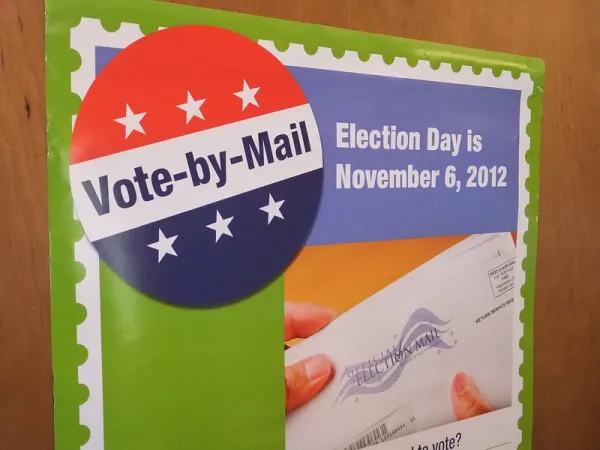
The more we learn about COVID-19, the more likely it seems most of us will be voting by mail this fall. Voting in person has become, and will likely remain, too dangerous.
Oregon, Washington, Hawaii, Colorado and Utah have long been voting by mail. California now says it will join them, and other states are likely to follow.
The Trump administration is acting as though it wants to eliminate the U.S. Postal Service, which would make it virtually impossible to get ballots out and back, something President Donald Trump appears to desire.
What’s needed is a national commitment to voting by mail. Under this system, all registered voters would receive a postpaid ballot. They can then make their choices, sign the ballot, seal an interior envelope and send it back.

Against the institution of war
The United Nations has designated the 16th of May as a day devoted to Living Together in Peace. It therefore seems appropriate to mark this day by discussing the reasons why war must be eliminated as a human institution.
Science and technology are double-edged
As we start the 21st century and the new millennium, our scientific and technological civilization seems to be entering a period of crisis. Today, for the first time in history, science has given to humans the possibility of a life of comfort, free from hunger and cold, and free from the constant threat of infectious disease. At the same time, science has given us the power to destroy civilization through thermonuclear war, as well as the power to make our planet uninhabitable through pollution and overpopulation. The question of which of these alternatives we choose is a matter of life or death to ourselves and our children.
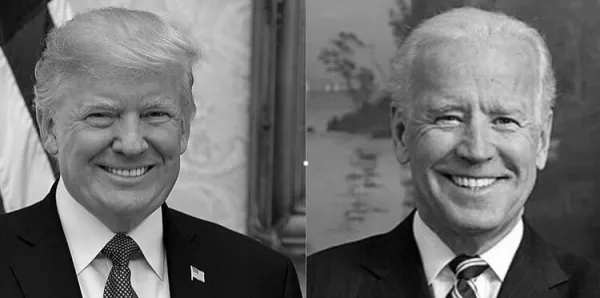
With six months to go until November’s 2020 election, dozens of America’s top legal minds convened to consider what would have been unthinkable before Donald Trump’s presidency. They gathered to brainstorm what could be done to prevent the country from descending into a “civil war-like scenario,” as one participant put it, if Trump and Joe Biden both claim that they won the presidency—and won’t back down.
Their May 4 teleconference parsed a series of nightmare scenarios in the aftermath of the November 3 election that would lead to competing Electoral College results being sent to Congress from battleground states—one issued by a Republican legislature backing Trump, and another issued by the Democratic governor backing Biden.
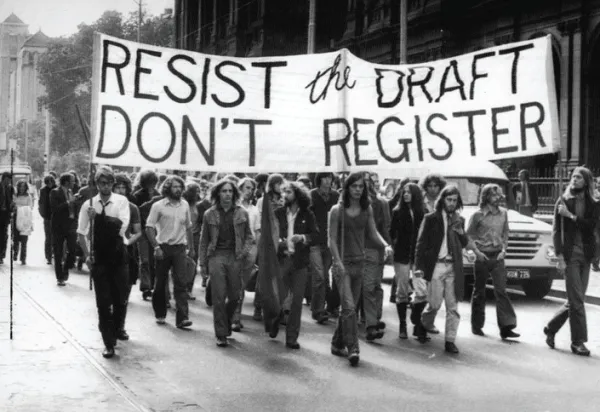
There are two brand new ways to avoid any military draft that should come along.
(I know you’re not worried about a draft, but the numbers of failed coup attempts in Venezuela and of failed attempts to start a war on Iran are both approaching the number of years of war in Afghanistan, so frustration may be building. Two candidates for U.S. President are competing in hostility toward China. Plus, military recruitment is faltering, and even corporate mainstream politicians are being brought around to the idea of making college part of a public education. So, I wouldn’t get too complacent).
Method #1: Catch coronavirus. Recover. Be banned from the U.S. military for life.
While this is a truly dumb approach, four out of five doctors do recommend getting banned from the military for their patients who tend to do whatever is not banned.
Method #2: Eliminate the draft.
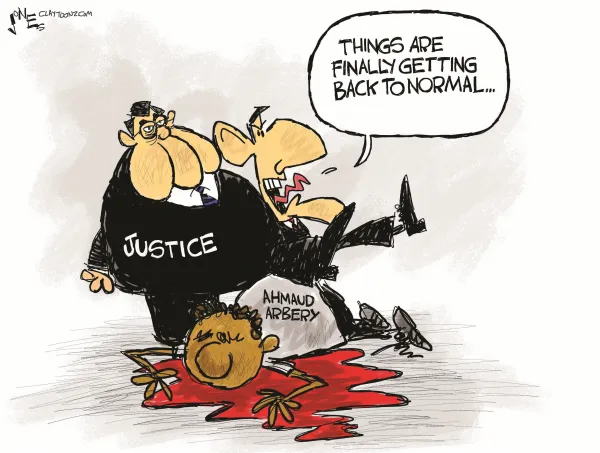

Even though 1,000 workers at Tyson's slaughterhouse in Waterloo, IA have tested positive for the coronavirus, it has reopened. Tyson has said last week it would begin slaughtering pigs.
“Corruption is embedded in health systems. Throughout my life—as a researcher, public health worker, and a Minister of Health—I have been able to see entrenched dishonesty and fraud. But despite being one of the most important barriers to implementing universal health coverage around the world, corruption is rarely openly discussed.” – Dr. Patricia Garcia, in her powerful Lancet journal article of November, 2019: “Corruption in Global Health: An Open Secret”
Many more questions are being raised than there are answers being discovered concerning the recent strains of coronavirus. Where and how did it originate? Was it the result of human engineering and manipulation or is it a strain that mutated naturally? What are the best tests to determine exposure and infection? Why are so many infected individuals asymptomatic? Are all elderly people equally susceptible to infection and how much do co-morbidities determine outcomes? These are just several of the important questions that still require definitive answers.

I’m not quite as big a fan of the new film “Capital in the Twenty-First Century” as Jon Schwarz is but think he makes some great points about it, as he usually does. The film doesn’t tell a story with characters and drama. It’s a documentary that tries to recount the economic history of the past few centuries from a European/American perspective in a little over an hour, which means it’s rushed, much of it is familiar already, and the facts and statistics it throws out lack clarity and documentation, as is usually the case in films. (In its defense, the film is based on a book that is widely available.)
But the film does present people with topics that are rarely if ever talked about, things not normally noticed because they are taken to be inevitable or because they are taboo. For example:

The Presumptive Nominee seems to be in trouble. Reuters just released a national poll showing that “Joe Biden’s advantage over President Donald Trump in popular support has eroded in recent weeks” -- and the contest is “essentially a toss-up.” In a half-dozen key swing states, Biden is only up by an average of 4 percent. Even among the Democratic faithful, enthusiasm for Biden is low.