
Global
Extended Excerpts (with some editing) from a Democracy Now! Interview with Retired Army Lt. Col Lawrence Wilkerson – January 13, 2020 (2436 words)
http://www.democracynow.org/2020/1/13/lawrence_wilkerson_american_empire_war
Bases, Demilitarization, Myth of Benefits, World
By David Swanson, Executive Director of World BEYOND War, January 15, 2020
South Korea cannot choose to make peace with North Korea without the consent of a foreign power that keeps thirty thousand troops in South Korea, makes South Korea pay much of the cost of housing them, commands the South Korean military in war, holds veto power at the United Nations, and is not accountable to the International Criminal Court or the International Court of Justice.
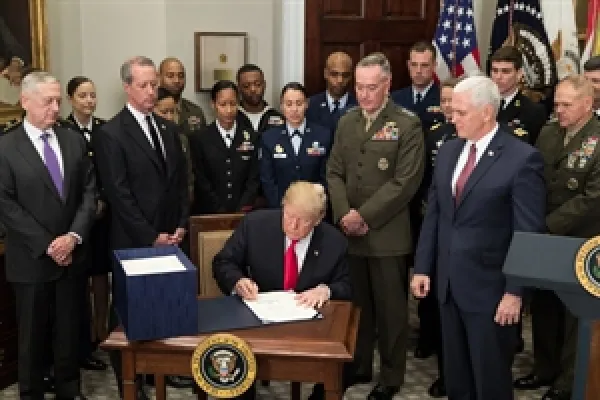
If one seriously seeks to understand how delusional policymakers in Washington are it is only necessary to examine the responses by the president and Congress to the assassination of Iranian Major General Qassem Soleimani. The first response came in the form of a Donald Trump largely incoherent nine-minute self-applauding speech explaining what he had done and why. It was followed by a House of Representatives War Powers non-binding resolution that was all theater and did nothing to limit the president’s unilateral ability to go to war with the Islamic Republic.
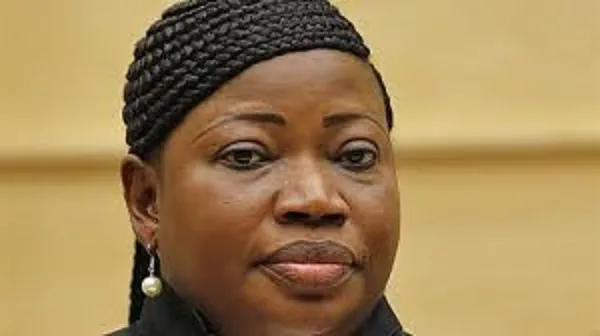
At long last, Fatou Bensouda, the Chief Prosecutor of the International Criminal Court (ICC) has uttered the long-anticipated conclusion that “all the statutory criteria under the Rome statute for the opening of an investigation (into alleged war crimes in the Occupied Palestinian Territories) have been met”.
Bensouda’s verdict has been in the making for a long time and should, frankly, have arrived much earlier. The ICC preliminary investigations into Israeli war crimes began back in 2015. Since then, many more such war crimes have been committed, while the international community persisted in its moral inertia.
Martin Sheen has just released a powerful new 11-minute video outlining the two biggest dangers the world faces.
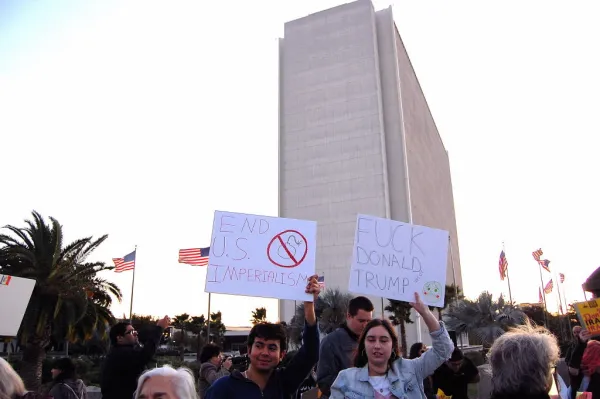
As Emperor Trump cries havoc and lets loose and wags the dogs of war, up to 200 peace protesters held a Jan. 9 antiwar rally outside Los Angeles’ symbol of Washington, the Federal Building located near UCLA in Westwood. The demonstrators ranged from Vietnam era stalwarts to teenagers who have grown up in an America perpetually fighting endless - and unwinnable - wars. They began gathering before the 5:00 p.m. kick off time at the bus stop at the corner of Wilshire Blvd. and Veteran Ave., where info tables were already setup for the Bernie Sanders-for-president campaign and the #OUTNOW! Movement to drive Trump and Pence out of the White House.
Sanders is noted for his youthful acolytes but two older women “manned” the senator’s table offering leaflets and perhaps petitions. One volunteer told me “Bernie is the most antiwar candidate,” which given his long-standing support of antiwar causes and current stance against Trump’s escalations may be true. But the other Sander-nista added, “Bernie is the only antiwar candidate,” which I don’t think is accurate. (See: www.berniesanders.com.)

Please share and help others get informed. Good talk with the Great Harvey Wasserman.
As the insanity escalates in Iran and Iraq, we face the extremely sophisticated and dangerous on-going push to manipulate the American electorate.
We’re joined by two of America’s top election protection analyst/activists JOHN BRAKEY and SUSAN PYNCHON.
These two brilliant and powerful citizens have already made a huge difference in how we conduct our elections.
Today the give us the inside information on Cambridge Analytica, computerized ballot marking devices and the other incredibly sophisticated tools being used to manipulate our elections.
Beneath the clouds of war and ecological catastrophe, Susan and John keep their eyes on the prize of actual democracy.
If you’re concerned about the realities of 2020 election, don’t miss this show.
I suppose you have to actually be convicted of a felony to be a felon, but I also think we should make an exception for U.S. presidents. Take the current one, for example. Donald Trump just murdered Iranian and Iraqi military officials at an airport in Baghdad. His staff later “briefed” Congress members on why these murders were “legal.” Congress members denounced the briefing as utter nonsense, and yet labeled the murders “a strike of choice.” People who have been convicted of murder, and who are properly called felons, never had the option of getting their crimes labeled “strikes of choice.”

Our Reps Will Wait Their Turn To See The Doctor
They will not be dressed to star in music videos. Prior experience at Hooters or Work Out World will not be sufficient for hiring. They will not call the doctor dude. We understand others waiting to see the doctor are sick.
We Will Leave Poor Countries Alone
We'll stop conducting clinical trials on people who can't give informed consent and think they're getting medical care. We will stop marketing cholesterol drugs, HPV vaccines and lifestyle drugs to poor people whose major health problems are malaria, diarrheal diseases and potable water.
We'll Stop Extortion Pricing and Looting Medicare/Medicaid
We admit that pricing drugs at $52,321.80 a month (Actimmune), $42,570 a month (Chenoda) or $87,800 for a course of treatment (Harvoni) is extortion. Frankly we're amazed we have gotten away with it.

It is important for readers to understand that when true root causes of illnesses are denied or ignored by the medical profession - for whatever reason - erroneous diagnoses will inevitably be made, treatments will be inevitably misguided and any chance for the prevention of future illnesses will be impossible. To read the expanded versions of the following 29 abbreviated articles (and scores of other important stories about iatrogenic vaccine injuries and vaccine failures from past years), go to: https://thevaccinereaction.org/vaccination/risk-failure-reports/)