
Global
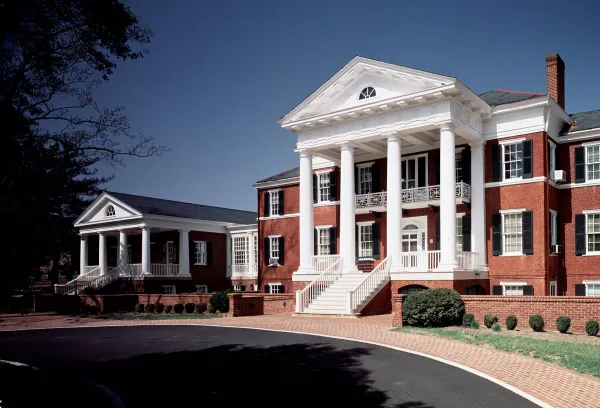
The University of Virginia’s Miller Center caught flak for appointing Trumpian Marc Short, but has now announced the appointment of John Negroponte, presumably hoping for little resistance since Negroponte’s not a Trumpman.
But shouldn’t morality still matter? Shouldn’t a center that has yet to ever feature an opponent of war but keeps inviting mercenaries and soldiers and warmongers to speak have to have some limits?
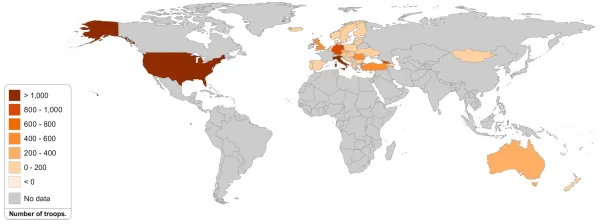
The United States spends about five times what China does on its military. And it spends more just on its military bases in other people’s countries than any country other than itself or China spends on its entire military. The United States keeps troops in almost every country on earth, including in 800 to 1,000 major military bases outside the United States. The rest of the world’s nations combined (most of them U.S. allies and weapons customers) keep a couple of dozen foreign bases total. Imperialism is a uniquely U.S. illness, although everybody suffers the damage.

The following article comes, slightly edited and re-formatted, from a 2015 Frontiers in Neurology Review Article. It was authored byRomain Kroum Gherardi, Housam Eidi, Guillemette Crépeaux, François Jerome Authier and Josette Cadusseau (of the Faculté de Médecine and Faculté des Sciences et Technologie, INSERM U955 Team 10, Université Paris Est-Créteil, Créteil, France)
(The original English journal article is available online at https://www.frontiersin.org/articles/10.3389/fneur.2015.00004/full)
Following are two important passages from the article plus a note from the Duty to Warn editor prefacing the article:
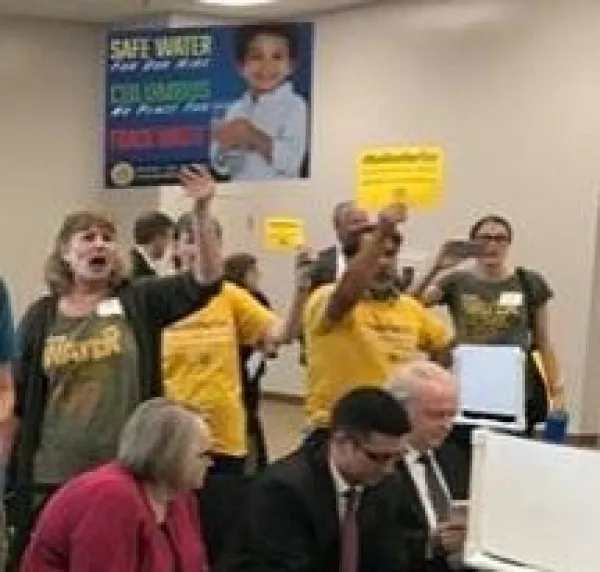
Two recent local news stories offer compelling, if baffling, insight into the priorities of the media in and around Columbus. On August 22, the media descended on Ohio State University to learn the future of Urban Meyer following the football coach’s handling of a domestic abuse scandal involving one of his assistants.
Two days later, the same news outlets failed to appear at the Franklin County Board of Elections to learn the fate of a citizens’ initiative to protect Columbus, and thus Central Ohio, from the toxic and radioactive dangers of fracking. During this hearing, the board would decide whether to place on the ballot the Columbus Community Bill of Rights (CCBOR) proposal to “establish a community bill of rights for water, soil and air protection” from fracking operations and its waste. Strangely, the same media that comprehensively covered Meyer and his football program demonstrated little interest in an issue that affects the health of all Central Ohioans and their environment.
Ayanna Pressley just won a Democratic Primary in a Democratic Congressional District in Massachusetts.
While most candidates for Congress have websites completely devoid of any mention of foreign policy whatsoever, Pressley has one with a substantive position on foreign policy.
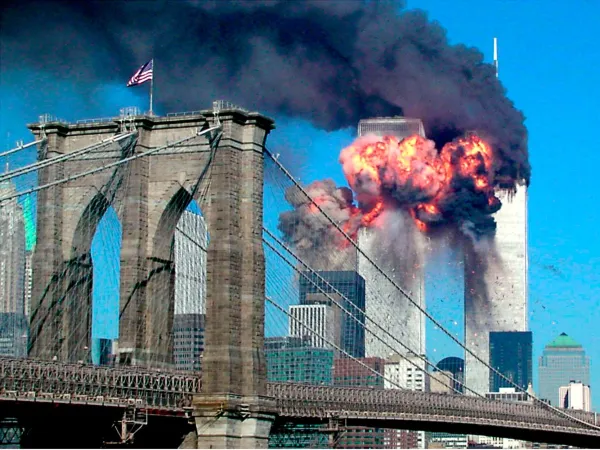
Over the past 17 years since 9/11/01, the title question has plagued the tens of thousands of committed groups of highly intelligent and thorough truth-seeking scientists, physicists, architects, engineers, pilots, ex-military officers, ex-intelligence agents, firefighters, demolition experts, psychologists, medical professionals, etc, etc who have absolute proof that the official Cheney/Bush White House story about what happened on 9/11/01 was a “Big Lie”, that was so easily perpetrated on a fearful, gullible and mainstream media-saturated public that was very willing to suspend their critical thinking skills and throw their trust onto authority figures that would tell them what they were supposed to believe, even if it was contrary to what they actually saw with their own eyes. Unfortunately, those pseudo-authority figures that have the power to dominate the media, also have a long history of being serial liars - and they have hidden ulterior motives and a willing mainstream media machine on which to perpetuate the lies.
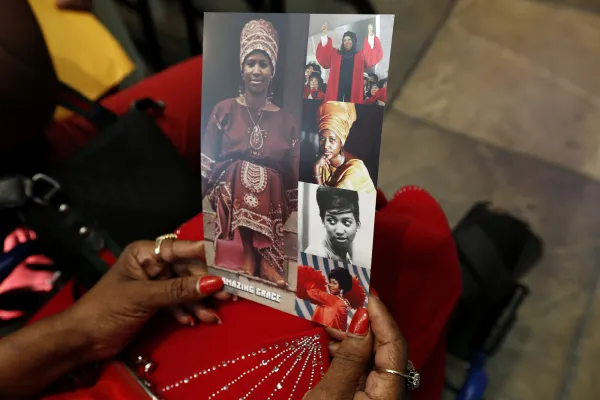
Hollywood is known around the world as a “company town” for the motion picture industry and television, but Los Angeles is also a music Mecca. In January 1972, Aretha Franklin recorded the live album “Amazing Grace” with Rev. James Cleveland’s Southern Californis Community Choir in south L.A., and it became one of America’s bestselling gospel recordings of all time. After her death on August 16, to pay homage to the “Queen of Soul”, selections from that legendary Atlantic Records album were performed on the evening of August 30 at a sonorous, loving Gospel Music Tribute Remembering Aretha Franklin.

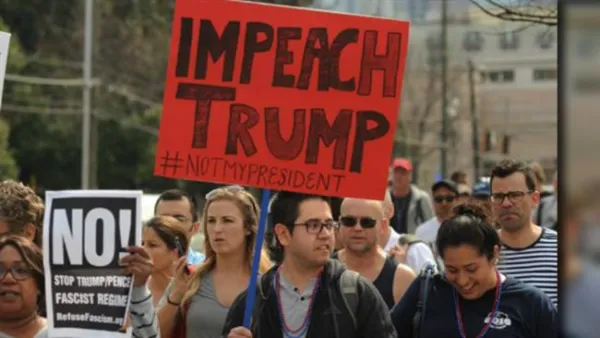
According to an ABC News / Washington Post poll, 49% of a sampling of the U.S. public wants impeachment begun (they don’t specify when, but presumably any moment now) against Trump, while 43% do not. There are almost certainly millions of additional Democrats who would move into the pro-impeachment column if that party’s leaders did so. Same with Republicans. Many more Independents might also jump on board if the case were publicly made and momentum built to make conviction in the Senate seem plausible in an age when absolute loyalty to partisanship goes unquestioned.
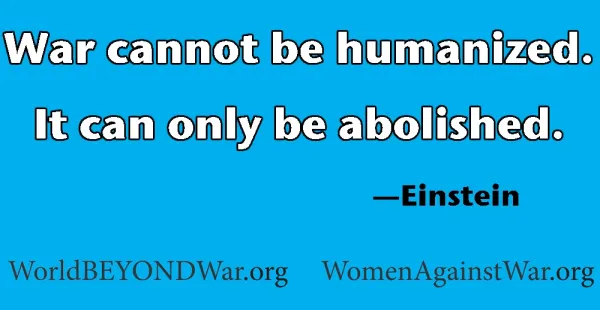
On Friday, September 7th at high noon on Erie Blvd., north of Monroe St., in Schenectady, NY, the graphic above will be up on a giant billboard, and people will gather to discuss and promote the message.