
Global
By David Swanson
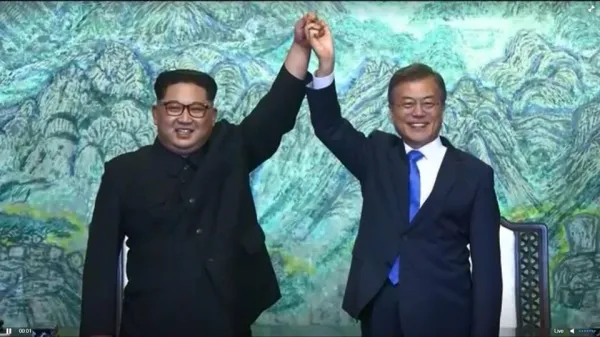
When peace shows its face, and weapons companies’ stocks plummet, we have to do more than just cheer. We have to avoid misunderstanding where peace comes from. We have to recognize the forces that want to destroy it. We have to work to make it last and expand.

By David Swanson
Suzy Hansen’s book Notes on a Foreign Country is the diary of someone going through the process of gaining the world by losing their religion, the religion of U.S. Exceptionalism. She begins as an ordinary U.S. resident, not believing anything that you would find unusual, but assuming all the certifiably insane things you assume are not even questionable:
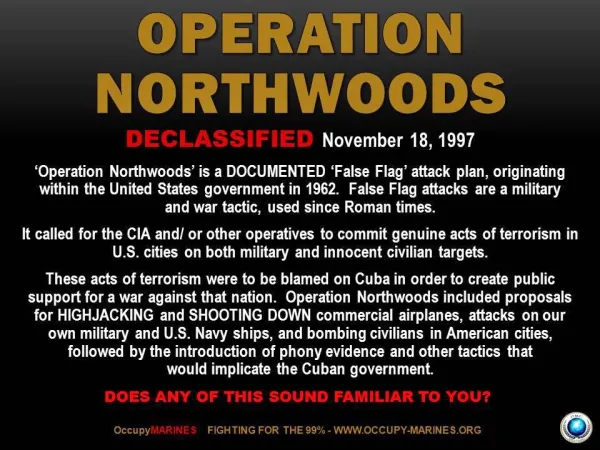
False Flag is a concept that goes back centuries. It was considered to be a legitimate ploy by the Greeks and Romans, where a military force would pretend to be friendly to get close to an enemy before dropping the pretense and raising its banners to reveal its own affiliation just before launching an attack. In the sea battles of the eighteenth century among Spain, France and Britain hoisting an enemy flag instead of one’s own to confuse the opponent was considered to be a legitimate ruse de guerre, but it was only “honorable” if one reverted to one’s own flag before engaging in combat.

Bob and Dan talk with Green Party write-in candidate Torin Jacobs and discuss the changes in Trump's revolving door of an administration.
http://www.wcrsfm.org/content/other-side-news-april-27-2018-torin-jacob…

BANGKOK, Thailand -- North Korea's Kim Jong Un learned from Saddam
Hussein and Moammar Gadhafi that nuclear weapons protect his survival,
and will disarm only if President Trump withdraws American forces and
ends the U.S.-South Korea defense treaty, said James Trottier who led
diplomatic efforts in Pyongyang.
North Korea agreed to "site closure, & no more testing!" Mr. Trump
tweeted on April 23 after Pyongyang announced on April 21 it would
halt developing and testing nuclear weapons.
Pyongyang however made no mention of dismantling thermonuclear
warheads and developmental ICBMs it supposedly possesses.
"North Korea views its nuclear capacity as a deterrent, not as a means
to launch a suicidal strike resulting in their total destruction. The
North Koreans are not jihadists seeking some afterlife," Mr. Trottier
said.
"For Kim, basically nuclear weapons are key to his survival. He's
learned the lessons of Saddam Hussein and Moammar Gadhafi -- what
happens when WMDs [weapons of mass destruction] are bargained away."
It may almost seem too obvious to mention, but I don’t think that’s why we so seldom mention it. I don’t mean being male, or being mentally disturbed, or having been cruel to women, or living in places like the United States where it’s easy to acquire weapons of war. These and many other factors are very significant and very often discussed, as they should be, when we consider mass killings.

Around 9 a.m., a helicopter began circling overhead. Moments later, as Jonathan Blitzer wrote recently in the New Yorker, a fleet of cars pulled up outside the meat-processing plant in Bean Station, Tenn. . . .
And the SS guys stepped out.
Oh wait, I mean the ICE agents, who swarmed through the plant and wound up arresting 97 “illegals.”
In Morristown, a nearby town where most of the arrestees lived, “the raid was catastrophic news. Families’ worst fear had come true: husbands, fathers, wives, mothers — gone. The following day, more than five hundred students were reported absent from area schools, kept home out of a combination of fear, anxiety, and confusion.”
Ronan Farrow’s book War on Peace: The End of Diplomacy and the Decline of American Influence recounts episodes from the Obama-Trump militarization of U.S. foreign policy. While the book begins with and has been marketed with the story of Trump firing lots of key diplomats and leaving positions unfilled, much of its content is from the pre-Trump, Obama-era and even Bush-era erosion of diplomacy as something distinct from war and weapons sales.
The distinction between employing diplomats whose opinions are allowed to matter only when they agree with the Pentagon and not employing them at all is not as sharp a distinction as people may imagine. As with the distinction between drones that fire on unknown people when some poor schmuck is ordered to push a button and drones that decide when to fire all on their own, the question of whether or not you have diplomats sounds dramatic but can make little actual difference on the ground.

In Joseph Hickman’s book Murder at Camp Delta, he describes a hideous death camp in which guards were trained to view the prisoners as sub-human and much greater care was taken to protect the well-being of iguanas than homo sapiens. Chaos was the norm, and physical abuse of the prisoners was standard. Col. Mike Bumgarner made it a top priority that everyone stand in formation when he entered his office in the morning to the sounds of Beethoven’s Fifth or “Bad Boys.” Hickman relates that certain vans were permitted to drive in and out of the camp uninspected, making a mockery of elaborate attempts at security. He didn’t know the reasoning behind this until he happened to discover a secret camp not included on any maps, a place he called Camp No but the CIA called Penny Lane.