Global
Against a Trump regime that is totally unacceptable, we’ll need resistance that’s sustainable. Like a healthy forest, the resistance will depend on great diversity to thrive -- a wide range of people engaging in a vast array of activities. And our resistance will need community.
I’m not talking about the facile gloss of the word “community” that often follows an adjective denoting race, religion, ethnicity or sexual orientation. The kinds of community that will make ongoing resistance possible have little to do with demographic categories. The most powerful, most vital bonding will be transcendently human.
Facing a Trump presidency, we’ll have an imperative opportunity to go deeper as individuals and groups of people working together -- nurturing and growing the social, cultural and political strength that can overcome the Trump regime.
Against a Trump regime that is totally unacceptable, we’ll need resistance that’s sustainable. Like a healthy forest, the resistance will depend on great diversity to thrive -- a wide range of people engaging in a vast array of activities. And our resistance will need community.
I’m not talking about the facile gloss of the word “community” that often follows an adjective denoting race, religion, ethnicity or sexual orientation. The kinds of community that will make ongoing resistance possible have little to do with demographic categories. The most powerful, most vital bonding will be transcendently human.
Facing a Trump presidency, we’ll have an imperative opportunity to go deeper as individuals and groups of people working together -- nurturing and growing the social, cultural and political strength that can overcome the Trump regime.

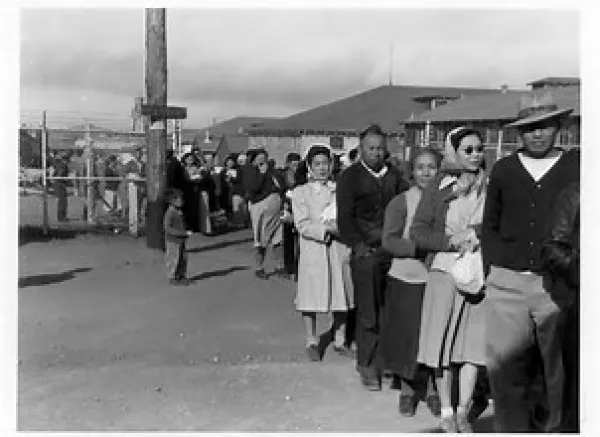
Since World War I and the initiative of J. Edgar Hoover, and right up through all the no-fly and terrorist-watch lists of today, the U.S. government has kept unconstitutional lists of people, largely or in part on the basis of their national or ethnic heritage or their political activism. These lists were part of the process of interning in camps Germans and German-Americans during World Wars I and II, and Japanese-Americans and Japanese during World War II.
In 1936 President Franklin Roosevelt ordered the creation by the Office of Naval Intelligence of a list of Japanese-Americans who would be the "first to be placed in a concentration camp" once a war could be started. In 1939 FDR ordered the ONI and the FBI to create a larger "custodial detention index" of primarily Japanese-, German-, and Italian-Americans, renamed and continued as the "security index" by Hoover after Attorney General Francis Biddle ordered it shut down.
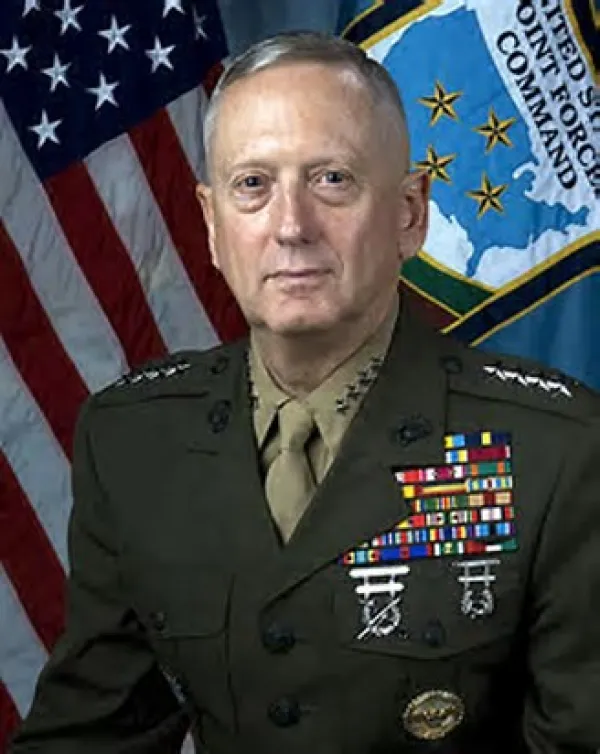
Donald Trump says he wants to stop overthrowing governments and turn toward peace. But not only does he also say he wants to increase the military spending that produces more wars, but he’s considering for Secretary of so-called Defense someone whose entire outlook is offensive in every sense of the word.
Here’s James Mattis in his own words:
“So it’s a hell of a lot of fun to shoot them. Actually it’s quite fun to fight them, you know. It’s a hell of a hoot. It’s fun to shoot some people. I’ll be right up there with you. I like brawling.”
Of course any wars continued or launched will be packaged as “last resorts” and “necessary evils” and so forth. But this guy will be drooling for blood with the glee of a sadist. War is his drug, or what Donald Trump would call his “sneaking into women’s dressing rooms.” Here’s Mattis:
“There is nothing better than getting shot at and missed. It’s really great.”
Not only is war the force that gives Mattis’s life meaning, but it’s his ideology, his worldview, his delusion in which the counterproductive can be seen as effective. Here’s Mattis:

Remember the satirical "Billionaires for Bush" protesters? Around this time in 2008 I asked them to become Oligarchs for Obama, and they refused. But I predict Tycoons for Trump will be born this month. Inequality, like war and climate destruction, has its face now.
Chuck Collins' book, Born on Third Base: A One Percenter Makes the Case for Tackling Inequality, Bringing Wealth Home, and Committing to the Common Good, presents the problem of inequality as well as any I've seen. Collins was born into wealth, gave it away, but still refers to himself as one of the wealthy, perhaps because of all the lasting privileges wealth brought him. Collins sites other examples, as well, of the wealthy putting their wealth to better use than hoarding.

“All great changes,” said Deepak Chopra, “are preceded by chaos.”
That starts to get at it — how to understand, and start healing, the national wound inflicted on this country, and the world, by the 2016 presidential election. But I need to throw in a little John Oliver as well.
“We are faced,” he said on his TV show, “Last Week Tonight,” “with the same questions as the guy who wakes up after a Vegas bachelor party deep in the desert, naked, tied to a cactus and a dead clown. Namely, how the fuck did we get here and what do we do now?”
We’ll be struggling to answer the second question for the next four years, but the question of how we got here can be addressed with a certain troubling clarity. It took more than Donald Trump’s spur-of-the-moment racist populism. The groundwork for the results of the 2016 election began with the nation’s founding — and the racist elitism that was deeply a part of it.
On October 9, I was in the Nevada desert with Catholic Workers from around the world for an action of prayer and nonviolent resistance at what is now called the Nevada National Security Site, the test site where between 1951 and 1992, nine hundred and twenty-eight documented atmospheric and underground nuclear tests occurred. Since the Comprehensive Nuclear-Test-Ban Treaty and the apparent end of the Cold War, The National Nuclear Security Administration, NNSA, has maintained the site, circumventing the intent of the treaty with a stated “mission to maintain the stockpile without explosive underground nuclear testing.”