
Global
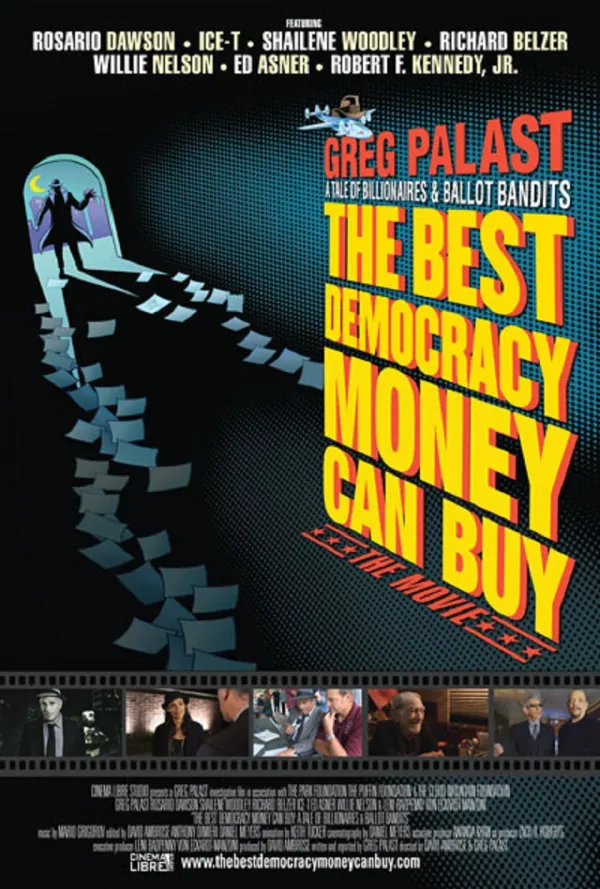
One of the American Left’s knights in shining armor, Greg Palast, is back with a new film. The trench coat, fedora-wearing Palast is to investigative reporting what Raymond Chandler’s private eye, Philip Marlowe, is to detective novels. In The Best Democracy Money Can Buy Palast wears out the shoe leather, pounding far flung proverbial pavements, from the Arctic Circle to way down South in the land of cotton to America’s heartland in Kansas to the Sunshine State to posh East Coast enclaves in Manhattan and the Hamptons to the West Coast (where Palast and Marlowe were both born) to the Congo, Venezuela and beyond, our man Palast is hot on the trail of the film’s subtitled Billionaires and Ballot Bandits.


At a meeting with the deputy political director of the AFL-CIO during my campaign for Congress, she looked across her desk and told me that I could get major union support by coming out in favor of the Keystone XL oil pipeline.
That was five years ago. Since then, the nation’s biggest labor federation has continued to serve the fossil fuel industry. Call it union leadership for a dead planet.

U.S. Military Forgets to Mention Its Fuel Consumption, Carbon Footprint, Destruction of Nature During Presentations at World Conservation Congress
The worldwide, prestigious World Conservation Congress of the International Union for the Conservation of Nature (IUCN) was held in Honolulu this week. The IUCN has come in for criticism for its lack of focus on the detrimental effects of wars and military operations on nature. Considering the degree of harm coming from these human activities one would think that the organization would have a specific theme and a series of workshops on that theme. Of the over 1300 workshops crammed into a 6-day marathon environmental meeting, followed by 4 days of discussion of internal resolutions, nothing specifically addressed the destruction of the environment by military operations and wars.
The heavy funding the IUCN gets from governments is undoubtedly the rationale for not addressing this "elephant in the room" in a conference for the protection of the endangered planet-a tragic commentary on a powerful organization that should acknowledge all pressures on the planet.

Several weeks back I was invited to speak this coming October at a U.S. university on ending war and making peace. As I often do, I asked whether the organizers couldn't try to find a supporter of war with whom I could debate or discuss the topic, thus (I hoped) bringing in a larger audience of people not yet persuaded of the need to abolish the institution of warfare.
As had never happened before, the event organizers not only said yes but actually found a war supporter willing to take part in a public debate. Great! I thought, this will make for a more persuasive event. I read my future interlocutor's books and papers, and I drafted my position, arguing that his "Just War" theory could not hold up to scrutiny, that in fact no war could be "just."
Rather than planning to surprise my "just war" debate opponent with my arguments, I sent him what I had written so that he could plan his responses and perhaps contribute them to a published, written exchange. But, rather than respond on topic, he suddenly announced that he had "professional and personal obligations" that would prevent his taking part in the event in October. Sigh!

Snowden is the most entertaining, informing, and important film you are likely to see this year.
It's the true story of an awakening. It traces the path of Edward Snowden's career in the U.S. military, the CIA, the NSA, and at various contractors thereof. It also traces the path of Edward Snowden's agonizingly slow awakening to the possibility that the U.S. government might sometimes be wrong, corrupt, or criminal. And of course the film takes us through Snowden's courageous and principled act of whistleblowing.
We see in the film countless colleagues of Snowden's who knew much of what he knew and did not blow the whistle. We see a few help him and others appreciate him. But they themselves do nothing. Snowden is one of the exceptions. Other exceptions who preceded him and show up in the film include William Binney, Ed Loomis, Kirk Wiebe, and Thomas Drake. Most people are not like these men. Most people obey illegal orders without ever making a peep.

The dogs growl, the pepper spray bites, the bulldozers tear up the soil.
“Water is life!” they cry. “Water is life!”
This isn’t Flint, Michigan, but I feel the presence of its suffering in this cry of outrage at the Standing Rock Reservation in North Dakota. No more, no more. You will not poison our water or continue ravaging Planet Earth: mocking its sacredness, destroying its eco-diversity, reshaping and slowly killing it for profit.

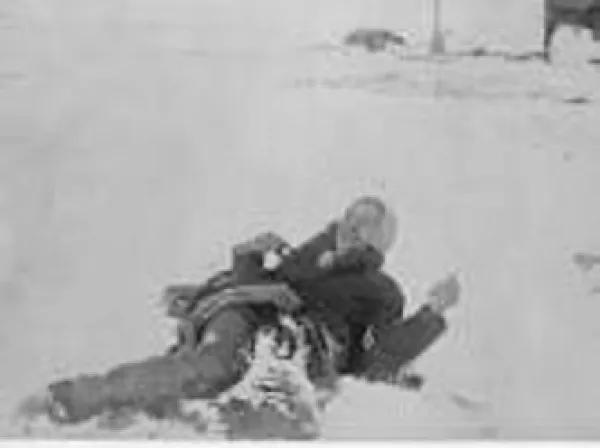
San Francisco 49ers quarterback Colin Kaepernick has been given much deserved credit for protesting racism by sitting out the Star Spangled Banner, which not only glorifies war (which everyone, including Kaepernick is totally cool with) but also includes racism in an unsung verse and was written by a racist slave owner whose earlier version had included anti-Muslim bigotry. As long as we're opening our eyes to unpleasant history hiding in plain sight, it's worth asking why the 49ers is not a team name that everyone associates with genocide. Why isn't Kaepernick protesting his uniform?

As a film historian I was a sucker for Drama Queens from Hell, playwright Peter Lefcourt’s homage/rip-off/mash-up of movie maestro Billy Wilder’s 1950 immortal masterpiece Sunset Boulevard. To be fair, Lefcourt’s two-acter also contains an original story that imaginatively, wittily riffs on Wilder and co-writer Charles Brackett’s saga about a young screenwriter’s (William Holden as Joe Gillis) relationship with an aging silent screen diva (Gloria Swanson as Norma Desmond) dreaming of a comeback and her butler/chauffeur and former director (Erich von Stroheim as Max von Mayerling) in her decaying mansion, located at that eponymous boulevard of broken dreams. All three thespians were Oscar-nommed, as was the film for Best Picture, while Wilder and Brackett scored a screenwriting Academy Award.