
Global
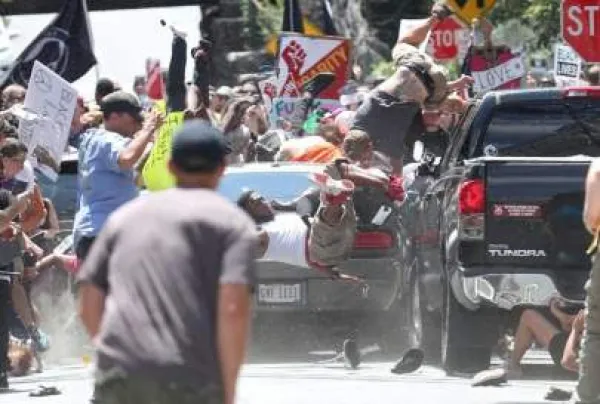
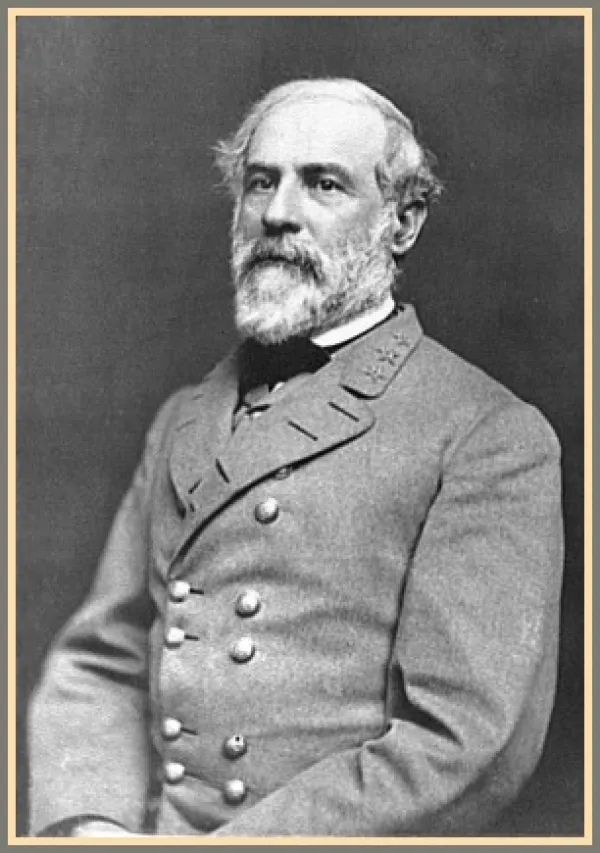
1. Let’s start with the obvious. Charlottesville, Virginia, and Charlotte, North Carolina, are actually two completely different places in the world. The flood of concern and good wishes for those of us here in Charlottesville is wonderful and much appreciated. That people can watch TV news about Charlottesville, remember that I live in Charlottesville, and send me their kind greetings addressed to the people of Charlotte is an indication of how common the confusion is. It’s not badly taken; I have nothing against Charlotte. It’s just a different place, seventeen times the size. Charlottesville is a small town with the University of Virginia, a pedestrian downtown street, and very few monuments. The three located right downtown are for Robert E. Lee, Stonewall Jackson, and the Confederacy. Neither Lee nor Jackson had anything to do with Charlottesville, and their statues were put up in whites-only parks in the 1920s.
Campaigning for the presidency, Donald Trump argued that blacks and other people of color should vote for him.
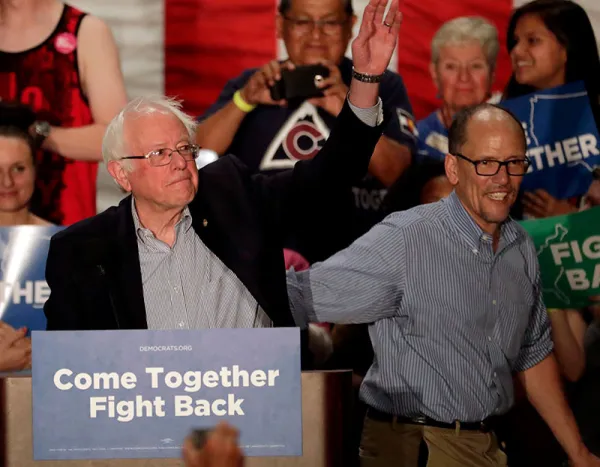
Nine months after losing the presidency, the Democratic Party is in dire need of a course correction. Grass-roots enthusiasm for the party is far from robust. Despite incessant funding appeals and widespread revulsion for the Trump administration, the Democratic National Committee’s fundraising is notably weak. And the latest DNC chair, Tom Perez, sounds no more inspiring than his recent predecessors. When Perez speaks next to Vermont Sen. Bernie Sanders, it’s a stark contrast between establishment cliches and progressive populism.
While a united front against the Trump regime would be ideal, mere unity behind timeworn Democratic leadership would hardly be auspicious. Breaking the Republican stranglehold at election time will require mobilizing the Democratic Party’s base on behalf of authentic populism. But the power structure of the DNC has other priorities.
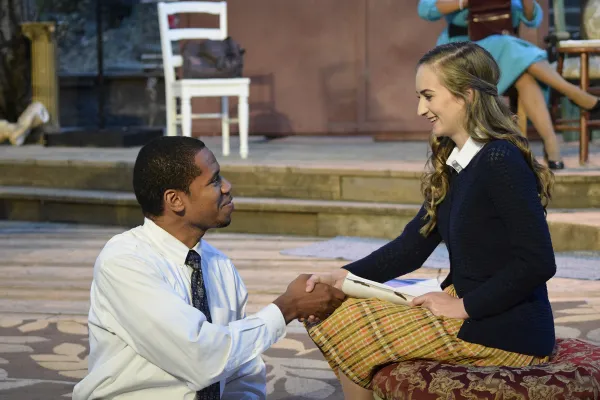
The Will Geer’s Theatricum Botanicum production of Alice Childress’ Trouble in Mind came to me as a theatrical revelation. It is a classic “the worm turns” tale: Manners (Mark Lewis) is a big shot white liberal Hollywood producer who is making his Broadway stage debut in order to make “serious art” with a play-within-the-play (likewise written by a Caucasian). Manners sincerely believes it’s a powerful, searing social statement about and indictment of racism. Trouble, which is set in the 1950s, also hints that Manners may have fled Tinseltown to escape what is euphemistically called “the investigation”: the Hollywood Blacklist and House Un-American Activities Committees’ purging of so-called subversives (like WGTB founder Will Geer, who was blacklisted).
Willetta (the venerable Earnestine Phillips) plays an African American actress who, in scene one, Act I, seems to pooh-pooh the notion of theater as high art with a mission, as advocated by enthusiastic Broadway newcomer John (Max Lawrence who also does a superlative job portraying the workaholic steed Boxer in WGTB’s Animal Farm).
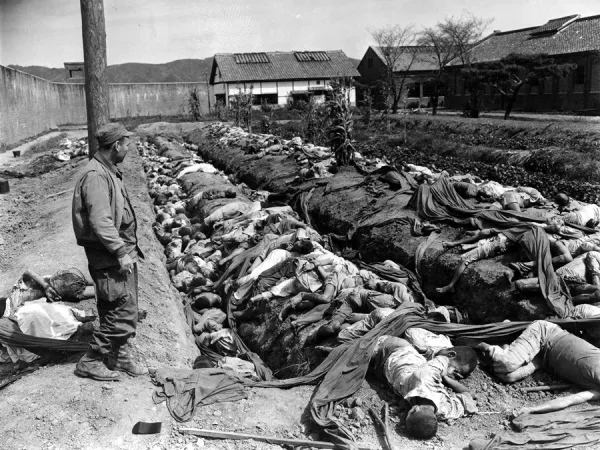
Donald Trump stands cluelessly at the edge of history, exemplifying everything wrong with the past, oh, 10,000 years or so.
The necessity for fundamental change in humanity’s global organization is not only profound, but urgent.
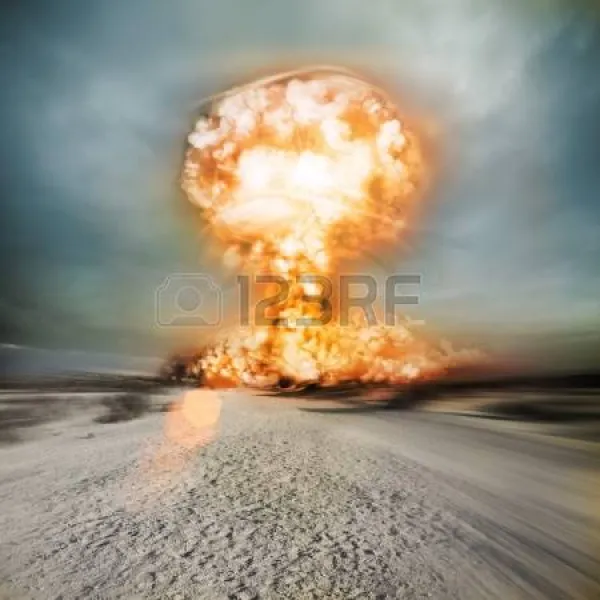
Trump’s latest outburst about North Korea’s nukes — threatening that country “with fire, fury, and frankly power the likes of which the world has never seen before” — creates a comic book Armageddon scenario in the media, except, of course, his power to launch a nuclear war on impulse is real.
– Tweet by President Trump, August 5, 2017
“U.S. spy satellites detect North Korea moving anti-ship cruise missiles to patrol boat.”
– Tweet by Fox & friends, August 8, 2017;
Re-tweeted by President Trump 6:50 a.m. same day
“I can’t talk about anything that’s classified and if that’s in the newspaper that’s a shame,... it’s one of those things I don’t know what’s going on. I will tell you it’s incredibly dangerous when things get out into the press like that….”
– Comment by UN Ambassador Nikki on Fox & friends,
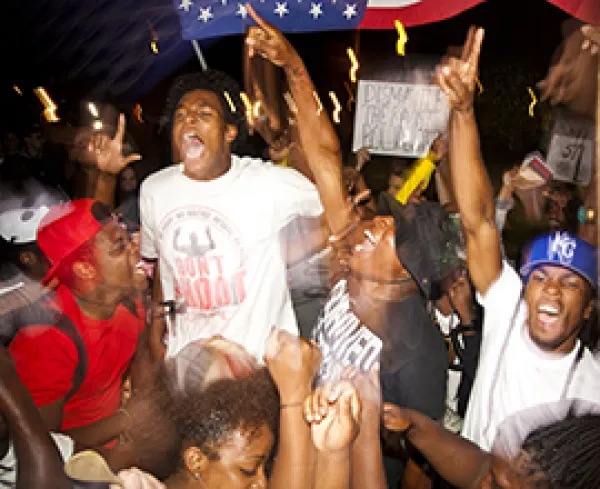
This week marks the third anniversary of the 2014 police shooting of unarmed African American teenager Michael Brown in Ferguson, Missouri. Whose Streets? the new documentary about that killing and the resulting civil unrest, is being released Aug. 11 in St. Louis, New York and Los Angeles. The young co-directors Sabaah Folayan of L.A. and Damon Davis of St. Louis are both Black and provide an insider, African American perspective in this hard-hitting nonfiction film with its “you are there,” street-level cinematography.
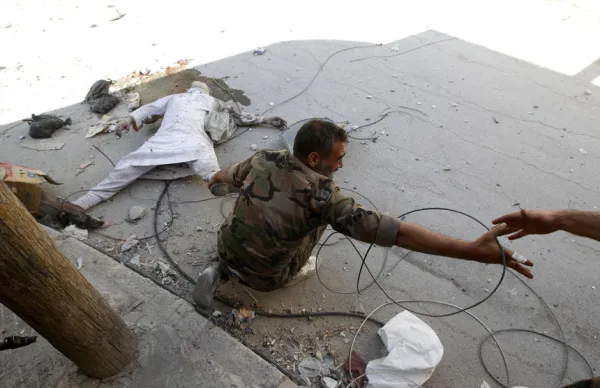
Statement by David Swanson as Director of World Beyond War at DC press conference August 8, 2017. http://davidswanson.org/purposeless-death-in-syria

A wonderful thing about observing and analyzing the human mind is that
there is a seemingly infinite variety of phenomena to observe and
analyze. I sometimes wonder if it is even remotely possible to master
this subject but, even if it is not, at least it provides an unending
source of 'entertainment'.
The phenomenon that I want to discuss in this article is what Anita
McKone and I call the 'magic rat'.
Before proceeding, let me emphasize that the 'magic rat' is an
incredibly dangerous psychological disorder that afflicts most political
and virtually all corporate leaders, notably including those in the
United States, thus rendering them incapable of responding intelligently
and appropriately to the ongoing crises in human affairs. And,
tragically, it afflicts most other people too, which is one reason why
it is difficult to muster a strategic response to these crises, even at
grassroots level.
In describing this disorder, I also want to emphasize that it never
occurs in isolation. Individuals afflicted by this disorder will