
Global
Whenever there is significant social progress, there is a backlash, and recent movements like Gamergate (covered by the Southern Poverty Law Center as an actual hate group) have proven that geek culture is by no means immune. Indeed, while women, PoCs and LGBT+ people have always been part of geek communities, there’s been a myopic tendency for the straight white male members to see these communities as somehow inherently theirs.
I wrote before about one of these movements, which calls itself Sad Puppies, with a more virulent, openly racist/sexist/queerphobic offshoot called Rabid Puppies. What are these puppies so sad about? They’re sad about losing the Hugo Awards — the sci-fi/fantasy literature equivalent of the Oscars — to people who, instead of using speculative fiction to write about Generic White Male Action Heroes doing action things, used it to explore social issues. They claimed to be opposed to the awards being given to “unreadable” cerebral books rather than “fun” ones, but by their actions they showed themselves to be simply another group of reactionary, entitled conservatives.

Renaming a mountain is better than beheading it.
And the pseudo-uproar from Donald Trump and other Republicans over the presidential renaming of the continent’s highest mountain, Denali — “the great one” — is so much yammering in a cage.
The cage is “Americanism.” The small-mindedness of this concept is suddenly more apparent than ever: Hey, we’re the greatest! Obama’s taking Mount McKinley — our mountain — away from us, giving it back to the Indians . . .
Would that it were true. Would that a sense of earth-reverence had entered the national consciousness through this act of renaming, this acknowledgement that our world isn’t merely the plaything of the American political ego. Would that President Obama meant what he said when, as he began his symbolic, climate-change-awareness trek to Alaska, he declared: “The time to plead ignorance is surely past.”

By the latest count, the nuclear agreement with Iran has enough support in the U.S. Senate to survive. This, even more than stopping the missile strikes on Syria in 2013, may be as close as we come to public recognition of the prevention of a war (something that happens quite a bit but generally goes unrecognized and for which there are no national holidays). Here, for what they’re worth, are 10 teachings for this teachable moment.
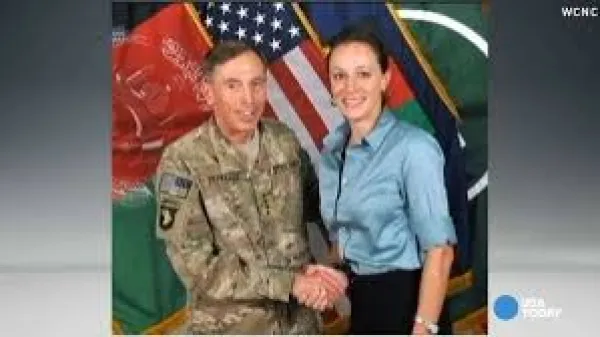
Now that General David Petraeus wants to arm and train al Qaeda killers, a number of questions arise that might be raised with the great leader:
1. Should people who said that anyone was a traitor who called you David Betray-Us while you were fighting al Qaeda, now call you David Betray-Us or a traitor?
2. Do you imagine that just because you can share all sorts of secrets with your girlfriend and get off easy, there are no hardcore nut cases who believe in the "material support for terrorism" law more than they believe in you?

Fascism From West Point
By
http://warisacrime.org/content/fascism-west-point
This headline in the Guardian is completely accurate: West Point professor calls on US military to target legal critics of war on terror.

1. WEALTH GAP: The playing field is not level. The median wealth of a white household in the United States is over 13 times that of a black household, and the gap is widening. Most black households have less than $350 in savings. It takes money not just to make money but to get a start, to live near good schools, to live free of lead paint poisoning, or to address the special needs that every person has.

Oh sacred planet.
The terror of climate crisis is a long time in the making. As I read about the mass mobilization forming around the upcoming U.N. climate change convention, which is likely to accomplish far too little — because what’s needed is change at the roots of civilization — I feel a desperate impatience, a tearing at my soul. What can I do that’s bigger than anger, bigger than a demand for governmental and corporate entities to make changes they are essentially incapable of making?
Maybe I can help rewrite the story of civilization, which means unwriting the present story. From the Dark Mountain Manifesto, for instance, here are two of the “eight principles of uncivilization”:
“We believe that the roots of these crises lie in the stories we have been telling ourselves. We intend to challenge the stories which underpin our civilization: the myth of progress, the myth of human centrality, and the myth of our separation from ‘nature.’ These myths are more dangerous for the fact that we have forgotten they are myths.
“We will reassert the role of storytelling as more than mere entertainment. It is through stories that we weave reality.”

Another war is in the making in Libya: the questions are ‘how’ and ‘when’? While the prospect of another military showdown is unlikely to deliver Libya from its current security upheaval and political conflict, it is likely to change the very nature of conflict in that rich, but divided, Arab country.
An important pre-requisite to war is to locate an enemy or, if needed, invent one. The so-called ‘Islamic State’ (IS), although hardly an important component in the country's divisive politics, is likely to be that antagonist.
Libya is currently split, politically, between two governments, and, geographically, among many armies, militias, tribes and mercenaries. It is a failed state par excellence, although such a designation does not do justice to the complexity of the Libyan case, together with the root causes of that failure.

The central assumption of democracy — beyond the assumption of fair elections, which is disturbingly questionable — is that voters are the possessors of their own “interests,” and vote for the candidate most sympathetic to them.
But of course those interests are fair game for advertising, bombast and propaganda — and the psychology of fear.
Thus, not only are candidates capable of misrepresenting their support of people’s interests, even more insidiously, they engage baldly in manipulating them. This is a game that turns the endless presidential campaign season, especially as it is conveyed to us in the mainstream media, into little more than a mish-mash of clashing sound bites: full of sound and fury, you might say, but signifying nothing, or at least nothing much.
The two-party system, which comes to us courtesy of Big Money and is taken so seriously by the media — as seriously as any advertising campaign takes itself — is, essentially, a race to seize control over the nation’s collective reptile brain.
Let’s make America great again!