Global
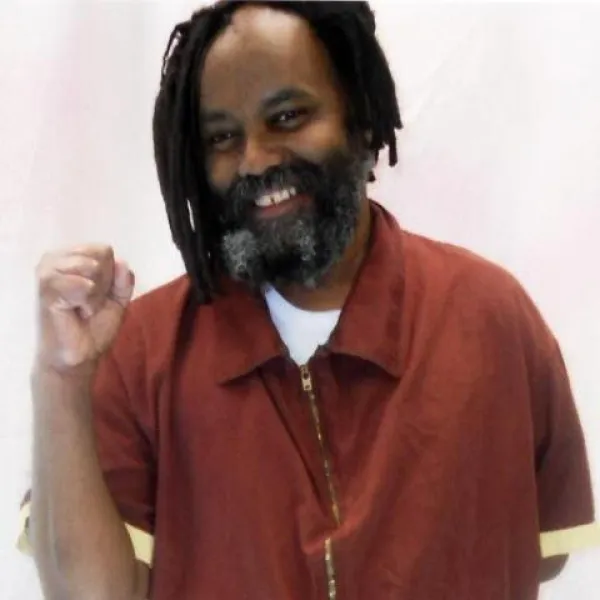
More importantly, Read Mumia. His new book is called Writing on the Wall: Selected Prison Writings of Mumia Abu-Jamal, and it includes commentaries by Mumia from 1982 through 2014. Mumia went ahead and made his prison a school -- a school in history, in politics, and in morality. And his own moral teaching is primarily by example. He teaches the liberating lesson that, if you so choose, you can know right now that never ever will anyone be able to beat you down. You can be cheerful for the rest of your life and rest completely assured that nothing can ever take that away.

“Officials in France and in Brussels said on Monday that they were unhappy and dumbfounded with the no vote, but let it be known that they would hold the door open to the possibility of a compromise between Greece and its creditors.”
Dumbfounded? Why? Because the godlike power of the creditors was insulted?
Mainstream coverage of economic matters — the above quote is from the New York Times — seldom cuts very deep into the world of money, seldom questions who’s in charge, and seldom dares to suggest that an economic system ought to serve humankind rather than vice versa.

I just read what may be the best introduction to peace studies I’ve ever seen. It’s called Peace Lessons, and is a new book by Timothy Braatz. It’s not too fast or too slow, neither obscure nor boring. It does not drive the reader away from activism toward meditation and “inner peace,” but begins with and maintains a focus on activism and effective strategy for revolutionary change in the world on the scale that is needed. As you may be gathering, I’ve read some similar books about which I had major complaints.
BANGKOK, Thailand -- Bangkok's coup-installed regime is considering
the purchase of three attack submarines from China for $1 billion,
after Thailand received exclusive anti-submarine warfare training from
the U.S. Navy's Seventh Fleet.
"We won't keep them to fight or shoot at any one. We will keep them so
that other people will be considerate of us," coup leader Gen. Prayuth
Chan-ocha said on July 7.
"You can see that other countries have problems in their seas. We have
to think, are we going to have problems in the future? It's all about
capability," Gen. Prayuth said at a news conference in Government
House, his political office after also grabbing the prime ministry.
"Do we only have the Gulf of Thailand as our sea? We also have the
Andaman Sea, do we not?"
Asked by a journalist if the submarine deal was an attempt to
strengthen ties with China, Gen. Prayuth replied:
"There is no need for that. We have a good relationship with China
already. Every country is good to us, except those who are still stuck

Obamacare is the name given a law that says you must buy overpriced private health insurance from companies that fund election campaigns. Yes, it's got some lipstick on it, but compared to a civilized healthcare system like other wealthy nations use it's awful. But how awful? Surely not as awful as . . .
Obamatrade, which is the name not given to a potential treaty, a.k.a. the Trans-Pacific Partnership (TPP) which says that . . .
You must let foreign corporations overturn national laws.
You must throw millions of people out of work.
You must pay more for medicine.
You must allow banks to gamble on and crash the economy.
You must not know what's in your food.
You must be censored online.
You must destroy family farming.
You must wreck the environment.
You must get paid less.
ALL OF THIS doesn't bother anybody?
The Supreme Court of the United States recently ruled in favor of Obamacare, and a considerable number of people apparently lost their minds and their bowels.

The images people bring to mind with the term "war," universally outdated, are grotesquely outdated in a case like this one. There is no pair of armies on a battlefield. There is no battlefield. There is no aim to conquer, dispossess, or rob. The people of Gaza are already pre-defeated, conquered, imprisoned, and under siege -- permanently overseen by military drones and remote-control machine-guns atop prison-camp walls. In dropping bombs on houses, the Israeli government is not trying to defeat another army on a battlefield, is not trying to gain possession of territory, is not trying to steal resources from a foreign power, and is not trying to hold off a foreign army's attempt to conquer Israel.

It would be fair to assume that Gershon Baskin’s recent article in the Jerusalem Post - Encountering Peace: Obviously no peace now, so what then? (June 24) – is not a mere intellectual exercise aimed at finding ‘creative’ solutions to the Israeli occupation of Palestine.
Baskin is a regular contributor to the Jerusalem Post, a rightwing newspaper. He is more or less embodied in the Israeli political establishment, otherwise, he would have never been allowed to initiate the “secret back channel for the release (of captured Israeli soldier) Gilad Schalit” as he proudly states in his bio.

Iraqis were attempting the nonviolent overthrow of their dictator prior to his violent overthrow by the United States in 2003. When U.S. troops began to ease up on their liberating and democracy-spreading in 2008, and during the Arab Spring of 2011 and the years that followed, nonviolent Iraqi protest movements grew again, working for change, including the overthrow of their new Green Zone dictator. He would eventually step down, but not before imprisoning, torturing, and murdering activists -- with U.S. weapons, of course.
There have been and are Iraqi movements for women's rights, labor rights, to stop dam construction on the Tigris in Turkey, to throw the last U.S. troop out of the country, to free the government from Iranian influence, and to protect Iraqi oil from foreign corporate control. Central to much of the activism, however, has been a movement against the sectarianism that the U.S. occupation brought. Over here in the United States we don't hear much about that. How would it fit with the lie we're told over and over that Shi'a-Sunni fighting has been going on for centuries?