
Global
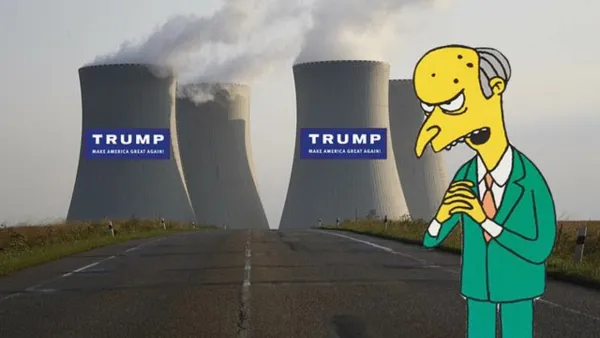
In the area of energy policy under the presidency of Donald Trump, two concerns loom above all others.
One is Trump’s support for nuclear power and fossil fuel energy, at a time when other powerful countries are going renewable. Trump’s economic commitments to nuclear energy and fossil fuels contrast sharply with China’s massive new commitment to energy sources including solar and wind. If China, the world’s number-two economy, joins Germany (number four) and possibly Japan (number three) in converting to 100 percent renewable sources, the U.S. economy will be left in the dust.

 es, that is what the ideological one-noters among Republicans want to do, so let them do it! Of course it’s not that simple, as even two-note Republicans have begun to acknowledge wanly, since flat-out repeal could make enemies for the party, maybe twenty million of the suddenly uninsured. That’s almost ten times the number of votes Hillary won by. Bring it on.


“The F-35 Lightning II Program (also known as the Joint Strike Fighter Program) is the Department of Defense’s focal point for defining affordable next generation strike aircraft weapon systems for the Navy, Air Force, Marines, and our allies. The F-35 will bring cutting-edge technologies to the battlespace of the future.”
Lurking behind this perky little PR blurb, from the F-35’s own website, is the void into which the soul of the human race has disappeared.
This is war consciousness: locked into place, awash in money. The deeply flawed F-35, the most expensive military weapons system in history, is ultimately projected to cost over $1 trillion, but no matter: “It will bring cutting-edge technologies to the battlespace of the future.”

I was a FL certified teacher from 1997-2012, and I now live in MA. I
am writing because of a problem I perceive with elections – and I am
suggesting a possible solution.
As a voter, I believe I should not only have the right to vote, but I
should be able to know facts about whom I am voting for. Yet, because
of the 1974 federal law FERPA, I am unable to review a candidate's
college transcript unless I file a lawsuit under that law.
Jeb Bush ran for governor three times in Florida, and also ran for
president. Each time he portrayed himself as a graduate of a 4-year
public university, but after much research I now believe he dropped
out of college after two years, and his father covered it up for him.
I am now sure Jeb Bush never attempted nor completed two of the four
years of his alleged degree in Latin American Studies. He dropped out,
but since 1988, his father, mother, friends, and the government make
false claims about his actual college status.
Should a candidate be able to run for office posing as a college
graduate when he is actually a college drop-out?
As you ride the Amtrak along the Pacific coast between Los Angeles and San Diego, you pass the San Onofre nuclear power plant, home to three mammoth atomic reactors shut by citizen activism.
Framed by gorgeous sandy beaches and some of the best surf in California, the dead nukes stand in silent tribute to the popular demand for renewable energy. They attest to one of history’s most powerful and persistent nonviolent movements.

What do these pieces of evidence tell you?
The United States and Russia each possess enough nuclear weapons to destroy all life on earth many times over.

With the mind fogging meme of “Russian Influence,” we are avoiding a fact-based analysis of the 2016 election at our own peril.
Treason doth never prosper: what's the reason?
Why, if it prosper, none dare call it treason.
Sir John Harington 1561-1612 - (Also credited with being the inventor of the flush toilet.)
Tragedy, Comedy and Farce All Rolled Into One
The official mythic revisionism of the recent US electoral debacle now seems to be settling firmly into place: Putin did it – the outcome was a result of ‘Russian influence.’
One can see how the Russian Influence Mind Fogging Meme might be mutually convenient for the elites of both parties to unite behind.
For the Dems it deflects attention away from their terminal corruption and incompetence.
For the GOP it deflects attention away from their gargantuan election theft apparatus, patiently assembled by the ruthless radical right-wing billionaires over the past decades .

The idea has been floated and endlessly reintroduced in legislation since the founding of the United States of creating a Department of Peace. These efforts even resulted in 1986 in the creation of the USI”P” — the U.S.