
Global

I pledge allegiance to . . . what?
The Electoral College, to no one’s serious surprise, voted Donald Trump in as the nation’s 45th president, and the pot of outrage in the American spectator democracy begins to boil.
No, no, no, no, no, no, no — no to all his right-wing and idiotic cabinet and Team Trump appointments, no to his conflicts of interest and serial tweets, no to his sexism, his reckless arrogance, his ego, his finger on the nuclear button.

 When George W. Bush made the case for attacking and destroying the nation of Iraq, he made claims that, if true, would have justified nothing. And he proposed as evidence for those claims fraudulent, implausible, and even ridiculous pieces of information. But he was expected to produce evidence. There was no assumption that he should simply be taken on faith.
Those standards are gone.
The common wisdom that Vladimir Putin hacked into Democratic and Republican emails and fed the Democratic ones to WikiLeaks which delegitimized an otherwise legitimate election, is not based on any public evidence, and none is asked for by most believers.
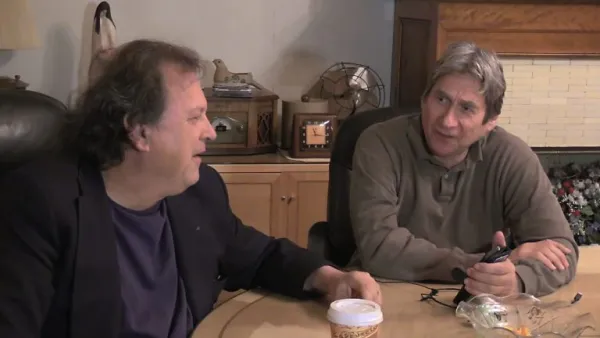
Harvey Wasserman interviews investigative reporting partner Bob Fitrakis about the rigged 2016 selection and the inside story of the attempted recount for his weekly radio program, the Solartopia Green Power and Wellness Hour. EON photo
The Woodward and Bernstein of Election Integrity
Every presidential election since 2004, we have traveled to Columbus, in key swing state of Ohio, to video document election protection efforts by Harvey Wasserman, Bob Fitrakis and the Columbus Free Press team (FreePress.org). We made the trip again this year and have just returned from filming post-recount interviews with both of them in Columbus last week.
Harvey Wasserman – an author, historian, celebrated journalist and lifelong activist, and Bob Fitrakis – a practicing attorney who holds doctorates in both political science and law – are also both popular professors in Columbus colleges.

With its theme of inconsolable grief and how to cope with it, director David Frankel’s (Marley & Me, The Devil Wears Prada) Collateral Beauty has the kind of story one usually experiences in low budget indies by filmmakers such as Jim Jarmusch. But this is a New Line Cinema, Village Roadshow Pictures, et al, feature being distributed by Warner Bros. with an A-list cast, written by Allan Loeb (the similarly-themed Things We Lost in the Fire, Wall Street: Money Never Sleeps), a screenwriter who “doggedly pursues and creates unique, character-driven films… grounded in authentic emotion, poignant honesty, and a deep sense of humanity,” according to press notes.

BANGKOK, Thailand -- Thailand's military government is consolidating
its control and skillfully handling the country's traumatic mourning
in the aftermath of King Bhumibol Adulyadej's death on October 13 at
age 88, while a flow of hundreds of thousands of grieving people offer
Buddhist prayers in front of the golden royal coffin.
Prime Minister Prayuth Chan-ocha, a staunch royalist who seized
power in a bloodless 2014 coup, is overseeing the elaborate funeral
arrangements and extensive public security amid the nation's
grief-stricken changes.
The widely revered, late constitutional monarch headed an
influential institution which supported the military.
In turn, the armed forces proudly protected Bhumibol during his
70-year reign.
Prayuth's post-coup policies are also defending Thailand's "old
money" elite against social climbing "nouveau riche" rivals.
Those quashed rivals are led by former Prime Minister Thaksin
Shinawatra, who Prayuth helped topple in a 2006 coup, and by Thaksin's
 lections have consequences, as the cliché goes, and those consequences are unpredictable, perhaps never more unpredictable than when no one wins the election — but someone takes office anyway. When that happens, the country is largely defenseless, as we learned so disastrously in 2000.
That was when we had five unprincipled Supreme Court justices to thank for promoting an actual (but uncounted) loser to the presidency. George W. Bush proceeded to reward the country’s wary trust by blithely ignoring warnings of a terrorist attack, then using 9/11 to jingo up the fear-laden public mood and urge us to go shopping while he (and a complicit Democratic Congress) started wars that have yet to end. (For reasons having nothing to do with decency or justice, Nancy Pelosi led the opposition to impeaching this war-criminal president.) For extra credit, Bush presided over a bipartisan wave of unchecked criminal capitalism that brought the economy to its knees and Democrats to the White House.

As we think about the election — what went wrong, what’s been unleashed and what we should do about it — please, please, let us expand our vision beyond some technical fix or updated “message.”
Even if we’re talking about the Democratic Party.
James Zogby, founder of the Arab American Institute and a longtime member of the Democratic National Committee, discussing the Bernie Sanders phenomenon and the future direction of the party, wrote recently: “Many rank and file Democrats had lost confidence in their establishment and were looking for an authentic message that spoke to their needs.”
The growing push to defeat Trump by any of the following means:
Taking the CIA's warmongering on faith and blaming Vladimir Putin for everything, Accusing the FBI, Pressing for majority rule despite the electoral college, Protesting voters being stripped from the rolls, Objecting to intimidation at the polls, Trying to undo the blocking of votes by those lacking IDs, Remedying broken and insufficient and unverifiable machines, Counting paper ballots where they exist, Threatening impeachment over Trump's unconstitutional presents and emoluments from foreign nations unless he sells his foreign businesses, Arguing for disqualification on the ground of mental illness, Praying and fantasizing,would be far more energized and popular if the "defeated" candidate were Bernie Sanders, who -- judging by all existing polling (and theorizing what his general election campaign would have looked like) -- would almost certainly not have been defeated by any means in the first place.

Part I. Personal
Wednesday evening I answered the phone, and a man pretending to work for the local sheriff's department asked me to identify myself, told me that the call would be recorded because it might be used against me in a court of law, and ordered me to get a pen and paper. He spoke fast and unclearly and with lots of strange background noises. He claimed that I had failed to appear for jury duty and I would be arrested if I didn't do what he said. (I'd received no notice of jury duty.)
There are less than 48 hours to go before the Electoral College begins casting its votes.
Here is a petition to sign that might make a difference:
http://petitions.moveon.org/sign/ask-hillary-clinton-to-3?source=c.fwd&r_by=1398470
The desperate search for a successful Hail Mary to prevent Donald Trump from becoming president is down to the wire. The attempts can be easily seen by many as pollyannish. But we honor such individual acts of extreme clarity in John Kennedy's PROFILES IN COURAGE.
And given the specter of a Trump presidency, this could be one of them.
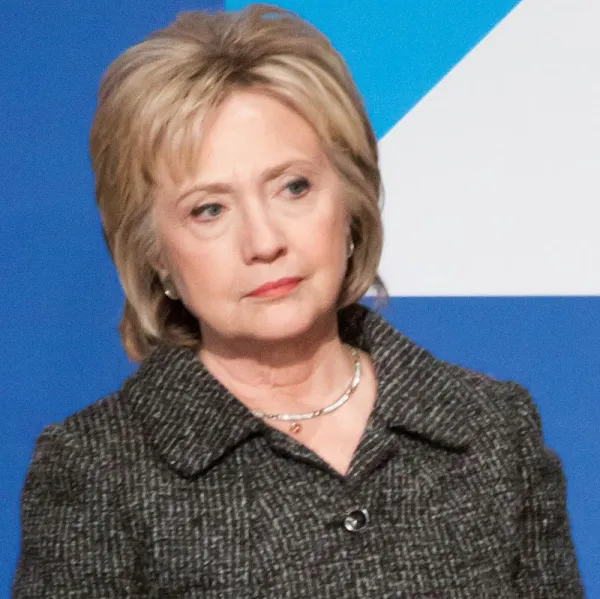
In the final moment, it all rests on Hillary Clinton. Given the legal strictures of the Twelfth Amendment, she may be the only one who can possibly stop a Trump presidency.
Here's the petition to sign asking her to do just that: