
Global

“All great changes,” said Deepak Chopra, “are preceded by chaos.”
That starts to get at it — how to understand, and start healing, the national wound inflicted on this country, and the world, by the 2016 presidential election. But I need to throw in a little John Oliver as well.
“We are faced,” he said on his TV show, “Last Week Tonight,” “with the same questions as the guy who wakes up after a Vegas bachelor party deep in the desert, naked, tied to a cactus and a dead clown. Namely, how the fuck did we get here and what do we do now?”
We’ll be struggling to answer the second question for the next four years, but the question of how we got here can be addressed with a certain troubling clarity. It took more than Donald Trump’s spur-of-the-moment racist populism. The groundwork for the results of the 2016 election began with the nation’s founding — and the racist elitism that was deeply a part of it.
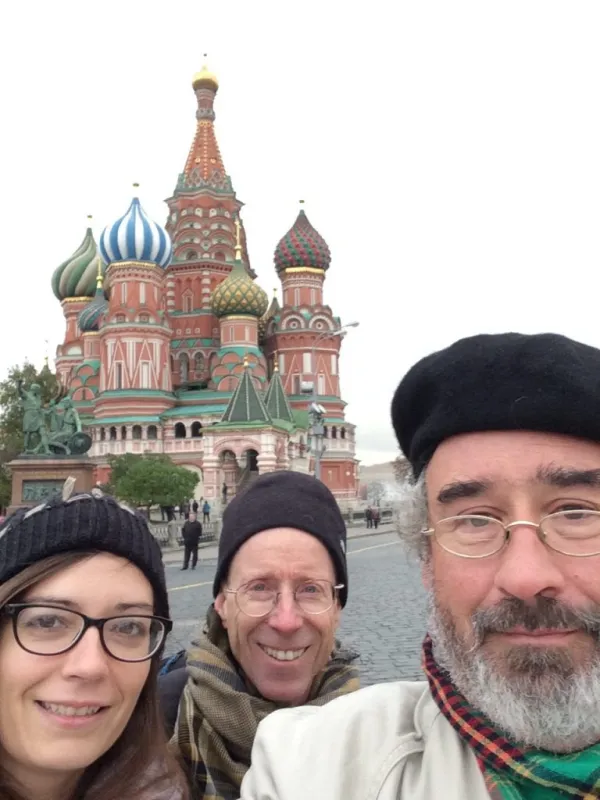
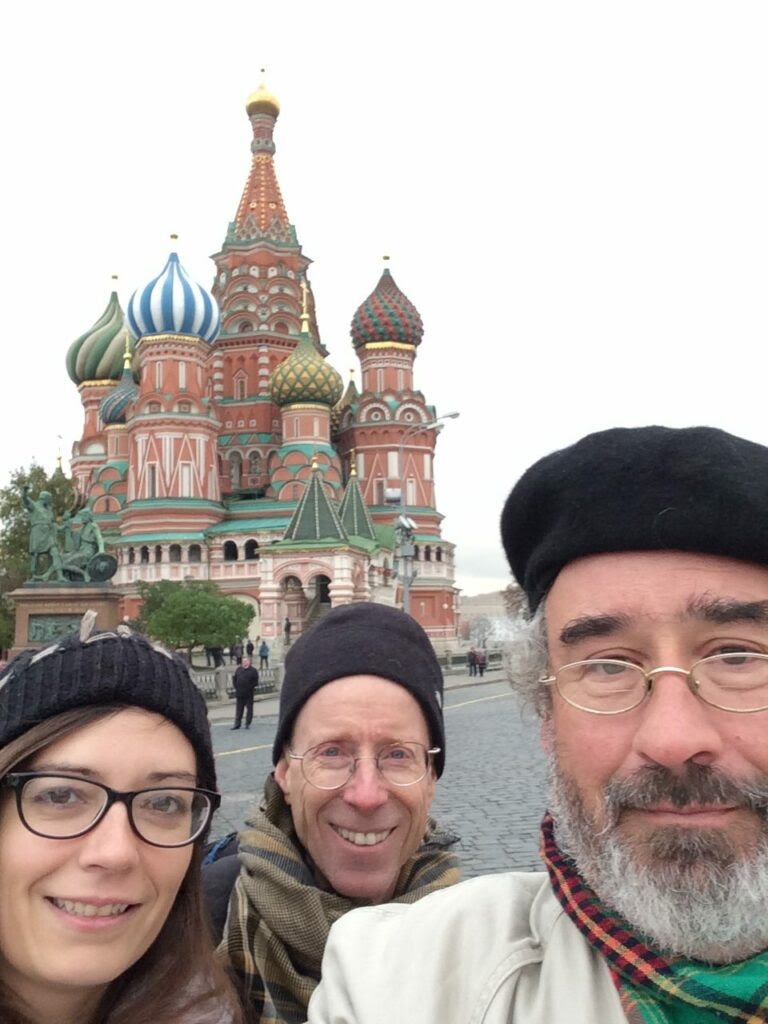
On October 9, I was in the Nevada desert with Catholic Workers from around the world for an action of prayer and nonviolent resistance at what is now called the Nevada National Security Site, the test site where between 1951 and 1992, nine hundred and twenty-eight documented atmospheric and underground nuclear tests occurred. Since the Comprehensive Nuclear-Test-Ban Treaty and the apparent end of the Cold War, The National Nuclear Security Administration, NNSA, has maintained the site, circumventing the intent of the treaty with a stated “mission to maintain the stockpile without explosive underground nuclear testing.”
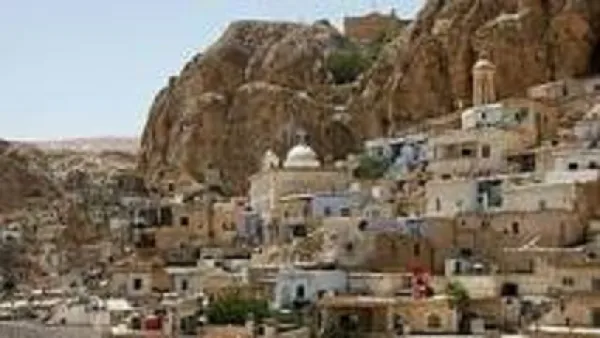
In early 2011, as the Arab Spring was moving across North Africa and the Middle East, small groups of nonviolent activists in Syria, which has been under martial law since 1963, started protesting against the brutal dictatorship of Bashar al-Assad and demanding democratic reforms, the release of political prisoners, an increase in freedoms, abolition of the emergency law and an end to corruption.
By mid-March these protests, particularly in cities such as Damascus, Aleppo and Daraa, had escalated and the 'Day of Rage' protest on 15 March 2011 is considered by many to mark the start of the nationwide uprising against the Assad dictatorship. The dictatorship's reaction to the protests became violent on 16 March and on 18 March, after Friday prayers, activists gathered at the al-Omari Mosque in Daraa were attacked by security forces with water cannons and tear gas, followed by live fire; four nonviolent activists were killed.

If I told you Moonlight is about an African-American boy growing up in a world of drugs and poverty, you’d probably begin to form an image of the film in your mind. And that image probably would be wrong.
Director/screenwriter Barry Jenkins has put together a movie so sensitive, so lyrical and so different from anything we’ve seen that there’s no way to avoid being taken by surprise.
Moonlight tells the sad tale of Chiron, a boy growing up in a scruffy neighborhood of Miami. Divided into three chapters, the film follows him into high school and finally into adulthood. At all three stages of his life, he struggles with loneliness brought on by his own—and other people’s—inability to accept him for who he is.
As a boy, Chiron (Alex R. Hibbert) is nicknamed Little due to his small size and is constantly bullied for being somehow different from the other boys. A sympathetic classmate named Kevin (Jaden Piner) advises him to stick up for himself, but Chiron’s mother, Paula (Naomie Harris), is too consumed by her drug habit to pay attention to his needs.
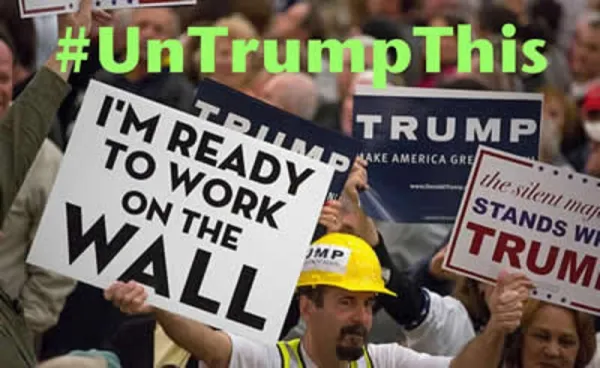
A couple of dozen young people marched back and forth through downtown Charlottesville, Virginia, Saturday evening shouting "Love Not Hate!" and "No Human Being Is Illegal!" and "Black Lives Matter!" and similar anti-Trump inspired slogans. They didn't hand out flyers or interact with other people at all, though I cheered for them.
Meanwhile some people my age looked on and made scornful condescending comments to the effect that the election was over and these fools should get over it. And one drunk guy, restrained by his wife or girlfriend, announced that "Black lives aren't worth s---!"
My response is different, if perhaps equally cynical. I'd like all the fools not marching and rallying to recognize that the dream of self-governance is over and to get over it. I'd like everyone to have gotten over it last month or last year or last decade.
It was a moment as tiny as marking a ballot — those two minutes of the second debate, when the presidential election hung suspended mid-diatribe and the candidates let go of their opponent’s flaws long enough to honor a bit of common humanity.
No big deal. Yeah, I know.
But as the thing winds down to the day of reckoning, and a sense of lost values and lost democracy overwhelms me — the election season is pure spectacle, full of sound and fury (signifying nothing?) — I find myself going back to those two minutes over and over, trying to understand why they hit me with such force.

A former diplomat who writes about the two issues pushing the world to the edge- foreign policy & religion.
This post is hosted on the Huffington Post’s Contributor platform. Contributors control their own work and post freely to our site. If you need to flag this entry as abusive, send us an email.
“That men do not learn very much from the lessons of history is the most important of all the lesson of history.” Aldous Huxley

1. Stop the efforts to ram through the Trans-Pacific Partnership during the lame duck.
2. Stop the efforts to ram through a supplemental war spending bill for assorted future wars during the lame duck.
3. Stop the efforts to repeal the right to sue Saudi Arabia and other nations for their wars and lesser acts of terrorism during the lame duck.
4. Build a nonpartisan movement to effect real change.
5. Ban bribery, fund elections, make registration automatic, make election day a holiday, end gerrymandering, eliminate the electoral college, create the right to vote, create public hand counting of paper ballots at every polling place, create ranked choice voting.
6. End the wars, end the weapons dealing, close the bases, and shift military spending to human and environmental needs.
7. Tax billionaires.
8. End mass incarceration and the death penalty and the militarization of police.
9. Create single-payer healthcare.
10. Support the rule of law, diplomacy, and aid.
11. Invest in serious effort to avoid climate catastrophe.
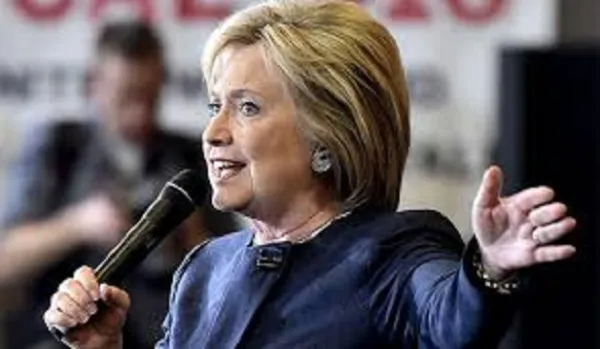
For the sixth time in our history, a candidate for President of the United States may have won the popular vote and lost the White House.
This must end.
While the nation—and much of the world—shudders at the thought of a Donald Trump presidency, our electoral system has once again failed to deliver a formal victory to the person who got the most votes.
Hillary Clinton appears to have won the nationwide popular vote. As of about 1 PM eastern time, the tally was roughly 58,909,774 votes (47.6%) for Clinton, versus 58,864,233 votes (47.5%) for Trump. (The exact numbers will change as the vote count continues.)
But Donald Trump's Electoral College tally has exceeded the 270 Electoral College votes needed to take the White House.