
Global

 he official version of Associate Justice Antonin Scalia’s death at a remote Texas luxury resort during the night of February 12-13 is that he died of natural causes, in bed alone and without any witness, time of death unknown. While there’s little forensic evidence to support this or any other conclusion, there’s even less evidence to challenge it. What, after all, is not credible about a 79-year-old, overweight man with heart disease and other medical issues dying in his sleep after overindulging at a dinner party for forty people?
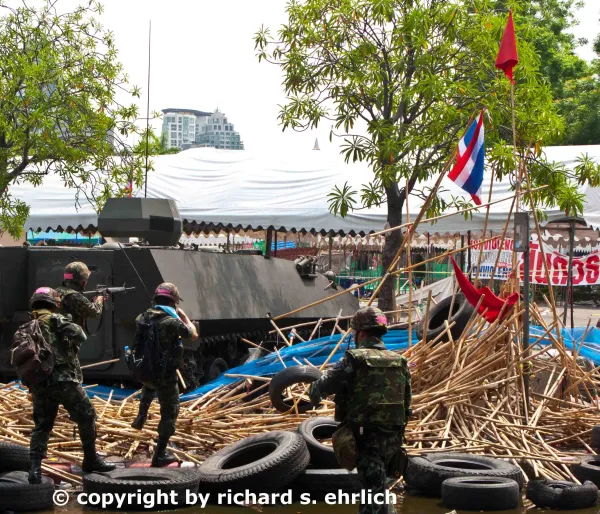
BANGKOK, Thailand -- While the U.S. alliance with Thailand suffers
strains after Bangkok's 2014 coup, Russia has delivered combat
helicopters to the military regime and now wants to provide tanks,
counter-terrorism training, security intelligence and other
assistance, Russia's ambassador to Thailand said in an interview.
Moscow's willingness to support coup leader Prime Minister Prayuth
Chan-ocha sharply contrasts with the Obama administration's public
criticism of Thailand's junta, Russian Ambassador Kirill Barsky said.
Meanwhile, Thailand's Defense Minister Gen. Prawit Wongsuwon, who
is also deputy prime minister, visited Russia February 23-27 so the
two sides could tighten military relations after decades of relatively
low-key links, Mr. Barsky said.
Prime Minister Prayuth is invited to join a May summit in the
Russian city of Sochi between the Kremlin and the Association of
Southeast Asian Nations (ASEAN) which also includes Brunei, Cambodia,
Indonesia, Laos, Malaysia, Myanmar, the Philippines, Singapore and
Vietnam.

Nick Scott takes I’ll be back, one of the greatest movie quotes of all time, to a mind-bending level of inspiration.
At 16 he was in a car accident that paralyzed him from the waist down. He became borderline suicidal. He ballooned to 300 pounds. He was lost in a world of despair that healthy people can’t or simply don’t want to comprehend.
Seventeen years later he has become an iconic figure for handicapped athletes and Paralypians. He’s pioneered the competition of pro-wheel chair body building. He’s been recognized by the White House. He travels the country as a motivational speaker. He started Wheelchair Athletics, Inc. His ultimate goal is to open a chain of gyms for the handicapped.
He gives thanks every day the car accident didn’t end his life because the accident actually gave him life.
“I hated who I was,” said Scott to the Free Press. “But God gave me a second chance at life, and I realized I was blessed. And instead of being hateful about it I decided to live life positive not negative. Not what I couldn’t do, but what I could do.”
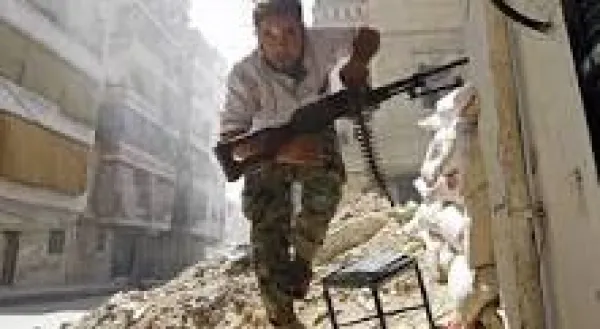
A cease-fire, even a partial one by only some of the parties to the war in Syria, is the perfect first step -- but only if it's widely understood as a first step.
Almost none of the news coverage I've seen speaks to what purpose the cease-fire serves. And most of it focuses on the cease-fire's limitations and who predicts someone else will violate it, and who openly promises to violate it. The big outside parties, or at least Russia, plus the Syrian government, will go right on bombing selected targets, which will go right on shooting back, while Turkey has announced that ceasing to kill Kurds would just be taking the whole thing a bit too far (Kurds the United States is arming against other people the United States is arming, by the way).
The United States distrusts Russia on this, while Russia distrusts the United States, various Syrian opposition groups distrust each other and the Syrian government, everybody distrusts Turkey and Saudi Arabia -- the Turks and Saudis most of all, and U.S. neocons remain obsessed with Iranian evil. The predictions of failure could be self-fulfilling, as they seem to have been before.

A young, much-beloved woman was gang-raped three years ago on a bus in Delhi and a culture exploded.
The documentary India’s Daughter, which addresses the horrific rape-murder and its aftermath, is part of that explosion of awareness, aimed straight at the heart of India’s cultural dismissal of women as full-fledged members of society and full-fledged human beings. It opens up a world where people can still say: “A decent girl won’t roam around at 9 o’clock. A girl is far more responsible for a rape than a boy.”
Remarkably, it also does more than that. It envisions the sort of peace that looks squarely at the worst of who we are . . . and calls, not for more scapegoating, but for collective responsibility. The stories of the six young men convicted of the crime are also part of Leslee Udwin’s documentary. Their lives, just as the victim’s life, are embraced with compassion and openness.
Wa wa wa wa.
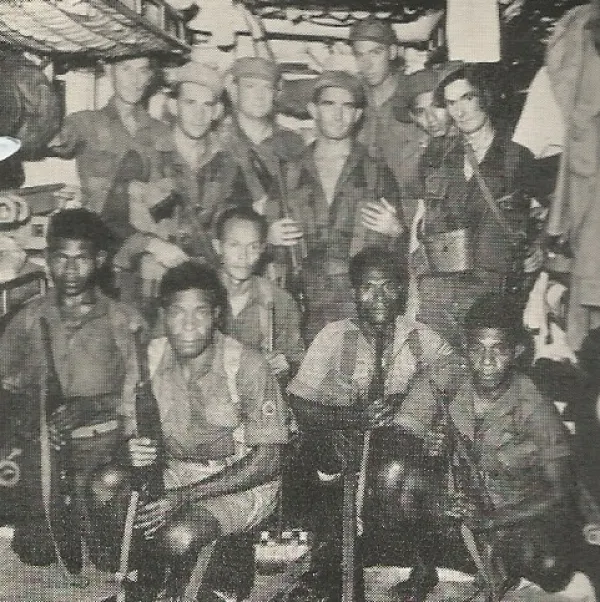
We have recently been discussing your ongoing courageous struggle to liberate yourselves from more than 100 years of occupation, first by the Netherlands, briefly and brutally by Japan during World War II, and now by Indonesia. In that regard, we would each like to share a brief message with you, our friends from West Papua.
From James: I have been very impressed with the information gleaned from my son Robert Burrowes after his recent meeting in Brisbane with your leaders Octovianus Mote, Benny Wenda, Jacob Rumbiak and Rex Rumakiek of the United Liberation Movement for West Papua.
The work and dedication you have been devoting to the cause of freedom for West Papua has inspired me to recall my own experience with some of your ancestors during my 4 years with the Australian Imperial Force (AIF) during World War II, which included 2½ years as a coastwatcher. Ten months of this time was spent in enemy-held territory as a signaller.
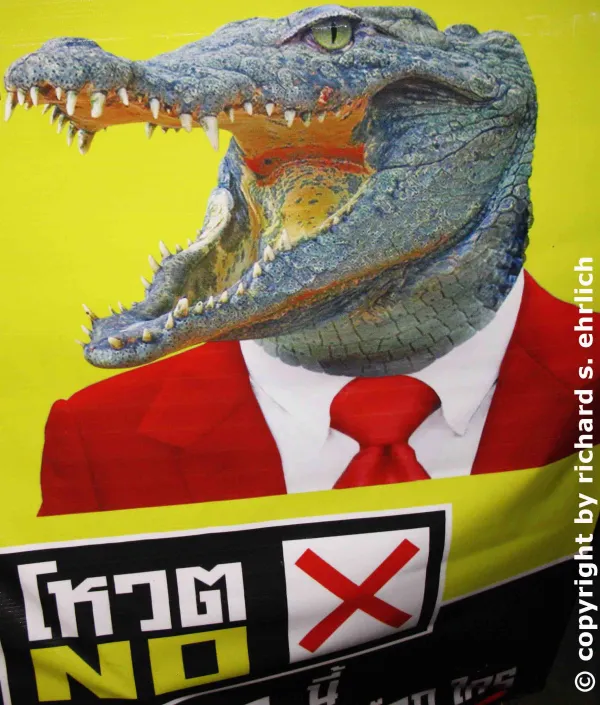
writing a new constitution which appears to extend its dominating
policies by ensuring an unelected prime minister can rule, boosted by
a Senate stacked with pro-junta appointees.
Only then, after popular anti-coup politicians and parties are
rendered weaker, will nationwide Parliamentary elections be allowed in
2017 or 2018 -- or perhaps later.
Not everyone is thrilled.
"The draft charter has already been branded by opponents of the
military government as a 'dictator's charter' or the constitution that
'cheats and steals the power of the people'," the Bangkok Post said in
a February 12 editorial.
The finalized constitution may allow a National Strategic Reform and
Reconciliation Committee --nicknamed "a crisis panel" -- to seize all
executive and legislative power from the government and Parliament.
"The committee will get involved only after the country is at a dead
end," Defense Minister Prawit Wongsuwon warned last year.

Bernie Sanders can absolutely win the Democratic Party’s nomination. He’s still way behind Hillary Clinton in a number of Super Tuesday states. But you have to have worked on or followed presidential campaign politics to understand the power of momentum. If you ask any campaign leader which they’d rather have, the lead or momentum, they will usually choose momentum.
Leads can dissolve quickly in the face of momentum. Nationally, Hillary Clinton used to lead Sanders by an average of about 20 percentage points. But in the wake of Sanders’s surprising performance in Iowa and his 22-point margin of victory in New Hampshire, the latest Quinnipiac poll shows he and Hillary are statistically tied across the country.
How did this happen? Did people suddenly remember they didn’t like Hillary Clinton? No. Many are suddenly finding out that they actually like Bernie Sanders — a lot.
The United States has launched over 100,000 air strikes during its war on (or is it of) terror. It's blown up houses, apartments, weddings, dinners, town hall meetings, religious gatherings. It's killed senior citizens, children, men, women. It's tapped them, double tapped them, bugsplatted them, targeted them, kill-sported them, and collateral damaged them by the hundreds of thousands. It's killed civilians, journalists, mercenaries, opportunists, those trying to get by through support of the dominant force in their village, and those opposing the foreign occupation of their countries. It's killed kind people, smart people, dumb people, and nasty sadistic people who -- purely because of where they were born and raised -- had no opportunity to become U.S. presidential candidates.
Of course I would like all militaries to refrain from bombing hospitals, but I want to say a word in support of the not-yet-injured. Don't people of sound body have rights too? If there is a problem with bombing hospitals, why is there not a problem with bombing everywhere else? If there's not a problem with bombing everywhere else, why isn't it OK to bomb hospitals too?