
Global

Iraqis were attempting the nonviolent overthrow of their dictator prior to his violent overthrow by the United States in 2003. When U.S. troops began to ease up on their liberating and democracy-spreading in 2008, and during the Arab Spring of 2011 and the years that followed, nonviolent Iraqi protest movements grew again, working for change, including the overthrow of their new Green Zone dictator. He would eventually step down, but not before imprisoning, torturing, and murdering activists -- with U.S. weapons, of course.
There have been and are Iraqi movements for women's rights, labor rights, to stop dam construction on the Tigris in Turkey, to throw the last U.S. troop out of the country, to free the government from Iranian influence, and to protect Iraqi oil from foreign corporate control. Central to much of the activism, however, has been a movement against the sectarianism that the U.S. occupation brought. Over here in the United States we don't hear much about that. How would it fit with the lie we're told over and over that Shi'a-Sunni fighting has been going on for centuries?
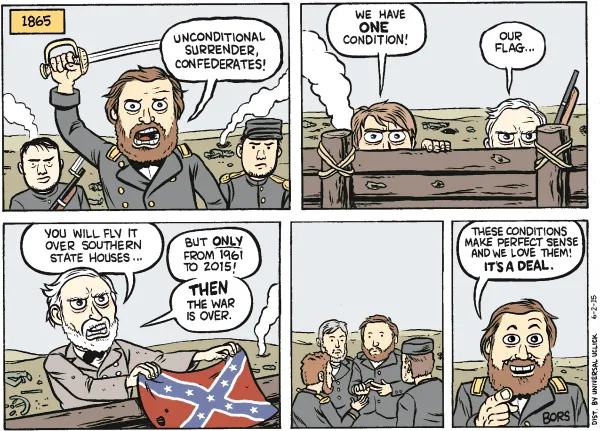

“The existence of the approximately 14,000 photographs will probably cause yet another delay in the military commissions at Guantanamo Bay, Cuba, as attorneys for the defendants demand that all the images be turned over and the government wades through the material to decide what it thinks is relevant to the proceedings.”
This was the Washington Post a few days ago, informing us wearily that the torture thing isn’t dead yet. The bureaucracy convulses, the wheels of justice grind. So much moral relativism to evaluate.
“They did what they were asked to do in the service of our nation,” CIA director John Brennan said at a news conference in December, defending CIA interrogators after a portion of the 6,700-page Senate Intelligence Committee report was made public.
Serving the nation means no more than doing what you’re told.
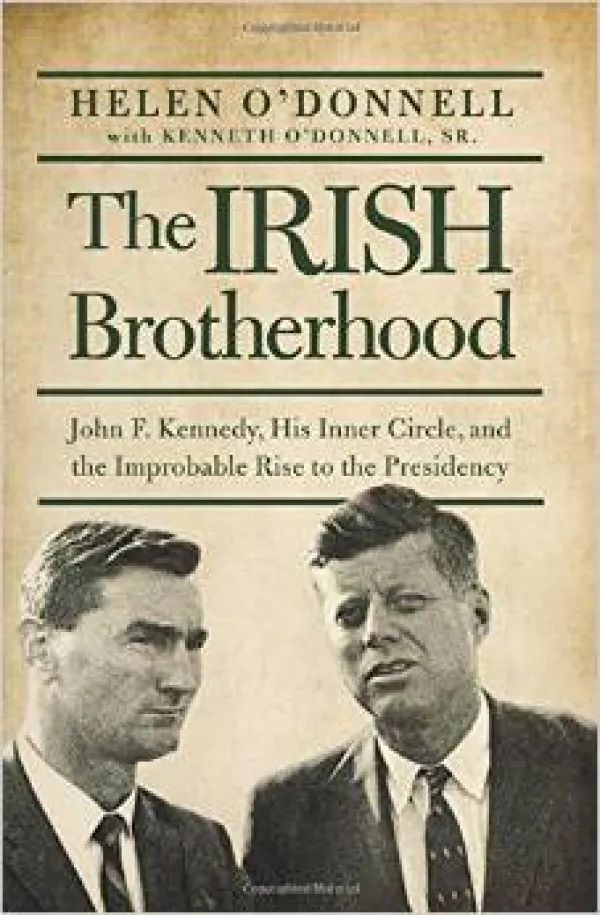
I have been fascinated by Jacqueline Kennedy Onassis since I was a young girl. This fascination at times has spilled over on other members of her family, including the president. Yet even I wonder if there is anything new to say about the Kennedy Family, especially the charmed threesome of John, Robert and Jackie. In penning The Irish Brotherhood, Helen O’Donnell has shown us that there is a most interest aspect of the late president’s political life that has received short shrift.

When he first came to Columbus Crew SC in the 2006 season, Kei Kamara was only a footnote in the Gold & Black’s offense. Kamara, a forward from Kenema, Sierra Leone, scored three goals in 2006 and two in 2007 before being traded to the San Jose Earthquakes in 2008.
Things are much different in Kamara’s second time around. Starting in 14 of the team’s first 15 games, the forward has doubled in his goal production in those first two seasons and, as of June 17, leads Major League Soccer with 10 goals.
Kamara’s total, set in the first 12 games of the season, helped him become the fastest player in club history to reach double digits in goals. He also set a MLS record for most shots in a game, blasting 10 shots and failing to score in a 2-1 loss to Montreal on June 6.
Experience, Kamara says, has made all the difference.

After E3 2014’s overdose of angry scruffy white men, E3 2015 was a marginally more open and diverse affair. More game publishers than usual held their own press conferences this year, including the first-ever E3 press event from Bethesda, best known for their Mass Effect and Elder Scrolls RPG series. Nintendo confirmed a same-sex relationship option for their next Fire Emblem game. And more publishers showed off games featuring women, as well as mobile games, which are played by more women than men. There’s still a decided lack of racial representation, but this year’s E3 showed that most game studios are starting to listen.
Another first this year was the PC Gaming Show, presented by PC Gamer magazine and PC hardware maker AMD. Presented in the format of a talk show, the PC Gaming Show showed off footage from upcoming PC games and expansions to existing ones. Though this included some bigger publishers, it also gave smaller studios without the clout to host their own events a chance to show off new game footage that otherwise would have been trampled by the Holy Console Trinity of Sony, Microsoft and Nintendo.
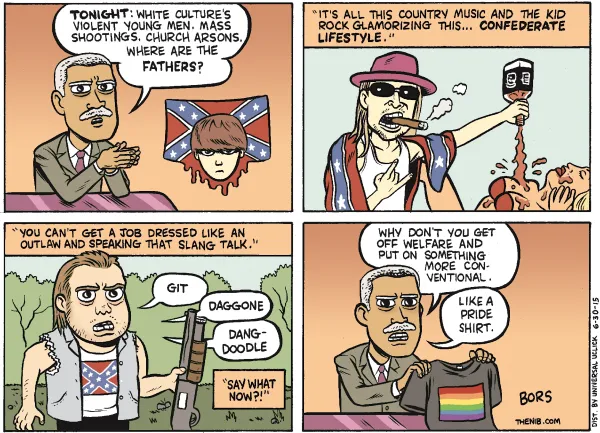

“The pharmaceutical companies are an amoral bunch. They’re not a benevolent association. So they are highly unlikely to donate large amounts of money without strings attached. Once one is dancing with the devil, you don’t always get to call the steps of the dance.”—A psychiatrist, quoted in the Boston Globe, 2002.
The New England Journal of Medicine, under the editorship of Marcia Angell, MD, published a study in the May 18, 2000 issue whose principle author was the chief of Brown University’s Department of Psychiatry. The academic psychiatrist had reportedly made $500,000 in one year doing consultancy “work” for various psycho-pharmaceutical companies that marketed antidepressant drugs. In editing the article, Dr Angell discovered that there wasn’t enough room to print all the various co-author’s conflict of interest disclosures. Because of space limitations, Angell put the full list on the website rather than in the hard copy issue.

The House and Senate have rammed through Fast Track.
Here are the senators who voted for Fast Track: http://1.usa.gov/1GtAdTH
And the House members who voted for Fast Track: http://1.usa.gov/1GAl1TT
We always said this would virtually guarantee passage of the Trans-Pacific Partnership. But it doesn't absolutely guarantee it.
One way to stop it would be to pull out a seldom-used tactic in the United States that is indispensible in other nations. We could threaten consequences at the polling place for TPP supporters.
Yes, yes, yes, yes, I know -- No, not kidding, I actually know -- that in some small percentage of cases this could end up meaning that you've committed to voting against someone who faces in a future election someone else who looks even worse. But fear of that has in fact produced a pattern of, in fact, worse candidates followed by even worse candidates for years now. How, pray tell, do you propose to ever get any better candidates?

Two days ago an email came from an Iraqi doctor in Baghdad in response to a brief greeting I sent for the month of Ramadan.
“Thanks so much for remembering us…In fact we are the same if not worse. Our hearts are broken at the organized ruining of our country. We are targeted by those criminals and gangs coming from everywhere, even from the west who are all witnessing this drama and, if not supporting it, are keeping silent. We wonder what sin we committed to face this gloomy black fate. In fact, what is going on is beyond words. “
This courageous woman doctor never left the side of gravely ill children despite the great exodus of doctors due to kidnappings, assassinations and threats to their lives and families. Sadly she reports that another of her siblings has cancer, and she needs to leave the medical students for some days. This happens she says regretfully in “the critical time of final exams.” She herself is a cancer survivor and both her mother and sister had cancer. They have no choice, she says, but to go on and try to survive.