
Global
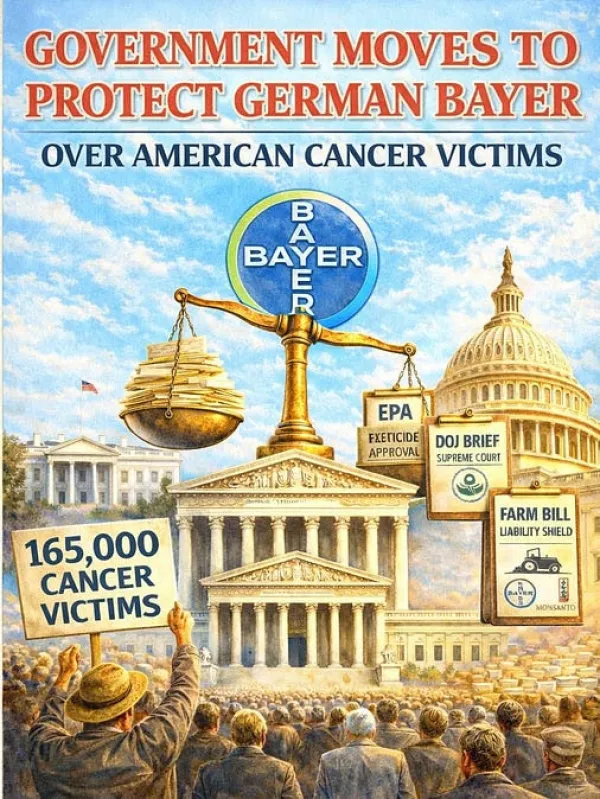
Healthy soil, water, and ecosystems are the foundation of human life. The health of creation gives rise to the health of life.
Powerful outside interests are using America’s treasury and public policy to advance profit-driven agendas while the health, land, and future of the American people bear the cost.
The same public purse that finances war abroad is now underwriting policies that poison the land at home.
Political energy that should be confronting this system is instead being redirected into advertising, messaging, and branding, while the real decisions are made through law, regulation, and votes.
While the long planned objectives of a foreign country drew America’s Department of War, the Department of State and the U.S. taxpayer’s purse into an expanding conflict across the Middle East, a foreign corporation, Bayer/Monsanto suddenly blasted onto the policy scene.
My enemies are not in Iran. My enemies are in Washington and Tel Aviv. In London and Canberra.
My enemies are the western oligarchs and empire managers who are poisoning my society and making everything awful while slaughtering human beings with the help of my tax dollars.
My enemies are the tyrants who are turning our civilization into a mind-controlled dystopia where it is increasingly illegal to criticize the abuses of my government and its allies, and increasingly difficult to find information which runs counter to the imperial narrative.
My enemies are the empire apologists and the hasbarists. The propagandists and spinmeisters. Those who side with Israel and the United States against basic human interests.
Imperial bootlickers always accuse me of writing “propaganda” for the “enemy”, with “enemy” meaning whoever the US-centralized empire happens to be attacking or preparing to attack on any given day. I always want to tell them “Motherfucker YOU are my enemy. YOU. You and the empire you simp for.”
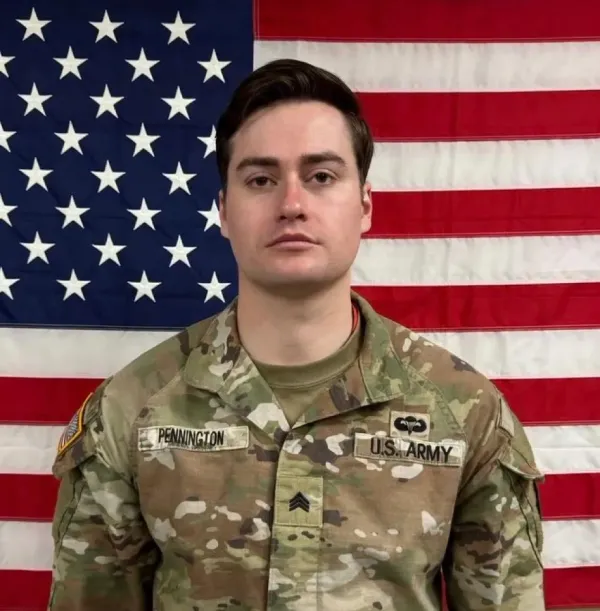
A few minutes ago I saw the announcement that US Army Sergeant Benjamin Pennington, of my home state of Kentucky, was killed this past week. And I am not here to speak ill of this man. I don’t know him. I am not even clear on what he was doing when he was killed - at what seems to be a military base in Saudi Arabia, so I won’t begin to speculate. I’m not even here for that.
I am here to make a painful point. Sgt. Benjamin Pennington did not die defending the United States. Not one credible person has ever said that Iran was even a remote threat to the United States of America. Trump claimed to obliterate their nuclear program last year. Iran had no missiles capable of coming even remotely close to the United States and had never attacked the United States. I don’t think a single Iranian ever has, to be honest.
This man died for Israel.
Bottom line. Period. You know it. I know it. The whole world knows it.
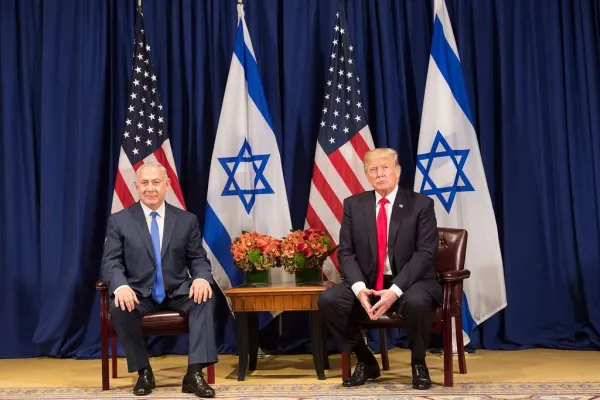
As the Trump–Netanyahu war against Iran drags into its third week, Americans are still asking the simplest question: why this war at all? What strategic objective justifies it? What national interest demands it? The administration has offered no answer. Instead, the public has been given spectacle.
Washington’s tone has been swagger, not seriousness—stage-managed bravado mixed with sarcasm and theatrical aggression. In a recent interview, Donald Trump boasted that U.S. strikes had “totally demolished” much of Iran’s Kharg Island oil export hub, then added, almost flippantly, that the United States might hit it again “a few more times just for fun.”
This is not responsible statecraft. War is not a reality show, and bombing critical energy infrastructure is not a punchline. Such strikes can destabilize entire regions, rattle global markets, and escalate a conflict whose boundaries are already unclear. Yet the administration presents the campaign less as a strategic necessity than as a performance of dominance.
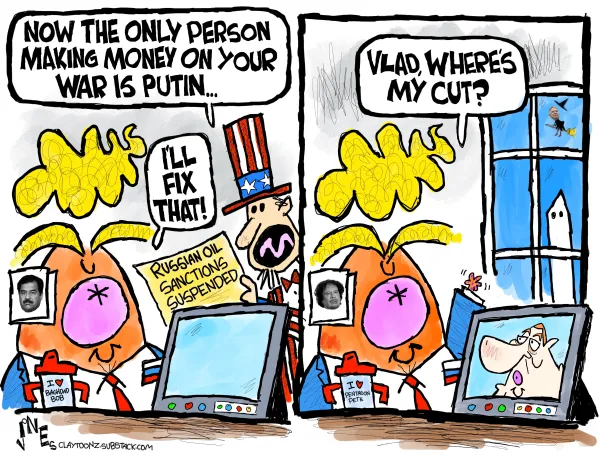
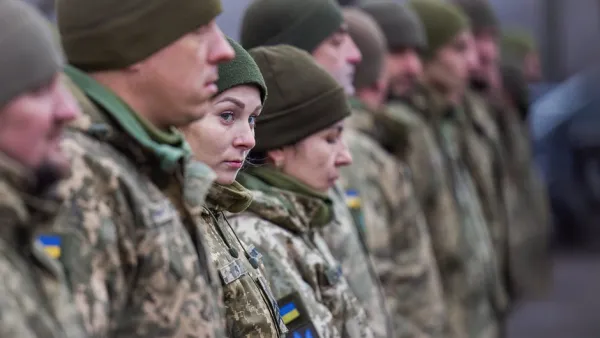
Doubtless, the war launched by US President Donald Trump is not popular among ordinary Americans.
According to the latest public opinion poll, only a minority of Americans—part of the dwindling core of Trump's supporters—believe that the US-Israeli aggression against Iran has merit.
According to a Reuters/Ipsos poll conducted in early March 2026, only 27 percent of Americans approve of the US-Israeli strikes on Iran—while 43 percent disapprove and 29 percent are unsure.
This pro-war constituency is likely to remain supportive of Trump until the end of his term in office, and long after.
However, the war on Iran is not popular, and it is unlikely to become popular, especially as the Trump administration is reportedly fragmented between those who want to stay the course and those desperate for an exit strategy. Such a strategy would allow their president to save face before the midterm elections in November.
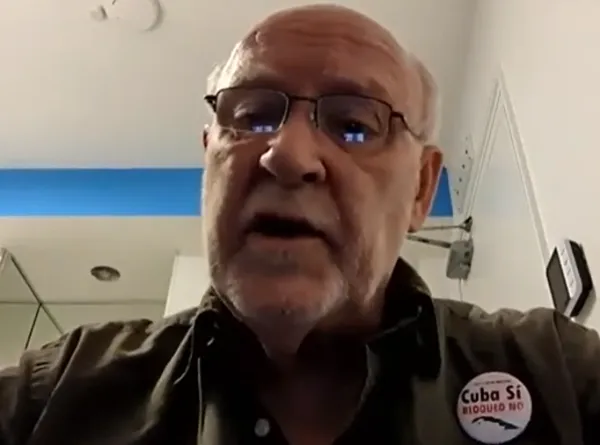
The Free Press Second Saturday Salon held March 14 on Zoom discussed the following;
U.S.-Cuba Relations and Global Shifts
Free Press Board member Mark Stansbery introduced Phil Wilayto, of the Virginia Defenders, who joined from New York City from the U.S.-Cuba Normalization Conference. He shared insights on U.S. foreign policy, emphasizing the shift towards a multipolar world and the extreme actions of the U.S. ruling class. He highlighted the impact of sanctions on Cuba, describing the country's severe oil shortage and its effects on daily life. Phil also shared his experience traveling through Iran in 2007, noting the friendly reception from Iranians despite tensions with the U.S., and mentioned his book "In Defense of Iran" based on that trip.
Iran's Resilience and U.S. Strategy
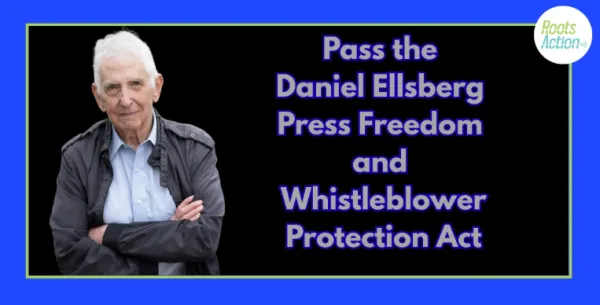
The Espionage Act has been used and abused to punish whistleblowers, journalists, and publishers, prosecuting them as if they were traitorous enemies, but denying them the right to put forward the defense that they were exposing, rather than committing, a crime.
We've seen indictments of Thomas Drake, Chelsea Manning, Jeffrey Sterling, John Kiriakou, Edward Snowden, Reality Winner, Julian Assange, Terry Albury, and Daniel Hale, not for trying to harm the United States but for trying to protect the United States from abuses within its government.
We need whistleblowers protected and rewarded. We need members of the press left free to exercise their First Amendment rights. We need the Constitutional right to defend oneself in court protected.
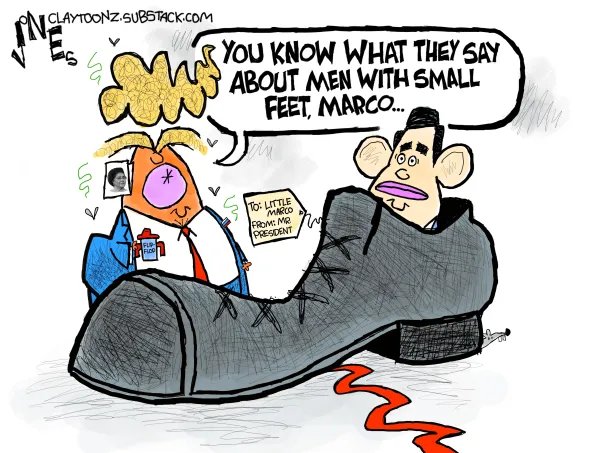
Oh, mercy, save us from Trump’s SAVE Act, which is all about restricting access to the ballot, fixing things that are not broken, and maintaining power in the hands of the minority, rather than the majority. Currently, amid a flurry of preposterous threats by Trump, the bill is bottled up in Congress, because the majority leader of the Senate, South Dakota’s John Thune, says they simply don’t have the votes, provoking a firestorm from the whacky conservative rightwing of the Republican Party. Thune is also resisting efforts to scuttle the filibuster, a long tradition in that body to block legislation unpopular with one party or another by stopping any business being done through endless talking on the floor of the body until one side or another blinks and caves into the other.