
Global

BANGKOK, Thailand -- Muslim-majority Malaysia's newly elected Prime Minister Anwar Ibrahim, who was jailed twice for homosexual sodomy, is warning lesbians, gays, bisexuals and transgenders (LGBT) that they, along with communism and secularism, "would never be recognized" by his administration.
Mr. Anwar made the remarks after a popular hardline Pan-Islamic Party (PAS) official, Razman Zakaria, claimed Mr. Anwar and his allies would legalize same-sex marriage in the Southeast Asian country.
“Sometimes these [rival] politicians say if Anwar becomes prime minister, then Islam will be destroyed, secularism and communism will be established, and LGBT will be recognized,” Mr. Anwar said on January 6.
“This is just a delusion. Of course it will never happen and, God willing, under my administration it is unlikely to happen," the prime minister said.
"Such anti-LGBT sentiments, coupled with scapegoating for political expediency and survival, are dangerous," responded Thilaga Sulathireh, co-founder of Justice for Sisters.
"It has effectively increased LGBT-related misinformation and bias."
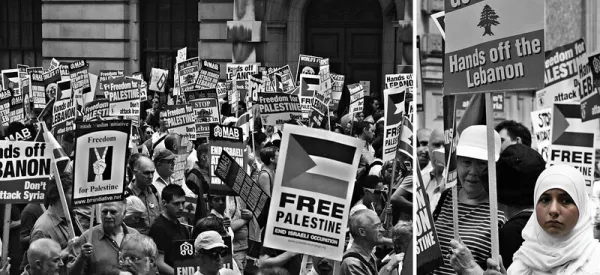
There were a couple of interesting articles that have appeared in the past several weeks that illustrate inter alia how the Israel Lobby operates when anyone dares to challenge America’s wag-the-dog relationship with the Jewish state. To be sure, the labels antisemite and holocaust denier are flung about with wild abandon as a first step, but there is a level of viciousness that goes well beyond that as the Zionists seek to ruin the reputations and employment prospects of those whom they target.

Nobody with a sane perspective of reality can deny that the Republican Party has become a cesspool of nefarious qualities like white supremacy, Christian nationalism, homophobia, antisemitism, QAnon conspiracy theories and unbridled greed amongst other character deficiencies mixed together looking for a leader that will allow unbridled greed to properly use the other nefarious "qualities" to maintain itself in the leading role.
Florida’s sane people are in a deep quagmire. We not only have Donald Trump as resident of the State, but worst yet, we have Ron DeSantis as governor. DeSantis working in conjunction with an inept Democratic Party, (sometimes the Dems are so inept that it makes it difficult not to believe they are working in conjunction), has been able to convey the image that Florida is going to be in the Republican camp for a long haul. All because while DeSantis is busy implementing Fascism many of the Democratic leaders are more concerned about “encroaching socialism.”
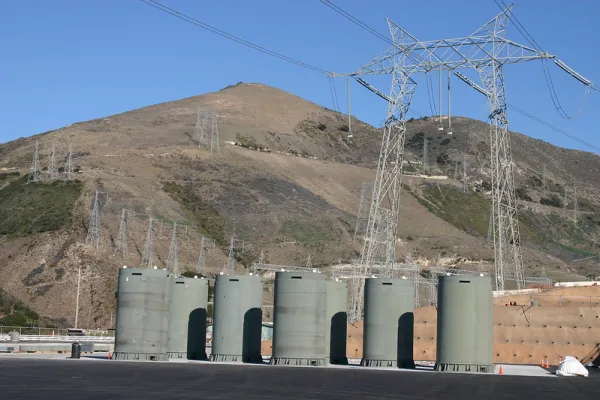
The California Energy Commission has made it clear that their reason for advocating keeping the Diablo Canyon Nuclear Power Station open an extra five years (or perhaps 20 extra years) has to do with rare, short-lived, peak load periods that can last from mere moments to perhaps a few hours and, very rarely, for a day or so.
The best solutions for these temporary fluctuations in power requirements are those solutions which can ramp up and down quickly. Nuclear power is not one of them.
"Baseload power refers to the minimum amount of electric power needed to be supplied to the electrical grid at any given time...Baseload power must be supplied by constant and reliable sources of electricity."
-- Source: https://energyeducation.ca/encyclopedia/Baseload_power
As I write this (late January, 2023), more than half of Pakistan is without electricity -- approximately 220 million people. It's the third time in as many years that a widespread blackout has hit that country.
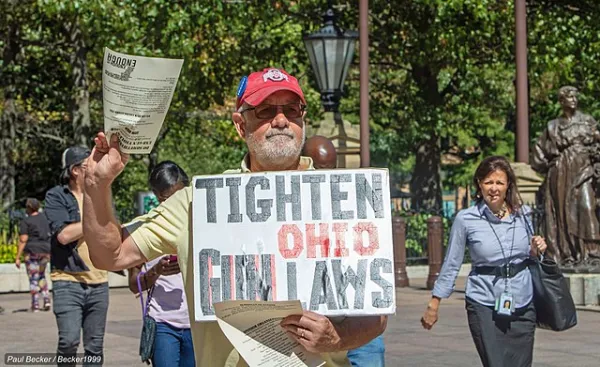
I had a passing moment of wonder the other day – as I read about the latest . . . you know, mass shootings.
Troubled souls with guns. Big problem.
My thought was simply this: What if . . .? And then I lapsed into uncertainty. What if . . . violence were not the simplistic and obvious – and only – solution to so many problems? Violence presents itself, in our imaginations (and in our games, in our movies, in our defense budget), as consequence-free, instantaneous and, for God’s sake, necessary. It’s the essence – it’s the definition – of empowerment.
And then the headlines scream about crazy guys grabbing hold of that empowerment to escape their personal cages, their crises on the moment: Yeah, it’s the fault of . . . whoever, and then another dozen people are dead.

Yesterday (1/19/23) I was reading the New York Times (arguably America’s most prestigious newspaper) and couldn’t find a single article about Peru while able to find several many about Ukraine. It surprised me because it was widely announced that there was going to be a march in Peru starting from different points in the interior of the country joined by a general strike to be called by the La Central General de Trabajadores del Peru (a conglomerate of different labor unions as it is our AFL-CIO).
The march was going to conclude in Lima, the nation’s capital. The Peruvian government set up roadblocks in many of the different roads leading to the city trying to prevent entry to the city to no avail. The Miami Herald reported on it in today’s (1/20/23) Page 8. Gee, I get the feeling that some people don’t want us to know about the trials and tribulations that white supremacists, and its elitists cohort are going through.

“The establishment media ignores the scientific evidence linking psychiatric medications and violent behavior because psychiatry is the religion of the mainstream media, and it has chosen to not mention the dangers of psychiatrically prescribed drugs.” -- Peter R. Breggin, MD (www.breggin.org)
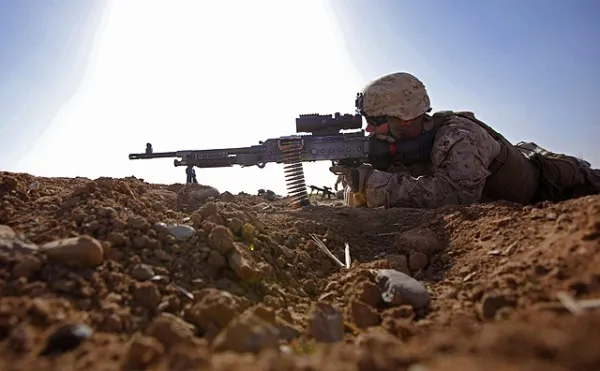
The Global Firepower ranking was published on January 6. The annual report classifies the world’s strongest militaries based on over 60 factors, including size, spending and technological advancements.
The report, which placed the United States military on top, followed by Russia, China, India and the UK, raised more questions than answers, with some accusing GFP, the organization that compiled the report, of being biased, sloppy and highly politicized.

In a self-congratulatory article published in the Atlantic in 2017, Yossi Klein Halevi describes Israeli behavior at the just-conquered holy Muslim shrines in Occupied East Jerusalem in 1967 as “an astonishing moment of religious restraint”.