
Local

This article first appeared on the Ohio Capital Journal
As promised, supporters of an anti-gerrymandering amendment have asked the Ohio Supreme Court to intervene regarding language the Ohio Ballot Board approved for the November ballot, saying the language violates the Ohio Constitution.
A brief filed Monday with the state’s highest court cites constitutional provisions that dictate the way in which titles and language can appear on Ohio ballots, according to the court document written by attorneys for Citizens Not Politicians, the authoring group for the redistricting reform.

When you’re hiking through nature, you miss a lot if you’re not paying attention. The same holds true when you’re viewing Good One, the story of a teenage girl’s hike through the Adirondacks with her dad and his best friend.
Seen mostly through the eyes of 17-year-old Sam (Lily Collias), the flick is full of telling moments, but few of them hit you over the head. Instead, writer/director India Donaldson expects you to watch and listen for clues about what Sam is going through.
Fortunately, Collias’s face registers the girl’s most fleeting thoughts, and cinematographer Wilson Cameron’s lens is right there to capture them.
Taking place over three days, the film follows along as Sam goes on what seems to be a family tradition: an extended hike with her dad, Chris (James Le Gros). They were supposed to be accompanied by both Chris’s friend Matt (Danny McCarthy) and his teenage son, but the son bails out following a last-minute family argument.
This leaves Sam alone with two divorced, middle-aged men whose egos and life experiences sometimes make them difficult traveling companions.
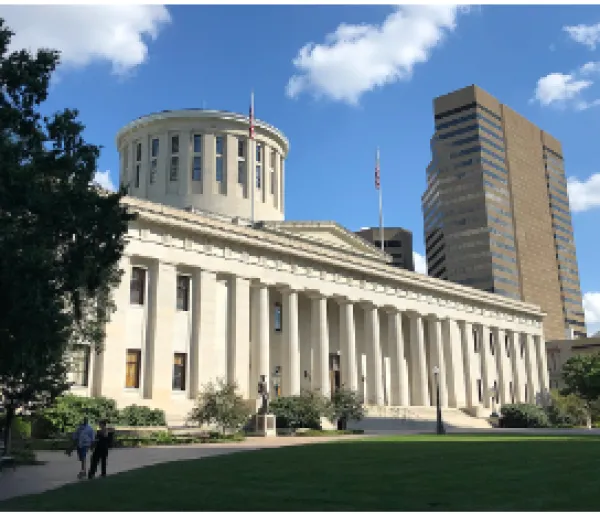
Indivisible Central Ohio Thursday Action Group Meeting
Thursday, August 22, 2024, 12:00 – 1:30 PM
Please join Indivisible Central Ohio for a Zoom with ALL THREE Democratic candidates for Ohio Supreme Court: Justice Donnelly, Justice Stewart, and Judge Forbes!
Zoom call HERE.
I stepped out. I jumped on the 1. My 62 dollar, 31 day-pass expired.
I paid 5 for a day pass. Five dollars is still cheaper than paying for parking. I would visit Kroger soon for my 62 dollar Month COTA pass.
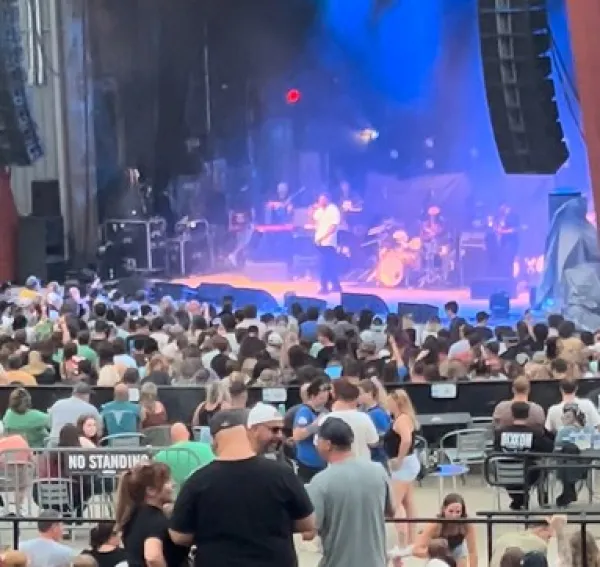
GZA from the Wu-Tang Clan’s concert existed within a short jaunt from my residence. At first discovery of the Wu, if people asked who my favorite Wu-Tang Clan member. I would say, GZA or RZA. In an online quiz, those would be the intellectual Wu members. I don’t have a Wu Favorite anymore. I like everyone in Wu-Tang Clan.
GZA was opening for Sublime with Rome. I’d looked at Sublime’s setlist. Sublime wasn’t playing the only Sublime song I know, KRS-1. During KRS-1, Sublime details Boogie Down Bronx’s KRS-1 teaching them about Elijah Muhammad, and our countries’ economic disparities. I hadn’t heard this song until last year. Sublime’s KRS-1 was an epiphany for me.
Wednesday, August 21, 7:30pm
The Go Go bar, 987 N. Fourth St.
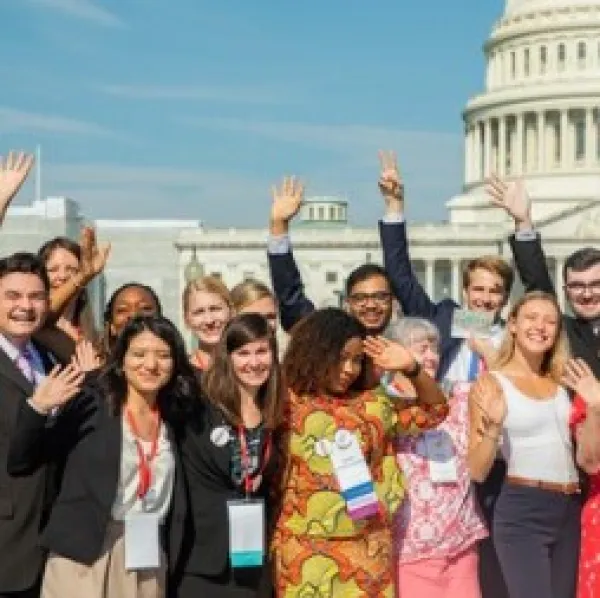
The Central Ohio chapter of RESULTS invites you to a Bingo Drag Show at The Go Go bar in Columbus on August 21 for an evening of fun in a supportive and inclusive environment! Please join us to learn more about our advocacy with RESULTS and help us to raise money to support the lifesaving work that we do.
Where: The Go Go bar, 987 N. Fourth St.
Cost: There is no charge to enter, play trivia, or attend the drag performances. Bingo, 50/50 raffle, and beverages available for purchase, and a food truck will be onsite. Gifts to RESULTS at the event or on this web page are tax-deductible and are deeply appreciated!
RSVP: Kindly write Ginnie Vogts at gvogts43@gmail.com if you can join us.
Time banks are popular around the world, and Columbus is lucky enough to have a very active time banking community. Hello, My name is Vilvi Vannak; I am the president of the Care and Share Time Bank (CSTB) -- a time bank based right here in Columbus, Ohio.
Difficult economic times that see most of us struggling to make ends meet, a general lack of community, and a feeling that our own hard work doesn’t get respect -- all of these things can be helped with time banking! Perhaps you heard the broadcast of Freakonomics on Sunday, August 18, about time banking? Here is a link to the broadcast: https://youtu.be/wQJVb3EQg50?si=yJiYmvAa9PN7BZf3

Tuesday, August 20, 2024, 7:30 PM
Join the zoom meeting here.
The purpose of this zoom is to enable members and allies to make BDS-type divestment and investment decisions. This occurs, as always, on the 3rd Tuesday of the month, August 20th at 7:30pm EST. Sloane Ortel (She/her), Chief Investment Officer for Ethical Capital Investment Collaborative will present on how one can invest ethically. She is also available to present follow-up trainings and zooms, and to review investment portfolios.
Monday, August 19, 2024, 7:00 PM
Register here.
You’ve likely already heard that the Ohio Ballot Board – chaired by Sec. of State Frank LaRose– approved inaccurate, confusing, and misleading ballot language for the Citizens Not Politicians amendment, November 2024’s Issue 1.
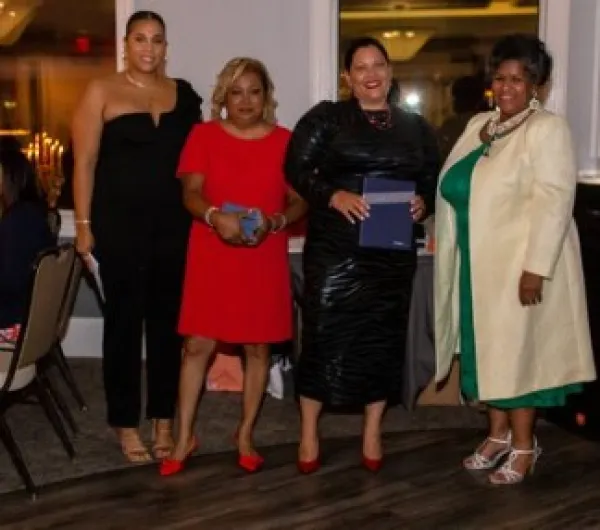
September is National Sickle Cell Month, and the Faith Thomas Foundation is excited to announce that we will be celebrating our 11th Annual Red Diamond Gala (RDG). The evening will include Hors d’oeuvre, program, dinner, silent auction, cash bar and music.
The Red Diamond Gala (RDG) will be held on Friday, September 13, 2024, at Creekside Conference and Event Center located at 101 Mill St #300, Gahanna, OH 43230.
Our theme this year is “The Gift of Life.”
This is a fundraising event that will raise awareness of sickle cell disease and to help us improve upon the quality of care and programs provided to sickle cell patients.
This event will benefit The Ohio State University Comprehensive Cancer Center – Arthur G. James Cancer Hospital and Richard J. Solove Research Institute (OSUCCC) – James, Nationwide Children Hospital, and the Faith Thomas Foundation.
Registration closes on Saturday, September 7, 2024.
You can purchase your tickets online at,

Columbus Mayor Andy Ginther claimed stolen data from the city’s database was encrypted or corrupted and likely unusable to any criminals, along with his Deputy Chief of Staff Jennifer Fening stating, “There is no evidence of ratepayers, or the general public were exposed.” And when asked by a local television reporter if he lied earlier this week about the extent of his knowledge of the information that had been leaked, and he gave a resounding "No" when it was noticed that his nose grew about four inches.
Friday, Mayor Ginther released the following statement: “To protect the community from the recent cyber attack on the city’s IT infrastructure, the City of Columbus is providing notification and offering free Experian credit monitoring to all residents and impacted individuals. Anyone who has shared their personal information with the city or municipal court may be impacted and can sign up for two years of free Experian monitoring, which includes $1 million of protection against fraud and identity theft.”