
Local
It seems like whenever you open the newspaper these days, either the city of Columbus, State of Ohio or Jobs Ohio is giving in to developers, major corporations and institutions that are swimming in cash to help fatten their profit margins. And at a time when our city income revenue is at a premium, yet another local entity with political influence, power and money is asking for charity. It’s bad enough that this City Council has given away millions in city income tax revenues, revenues that make up nearly 80% of our general funds budget to the likes of Ohio Health, Root Insurance, CoverMyMeds, Nationwide Insurance, Huntington Bank, The OSU Wexner Medical Center, Nationwide Children’s Hospital and U.S. Bank.
I was sorting the postal delivery recently when I opened an envelope addressed to my wife. It announced a “national campaign” and “citizen opinion survey” from the right-wing activist group Faith & Freedom Caucus’s “founder and chairman” Dr. Ralph Reed, PhD (redundantly and insecurely using both Dr. and PhD).
Aware of the group and its negative reputation among the legitimate media and public interest groups, I noticed these bold-typed statements leading the pitch and request for donations: “To Teach Millions of Young Americans What Made America Great and Train the Next Generation of Patriotic Leaders for America” and “Concerning the Assault on America by the Media, Our Nation’s Educational Institutions and Today’s Democratic Party.” I also noted that Reed boasted a “PhD in American History from Emory University” and writing “a number of books on America’s history and politics—including three national best-sellers.”
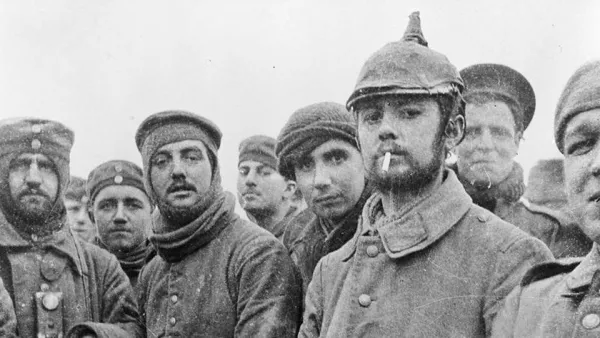
Ya gotta love how the U.S. media annually freaks out about a “war on Christmas” by which it means something completely unrelated to any wars, while the U.S. military always has several actual wars going on Christmas, the same as every other day. Perhaps especially on Christmas, as George Washington’s slaughter of drunk and sleeping British soldiers on Christmas 1776 has been rendered so “special” that it’s claimed as the very first in a string of millions of glorious “special forces” actions, and the wars now generally consist of oh-so-special actions.
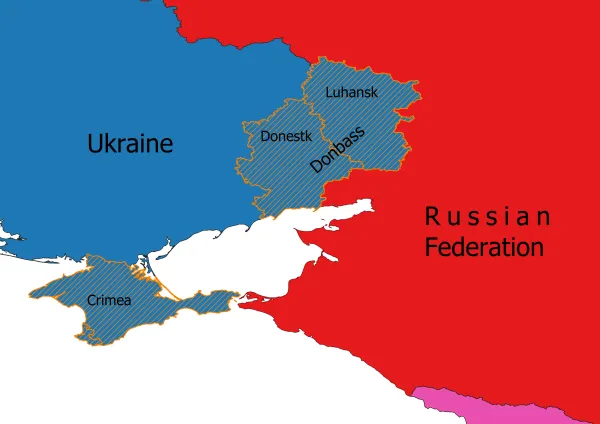
What could possibly go wrong?
What passes for conventional wisdom nowadays is expressed by the cover headline of the November 29 issue of The Nation magazine, of all places:
Ukraine: The Most Dangerous Problem in the World

"Flee" tells the story of Amin Nawabi (Fardin Mijdzadeh), as he grapples with a painful secret he has kept hidden for 20 years, one that threatens to derail the life he has built for himself and his soon Saif (Milad Eskandari) to be husband. It's the story of a extraordinary journey as a child refugee from Afghanistan.
Beginning with the death of his father in Kabul when he was a young child, and continuing in Moscow, when members of his family made several harrowing attempts to resettle in Western Europe, Amin’s childhood was defined by periods of waiting, hoping, and fleeing. Too much pain and heartbreak remained lodged beneath the surface, and he feared for both his own safety and that of his family, so they left the idea knowing that they would re-visit it when the time feels right.
The glory of Pearl Harbor Day still lingered yesterday on Human Rights Day with a Democracy Summit wrapping up and Nobel So-Called Peace Prize laureates talking about U.S. government-approved and -funded journalism. U.S. media is dominated by Donald Trump and how he’s out of power at the moment. All is just going swimmingly in the steady march of freedom and goodness. If you pay no attention to the little man behind the curtain. Or maybe it’s a small army of little men behind a thousand curtains. We can discuss the many causes and motivations of deception and self-deception. Suffice it to say that once you look, listen, or smell for an instant at the actual state of the world, you can’t turn away, and you can’t stomach the pretty picture.
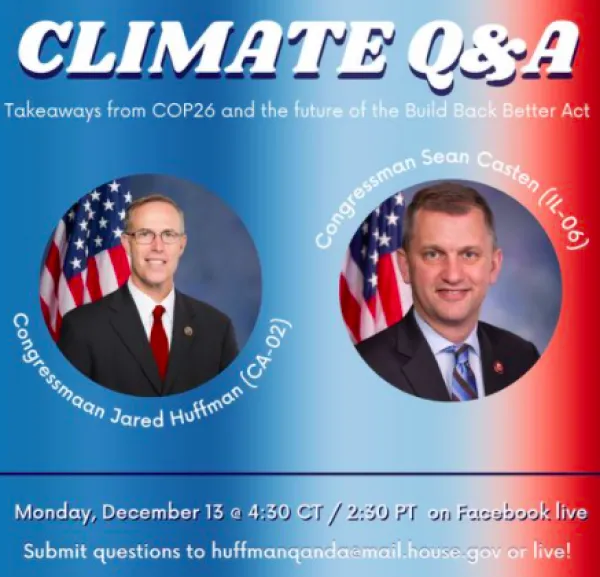
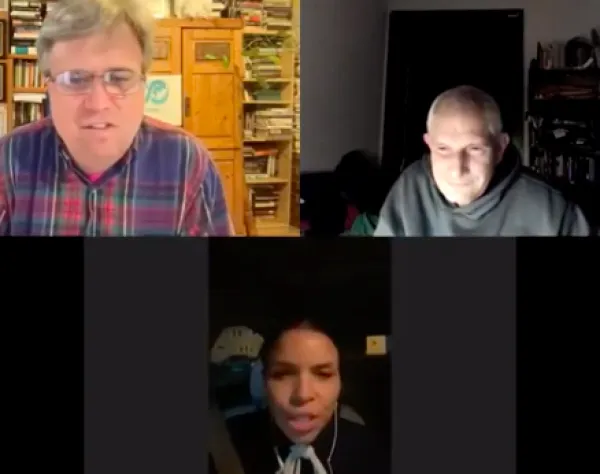
Mark Stansbery, Free Press Board member, started off the salon by introducing Travis Irvine.
Travis told us about the rally to support SB117 and HB351 and repeal the coal plant bailouts on December 9 and announced the showing of his new film Killer Racoons 2: Dark Christmas in the Dark. It will play at Studio 35 at 11pm on December 17 and 22, and is streaming online. He also mentioned another more serious film of his called How America Killed My Mother that is also streaming online.
Fearing for his political life, at the end of August, Gov. DeWine joined the right-wing blinded parade in opposing teaching critical race theory in Ohio’s K-12 schools. Not only would this be anti-democratic (small d), unconstitutional, and a threat to the maturity of Ohio’s children, but it is based on a lie. [“Mike DeWine opposes teaching critical race theory in Ohio's K-12 schools” Columbus Dispatch, Aug. 31, 2021 (https://www.dispatch.com/story/news/2021/08/31/ohio-gov-mike-dewine-doesnt-support-teaching-critical-race-theory/5647715001/)]