
Local

Wednesday, August 7, 2019, 6:00 – 8:00 PM. Public Action Meeting. Hosted by RAID – Resistance Against Immigrant Detention. This will be our launch meeting for RAID- Resistance Against Immigrant Detention. Our work will center around an action that will be held on August 16th. We'd love your help to build community and allyship to help support our undocumented friends here in Central Ohio! Location: Columbus Metropolitan Library, Northside Branch, 1423 N. High St., Columbus 43201. Facebook.

The struggle continues, but a battle has been won. The Trump administration, despite its “maximum pressure” campaign, has failed to crush Iran and Venezuela. There are signs that the economies of both countries have turned a corner. The Iranian rial has stabilized, rising “30%” against the dollar since early May according to Bloomberg. Hyperinflation in Venezuela has finally come to an end, as reported by economist Sergi Lanau.
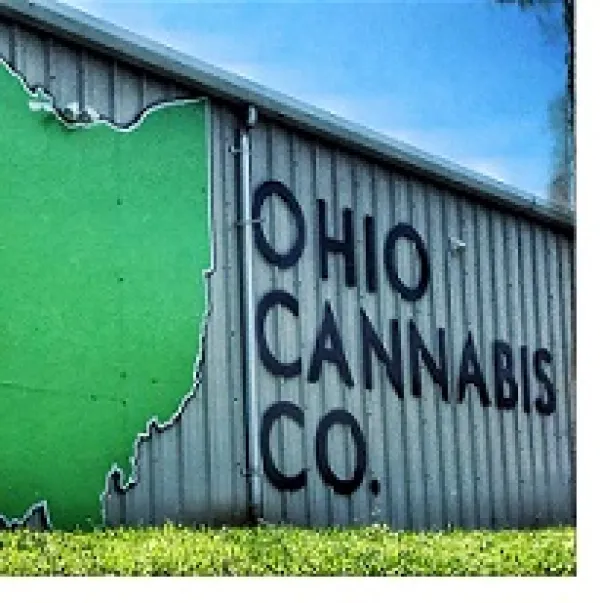
Let’s talk about purchasing medical marijuana from an Ohio dispensary. Get out your calculator, supercomputer, Alexa, Siri and a slide rule. You’ll need them. Why? Because buying cannabis can be complicated.
First, what’s allowed. HB 523, which the Ohio legislature enacted in 2016, created a system wherein qualified patients with a physician’s recommendation can purchase medical marijuana. The law permits nine forms: patches, lotions, creams, ointments, oils, tinctures, capsules, edibles and, of course, plant material, aka flower. Further, the bill established a seemingly generous maximum 90-day supply.
Implementing this quantity, though, became complicated because bureaucrats had to figure out what comprised a 90-day supply. So, they turned to conventional medicine and the “daily dose.” You know, “take two twice a day,” ignoring that most patients consume cannabis “PRN” or as needed. A puff here, a drop there. In addition, the English ounces had to be melded with metric grams.

Singer and songwriter Cat Stevens wrote in his 1972 hit song, Peace Train, “Peace Train soundin’ louder, glide on the Peace Train.” Those lyrics may have summed up the growing artist community in the Hilltop, especially right as the Summer Jam West Festival continues to grow steam for a neighborhood that has not been well known for its art in its long history prior to the festival’s existence.
The theme for this year’s Summer Jam West Festival, held last month at Westgate Park was “Peace Train.” After a community-wide contest for mural ideas, local artist Justin Withrow’s concept for “Peace Train” was overwhelmingly selected after the community voted.
At the Peace Train Mural Dedication Ceremony held on July 25, Withrow said, “We’re excited to have the opportunity to win something, competition-style.” Withrow also painted Summer Jam West’s Official Art Car, The Grape Escape, which has been seen at the Westgate Farmer’s Market, Comfest and Summer Jam West, and will be seen at the end of the summer at the Hot Times Festival in Olde Towne East.

Because I write a music column, people get the idea I am paying attention to modern music. I periodically get asked what new bands I’m listening to, and I always feel guilty when I have to tell them that I’m not really listening to any new bands. To be honest, if I’m listening to current music these days it’s pretty much pop with a little bit of dance. I’m sort of done with the Pearl Jam imitators on 99.7 The Blitz and the “indie” rock infesting the internet. The Pearl Jam stuff is self-explanatory, but people always seem disappointed that I can’t point them to an up and coming indie band.
Which is sort of bullshit. Why should I have to listen to indie rock? Why should I sift through the detritus of a genre that hasn’t had an original idea in 20 years just to see if somebody got confused and accidentally made a good record? The people over at Pitchfork get paid to do that, not me. Even then, how those people summon up the motivation to write breathless reviews of these lame bands day in and day out is beyond my comprehension.

Between 2006 to 2012, in the far-west zip code of 43228, each and every person accounted for 3,300 oxycodones or hydrocodones distributed. 170 million pills in total for roughly 50,000 Columbus residents.
The 43228 ranks number one in the state for the total amount of opioids distributed over those six years, and number three for pills per person, this according to data recently made public by the US Drug Enforcement Administration (DEA). Across the entire state 3.4 billion opioids were distributed over this time.
These numbers, this stomach-turning data, was voluntarily submitted by drug companies from 2006 to 2012 to the federal government’s ARCOS database or Automated Reports and Consolidated Ordering System. This begs the question, did federal law enforcement know the scope of what was happening? It was their database after all.
Following continued pressure by journalists, the data was recently made public by US District Judge Dan Polster of Cleveland. Polster is presiding over 2,000 lawsuits against drug manufacturers and distributors, which of course includes Cardinal Health of Dublin, the state’s largest distributor of opioids.

Tuesday, August 6, 2019, 4:00 – 8:00 PM
Join us during this year’s Night Out for Safety and Liberation! The People's Justice Project will be at the corner of 24th and Cleveland Avenue from 4-8 PM hosting entertainment and good vibes! Together we will redefine what safety is. Location: Cleveland Ave and 24th. More information on Facebook.

Temperatures during the summer months have been scorching. The last few weeks of July brought a dangerous heatwave throughout Ohio, the greater United States and worldwide. Staying cool during the month of August is achievable, however, with the help of herbalism and cooling energetics. Learning to harness the power of herbs — to beat the heat —is a valuable tool as more sweltering days approach.
Yet, how on earth can herbs help the human body to cool down? When working with live plant medicine it is important to consider that the life force of the plant itself has its own energy. The subtle energetic properties of herbs hold valuable answers on how one might use them to dissipate heat. Just as each human is born with their own unique set of genes, so are plants.

Columbus teachers picketed outside of Columbus City Hall to demand an end to tax abatements to corporations on Monday, July 29. They are bargaining for a new union contract to end the school to prison pipeline, reduce class sizes, end handouts to companies, hire counselors, social workers, nurses, and librarians, design schools that support physical education, music and the arts, and to compensate educators like the professionals they are.
At 4 p.m., community members, school children, future school kids, teachers, activists and union members from the Columbus Education Association (CEA), the Ohio Education Association and the National Education Association gathered in front of the Columbus Firefighters Union. CEA Vice President Phil Hayes, emcee for the event, informed the picketers to gear up for the march from 379 West Broad Street to 90 West Broad Street across the river after a few union members and teachers made statements.
Author Esther Flores is a registered nurse and the founder of 1DIVINELINE2HEALTH, a 501c3 public charity. Their mission is to eliminate human suffering locally and globally via compassionate messengers through a holistic approach. They are 100 percent solution-driven and community-funded. The organization is client-centered vs. system-centered. Seventy percent of their monetary donations go towards serving human trafficking victims and the remaining 30 percent goes towards loans, property taxes, insurance, maintenance and other costs. Flores is an abolitionist, with an addiction to love in the Columbus Jungle – a type of love that demands action and transparency. 1DIVINELINE2HEALTH defines compassion by using their human resilience as they meet hurting folks where they are at, never empty handed, which include the street outreach in a red commercial truck the victims call the “love bug.”