
Local
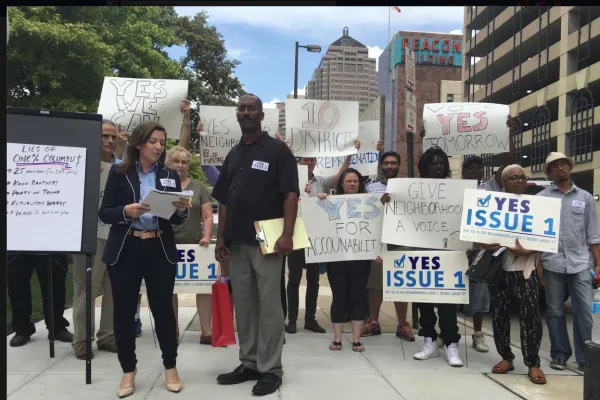
As we go to press, the devastating numbers are coming in from the special election polls. It appears Issue One has failed.
At the crux of the anti-Issue One campaign was the Big Lie that the idea of a city with representative districts came from "The party of Trump" who were supposedly "associated with the Koch Brothers." Ironically, many voters were worried about an increased cost of $20 million to the city budget, which was part of the anti-Issue One campaign's false advertising. In reality, the movement for more representation was created after the all-Democratic Columbus City Council gave away a quarter of a billion dollars to Nationwide Insurance and four of the richest families to bail them out for a bad investment in the Columbus Blue Jackets hockey team.

After a Donald Trump town hall reached capacity Monday afternoon, about 150 Trump supporters who had been turned away milled around the vendors of campaign merchandise outside the Columbus Convention Center. Trump falsely told his supporters that thousands were turned away “for political reasons.”
One merchandise hawker tried to turn the setback into an opportunity. “$5 off all Trump gear if you couldn’t get in!” he shouted over a bullhorn. Then he started to heckle protesters across the street who held signs saying “Wall off Trump,” “Love Not Hate,” “Black Lives Matter,” and “No Más Trump.”
Protest organizer Rubén Castilla Herrera also had a bullhorn. “We’re black, brown, white, queer, straight, immigrants, women, men,” he said. “We’re a diverse community, and we’re to tell you that Trump is not welcome here!”
A Trump supporter grabbed the hawker’s megaphone. “How can you say that black lives matter?” she said. “All lives matter!”
With all the struggles this presidential election of getting Gary Johnson eligible to take part in the debates, we can easily become lost in the miasma of the federal elections. It had happened to me, until I noticed a post last week from my previous professor Dr. Robert Fitrakis. Dr. Fitrakis was always one of my favorite teachers to have discussions with, as well as the professor I credit the most for providing the tools I employ to analyze political media, thanks to his “Politics and the Media” course. He and I would have long discussions while smoking our briar tobacco pipes outside of the school building jokingly referring to ourselves as “pipe smoking intellectuals.”
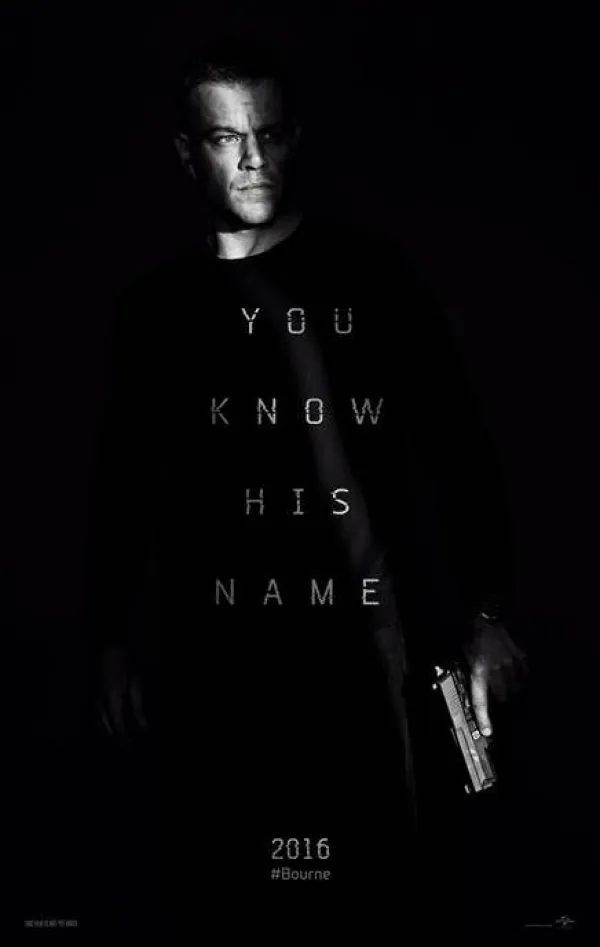
Jason Bourne is the fifth installment in the Bourne film franchise derived from Robert Ludlum’s espionage novels that began with 2002’s The Bourne Identity. Ludlum’s original Bourne trilogy began in 1980 but didn’t reach the big screen until shortly after 9/11, when the CIA and other U.S. intelligence agencies turned to what author Jane Mayer called The Dark Side. The latest sequel continues the Bourne formula of nonstop action combined with criticism of the Central Intelligence Agency and is the fourth movie starring Matt Damon as the title character and the series’ third feature helmed by British director Paul Greengrass, starting with 2004’s The Bourne Supremacy.

Jonathan Beard is the energy and inspiration behind Issue 1, the vote to end the at-large city council which has been in-place for over a century. Beard is the president and CEO of the Columbus Compact Corporation. He’s co-chair of Represent Columbus, the grass-roots group behind Issue 1. In his own words Issue 1 is the “citizen-initiated proposed Columbus Charter Amendment to change our city council to a form that better represents the interests of the people of all Columbus.” A summer of violence in a long-neglected east side neighborhood, he says, is when and where Issue 1 was born.
I personally became involved to initiate Issue 1 when Columbus City Council would not act to support 22 neighborhood groups – two area commissions, plus umpteen civic associations, business associations and block watches – during a summer of horrific drug-related gun violence on E. Main Street where all the violence was caught on video and shared with city council.

The New York Times published an astonishing article last week that blames green power for difficulties countries are facing to mitigate climate change.
The article by Eduardo Porter, How Renewable Energy is Blowing Climate Change Efforts Off Course, serves as a flagship for an on-going attack on the growth of renewables. It is so convoluted and inaccurate that it requires a detailed response.
As Mark Jacobson, director of Atmosphere/Energy Program at Stanford University, pointed out to me via email:

Several years ago, I had a conversation with Robert Loss, Blind Engineers singer and principal songwriter, about the Bruce Springsteen song “The River.” If you don't know it, the gist of that song is the angst of a young man who gets his girlfriend pregnant just out of high school, gets married and is having difficulty finding work. What’s with this guy, I said – he’s just 20 years ago and just because his marriage is on the rocks he’s acting like his whole life is over. Sure, said Robert, but what you are missing is that at this point in the character’s life he thinks it is.
Loss’ songwriting reflects this attitude. As someone who uses his music to tell stories, he takes characters at face value and presents them without judgment. It is left for the listener to decide whether a character is a principled hero, an unreasonable dreamer or just a miserable son of a bitch.
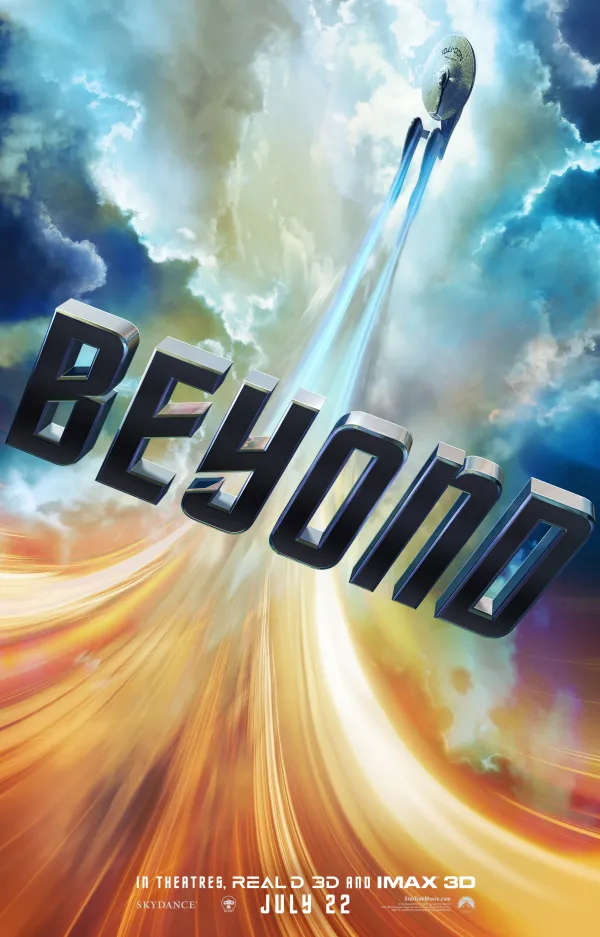
What a tired retread this umpteenth rip-off of the brand Gene Roddenberry pioneered 50 years ago with 1966’s Star Trek TV series, is, directed and produced by the cinematic art form’s most overrated, overpaid colossal no-talents. To see how many televised and motion picture permutations - perhaps mutations is a better word? - there have been of this sci fi TV classic, starting with a 1979 big screen adaptation and including 1982’s The Wrath of Khan and 1984’s The Search for Spock, see:
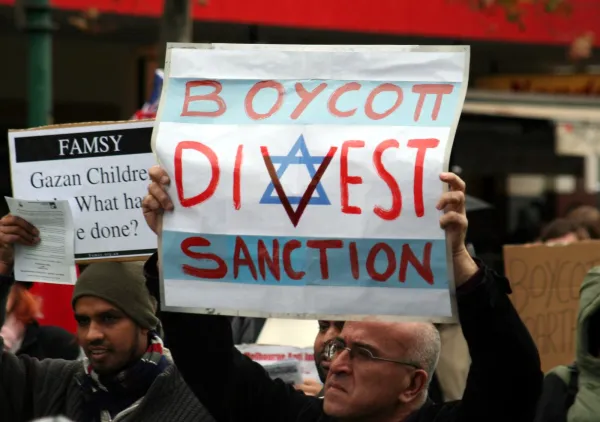
Prime Minister Benjamin Netanyahu declared on July 25 that Israel has defeated the BDS movement. Ben White of Middle East Eye calls this claim “laughable.” A few days earlier, the Palestinian BDS National Committee posted a blog article that describes the accelerating growth of BDS despite Israel’s efforts to undermine it.
BDS (Boycott, Divestment, and Sanctions) is an economic strategy for pressuring Israel to end its occupation and colonization of Arab lands in Palestine. BDS supporters also want Israel to dismantle the Gaza Wall and recognize full equality for Arab-Palestinian citizens — ending what they see as a system of apartheid.
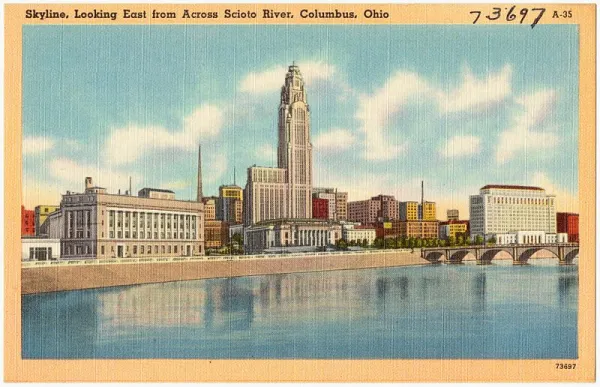
If approved at the August 2 special election, Issue 1 will end Columbus’ seven-member city council whose members are all elected citywide (i.e., “at large”). Replacing it will be a council consisting of 10 members elected from districts of the city and 3 elected citywide.
The present system was designed over a hundred years ago for a city less than a fourth of Columbus’ present size. The reform would make council’s structure consistent with what’s used by virtually every other large American city.
Issue 1 opponents are ignoring the present system’s problems and the changes the reform would bring. They’re hoping voters will too.
A currently divided city
Opponents say districts would divide the city and pit neighborhoods against each other. They ignore, however, that the present system has produced this very result by favoring certain areas and neglecting others.